
‘We cannot rest.’ Low Latino COVID vaccine rates in Tri-Cities a worry
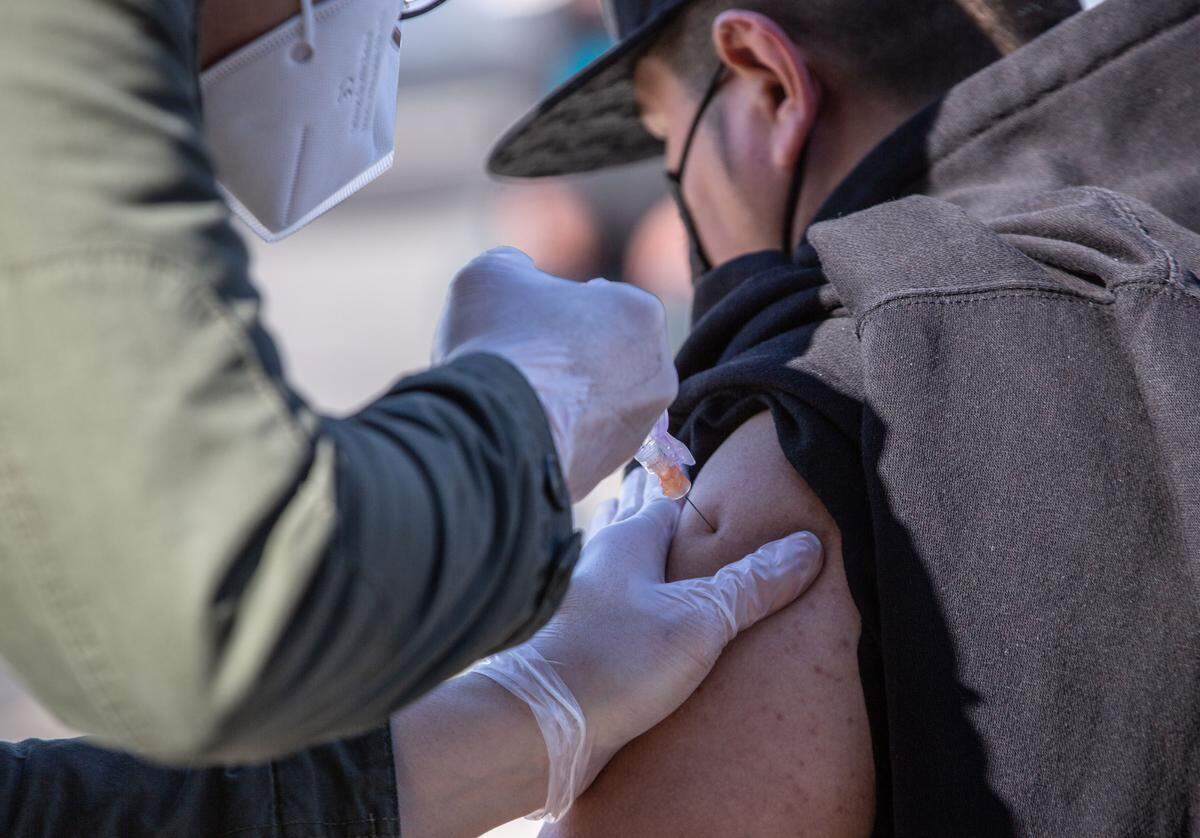
Every Saturday and Sunday the Tri-Cities Hispanic Chamber of Commerce coordinates a free COVID-19 vaccine clinic outside the SuperMex El Pueblo Market in Pasco.
The chamber knows that Hispanic shoppers will be picking up their groceries then on what may be their only full or partial day off from work that week.
Some people stop by the pop-up clinic by for several weeks before they decide to get a vaccine, sometimes coming back with everyone in the family, said Martin Valadez, interim executive director of the Tri-Cities Hispanic Chamber of Commerce.
Consistency is key, Valadez said.
Being at SuperMex week after week builds trust.
The Tri-Cities area has seen a substantial increase in the percentage of Hispanic residents vaccinated against COVID-19 since June, but rates locally and in the state continue to be too low, according to a new policy brief.
“Despite the overwhelming scientific evidence supporting the safety and effectiveness of the COVID-19 vaccines, progress in vaccinating eligible Latinx individuals has been slower than hoped and uneven across the state,” says the new report by the Latino Center for Health at the University of Washington.
The low rate is of particular concern because the Hispanic population across the state has been hit harder by COVID-19 than both non-Hispanic whites and also the state’s population as a whole.
In general, counties in Eastern Washington had the lowest vaccination rates of Hispanics in the state, the policy brief said.
However, Benton and Franklin had significantly lower vaccination rates for eligible Hispanics that neighboring Yakima and Walla Walla counties.
The Tri-Cities area lags those counties by about 15 percentage points.
Tri-Cities vaccination rates
As of Sept. 20, the age-adjusted COVID-19 case rate among Hispanics was 9,450 per 100,000 compared to 3,562 per 100,000 in non-Hispanic whites, according to the report.
Similarly, the age-adjusted COVID-19 death rate was 231 per 100,000, compared to 69 per 100,000 for non-Hispanic whites.
Data was adjusted to account for differences in age because the Hispanic population trends younger than the state as a whole.
The Latino Center for Health’s new policy brief looked at vaccination rates among Washington state’s Hispanic population using data from July through September.
Data for Benton and Franklin counties is worse than statewide, it found.
Hispanics in Benton and Franklin counties are less likely to be vaccinated against COVID-19 than Hispanics across the state, the report found.
That puts them at significant risk of COVID-19 as the Centers for Disease Control says that the best way to prevent the spread of infection is fully vaccinating eligible individuals, the report said.
In Washington state almost 55% of the Hispanic population 12 and older were fully vaccinated by the end of September, according to the report.
That dropped to 39% in Franklin County and Benton County was slightly lower at 38%.
The percentage of Hispanic residents vaccinated in Benton and Franklin counties also lags the population as a whole for both counties.
At the end of September 51% of eligible people in Franklin County — then people 12 and older— were fully vaccinated compared to 39% of Hispanics in the county.
In Benton County, 55% of eligible people were fully vaccinated, compared to 38% of its Hispanic residents.
The gap held across the state with 68% of all Washington residents 12 and older fully vaccinated at the end of September, compared to 55% of the Hispanic population in the state fully vaccinated.
However, both Benton and Franklin counties have made substantial progress since June in increasing the percentage of Hispanic residents getting vaccinated.
The percentage increase in the number of Hispanics who were vaccinated between the end of June and end of September increased 55% in Franklin County and 54% in Benton County, according to the report.
Eleven counties had lower vaccination rates for eligible Hispanics than Benton and Franklin counties, with Ferry County having a rate of just 13% and San Juan County and Okanogaon doing the best at 76%.
Increasing Hispanic vaccination
The report concluded that Washington state leadership should continue to support the work of community-based organizations and trusted community leaders to increase access to the vaccine for the Hispanic population and overcome reluctance to receive the vaccine.
“The greatest risk we face now is to be complacent about the COVID-19 pandemic,” said Dr. Leo Morales, co-director of the Latino Center for Health. “We cannot rest until we have reached all unvaccinated and under-vaccinated Latinos in our state.”
The Tri-Cities Hispanic Chamber of Commerce, which has a contract with the Washington state Department of Health to do outreach to the Hispanic community, says some Hispanic people work six or seven days a week with no sick leave or vacation days that can be used to take time off to seek out a vaccine.
The chamber has partnered with other organizations to make vaccinations more accessible. It has held one-day vaccine clinics, including at the Pasco farmer’s market and at Fiesta Foods in Pasco, in addition to its regular clinics 2-6 p.m. Saturdays and 10 a.m. to 2 p.m. Sundays at SuperMex.
Usually 30 to 40 people are vaccinated each day of the SuperMex clinics.
Among the chamber’s partners is Heritage University, which provides community health workers who can discuss the vaccine, including countering false information that it is not safe or effective.
In addition, the Tri-Cities Hispanic Chamber of Commerce has raised money for $50 gift cards, which are a valued ‘thank you’ to low-income residents of the area, Valadez said.
The chamber provides the gift cards not only for first and second doses at the SuperMex clinics, but has provided them for other clinics, including at Columbia Basin College in Pasco and Washington State University Tri-Cities.
Tri-Cities area health district
The Benton Franklin Health District also is working to increase the number of Hispanic residents of the two counties who are vaccinated.
It has worked closely with food processors who employ many Hispanic workers, including helping with clinics at their work places.
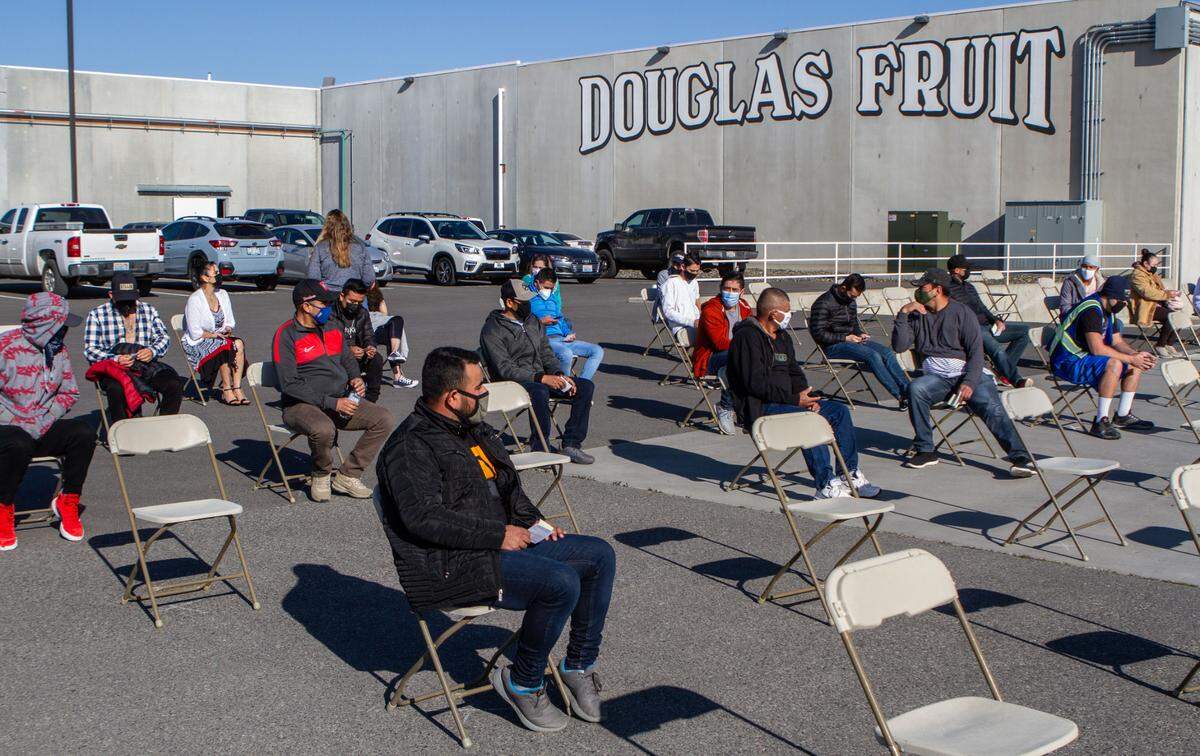
This year it has seen fewer outbreaks in the ag industry than the previous year, said Annie Goodwin, operations deputy chief for the Benton Franklin Health District.
District employees continue to visit ag industry workplaces to provide information to help their workers make an informed decision about getting vaccinated.
The district also had done outreach to other businesses and agencies that employ minority workers, including preschools, Head Start and long term care homes for the elderly.
The health district has turned to trusted Hispanic leaders, such as Mayor Saul Martinez, to provide information and reassurance about the COVID vaccine, including on Spanish-language stations.
It also has supported pop-up clinics in places popular with the Hispanic population and has increased the information it releases in multiple languages.
Some of the health district’s efforts have been guided by an equity advisory team it formed last year with representatives of community groups to help make sure health care and information is available to all regardless of race, culture or economic status.
This story was originally published November 7, 2021 at 12:58 PM.