
Tri-Cities Hispanics lag in COVID vaccinations. It’s not because they don’t want it
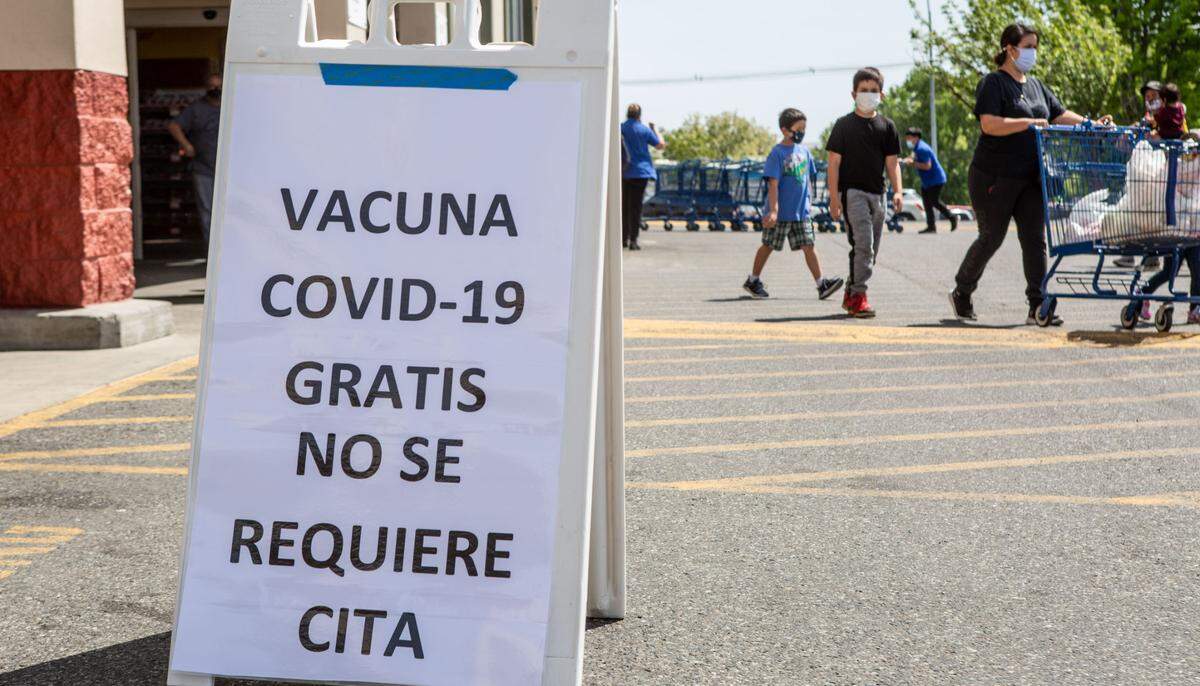
Tri-Cities fire department and public health employees set up a booth on Cinco de Mayo outside a grocery store popular with Hispanic shoppers.
“COVID vaccine. Free. No appointment required,” said the sign that remained up into the early evening hours to catch the attention of shoppers walking in and out of the store.
“We know a lot of farm labor shows up here in the evening to do their shopping once they work in the field all day,” said Ben Shearer, with the Pasco Fire Department.
The largely Hispanic agricultural workforce may be working when most vaccine clinics are commonly available in the Tri-Cities, including on Saturdays during the growing season, and may also have to arrange a ride to get there.
The pop-up clinic on May 5 was one of the ways public health officials are trying to increase the lagging rate of COVID vaccinations in Tri-Cities.
Latinos in the Tri-Cities area are getting vaccinated against COVID-19 at about half the rate of non-Hispanic whites, according to the most recent data from the Washington state Department of Health.
But a recent survey by the Latino Center for Health at the University of Washington found that the low rate does not appear to be because Hispanics in the state are hesitant to get the vaccine.
About 62% of respondents believed the COVID vaccine was safe and effective at preventing infection, although there were some concerns related to cost, side effects and, for some people, effectiveness.
But the main issue appears to be access to the vaccine, said the Latino Center for Health.
“Latinos in WA want to get the COVID-19 vaccine,” said Aida Hidalgo, a community health worker and UW public health practice student. “Let’s be empathetic, meet them where they are, help them overcome the obstacles they face, and give them relevant information in the language they understand best.”
Policy changes are needed to make it easier for Hispanics, who already have suffered more than most populations during the pandemic, to get a vaccine, the center said.
Washington state data shows that Latinos are significantly more likely to get COVID-19 than white non-Hispanics.
The COVID-19 infection rate in Latinos in the state is the second highest in the nation, accounting for more than a third of COVID cases even though they make up just 13% of the population.
They also account for 22% of people hospitalized for treatment of the virus.
Hispanic vaccine rates
The issue is particularly acute in Franklin County where 54% of the population is Latino.
About 23% of Benton County’s population is Hispanic, according to the U.S. Census Bureau.
Washington state Department of Health data through April 21 shows that about 11% of Latinos in Benton County are fully vaccinated and about 16% total have received at least an initial dose.
That compares with 24% of non-Hispanic whites in Benton County who are fully vaccinated and about 32% who have received an initial dose at the time of the study.
The Pfizer and Moderna COVID-19 vaccines require a booster dose several weeks after the initial shot to be fully effective.
Franklin County rates of COVID-19 vaccination for Hispanic people are similar to Benton County.
About 11% of Latinos in Franklin County are fully vaccinated and about 15% have received at least an initial dose.
That compares to 21% of non-Hispanic whites who are fully vaccinated and about 28% who have received an initial dose as of April 21 in Franklin County.
‘Happy and excited’
Alma Santiago, 37, of Kennewick, was one of the people who stopped to get a vaccine at the booth outside Fiesta Foods on May 5.
“This way I don’t have to miss a day of work,” she said in Spanish. She had previously made an appointment at a clinic.
Mel Phynon, 59, was delivering fuel to a gas station across the street from Fiesta Foods, when a “free vaccine” sign caught his eye.
By the time he gets off work from his job traveling between Washington and Oregon to deliver fuel, it is too late to get a vaccine, he said.
He said he was the first in his household to be vaccinated against the coronavirus.
“It was convenient and painless and well worth it,” he said.
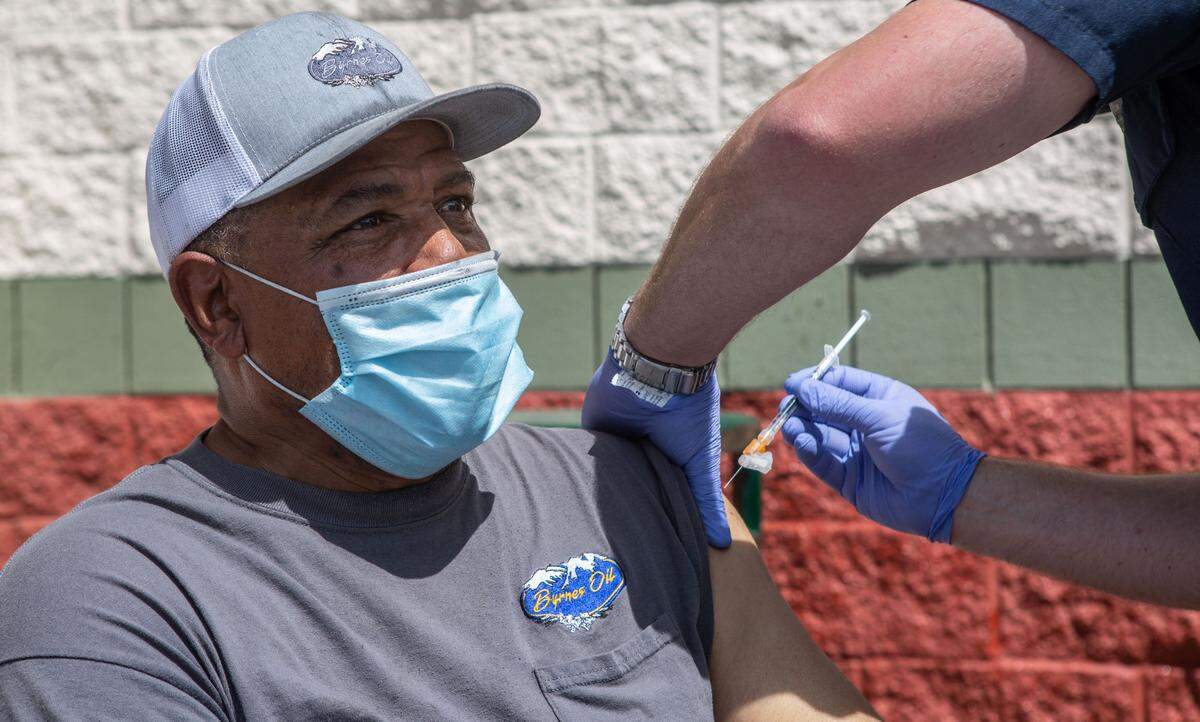
Eduardo Muñoz, 45, of Pasco, was one of the first to get a shot at the pop-up clinic.
“I am very happy and excited,” he said in Spanish. “I want to get the vaccine so things can go back to normal.”
For him that means being able to give hugs and kisses from his family again.
Getting an appointment can be complicated, but there are no excuses for not getting a vaccine at the pop-up clinic, he said. He planned to tell his friends about it so they could also stop by.
Hispanic survey results
The Latino Center for Health survey, done in partnership with Sea Mar Community Health Center, found that 62% of Latinos responding to the survey were very willing or somewhat willing to receive a COVID vaccine.
Spanish-speaking Latinos were even more likely to be interested in the vaccine, at 67%. Only 2% said they would not get a vaccine, compared to 18% of English-speaking Latinos.
However, a significant percentage of Spanish-speaking Latinos, 27%, were unsure if they should get a vaccine.
“If in all these years they haven’t found a cure for AIDS or cancer ... how do you expect me to believe they now have a cure or prevention for the COVID-19 pandemic?” said one survey respondent, answering in Spanish.
More Spanish speakers than English speakers were concerned about costs.
“Will my insurance cover it?” one respondent asked in Spanish, saying they had a policy that covered only catastrophic events.
English-speaking Hispanics raised concerns about vaccines as a political weapon, shortened clinical trials and long-term side effects.
The survey had 363 respondents, all patients at SeaMar Community Health Centers in Washington state.
Improving vaccine access
“The data supports that the issue with Latinos not getting the COVID-19 vaccine is not so much due to hesitancy, but access,” said Dr. Miriana Durán, research coordinator at the University of Washington School of Public Health.
The Latino Center for Health recommends offering the vaccine in Latino neighborhoods and places people can reach without a car.
More evening and weekend vaccination clinic hours are needed, along with easier ways to schedule vaccines and mobile messaging applications like WhatsApp to communicate with Latino community members, it said.
It also recommends communication that provides information on cost, safety and efficacy of COVID vaccines.
Local Hispanic community leaders make effective and trusted advocates to deliver information about the vaccine, and vaccine information should be distributed through Spanish-language media, including radio and social media, it said.
It also recommended leveraging the long tradition of pictorial storytelling in Mexico to use visual ways to present vaccine information.
Tri-Cities strategies
The Benton Franklin Health District, which collaborated in the Fiesta Foods clinic and has more pop-up vaccine clinics planned, is already using many of the strategies recommended by the Latino Center for Health.
It launched a $30,000 radio campaign, with people trusted in the Hispanic community, like Pasco Mayor Saul Martinez, providing information and reassurance about the COVID vaccine primarily on Spanish-language stations in the Tri-Cities area.
The health district has been working with local employers to bring vaccine clinics to work sites, such as food processing companies, that have many Hispanic workers.
That included a vaccine clinic at Gourmet Trading in Pasco for applicants for jobs there as the asparagus season got underway.
Tyson Fresh Meats in Wallula, which draws many of its 1,400 employees from the Tri-Cities, offered free onsite COVID-19 vaccinations in cooperation with the Walla Walla County Department of Community Health.
Hours have been extended for the Washington state Department of Health drive-thru mass vaccination clinic at the Benton County Fairgrounds to offer the COVID-19 not only on Saturday mornings but until 8 p.m. two nights a week.
To make access to the vaccine easier, it no longer requires online registration.
The drive-thru COVID testing site at Columbia Basin College in Pasco has expanded services to offer COVID vaccine on most Sundays, with an emphasis on working with agricultural employers to arrange transportation for their workers to the site.