
Twin City Foods workers rally to join union after 2 die of COVID
This report has been updated to include a second statement made by Twin City Foods.
---------------------------------
Two workers at the Twin City Foods frozen vegetable plant in Pasco have died of complications of COVID-19, say workers at the plant.
It is part of the reason that about 200 workers there want to vote to join the United Food and Commercial Workers Local 1439. The union is waiting for the National Labor Relations Board to schedule the election.
The workers who died were seasonal employees who came to the Tri-Cities for the processing season with plans to then return to Mexico.
Twin City employees interviewed by the Herald said the workers came here to work and are going back to their country in ashes.
One seasonal worker was reportedly taken from the plant by ambulance to a hospital, where he died.
Twin City Foods said in an updated statement released on Oct. 2 that there was no evidence that the employees contracted COVID-19 while at the plant, but said out of respect for worker privacy it could not disclose any employee information.
Multiple plant workers are currently quarantined at home, quickly exhausting their limited paid leave, according to union officials.
One former worker says he lost his job at the plant when he quarantined at home because he was suffering from COVID-type symptoms.
And a current worker told the Herald that Twin City managers were slow to implement ways to prevent the spread of the coronavirus and still could be doing more.
Twin City Foods has about 230 year-round packaging employees and brings on another 300 to 400 workers seasonally in its processing facility.
The company, based in Stanwood, Wash., has been processing frozen vegetables — including peas, corn, carrots and lima beans —since 1943. The Pasco plant is one of four in Washington state and Michigan.
Concerns about the working conditions have drawn the attention and support of city council members in Pasco, Kennewick and West Richland. And a union rally was held Friday afternoon.
Work stoppage
Twin City Foods said in a statement that it remains committed to keeping the food supply chain open.
“As important as the safety and quality of our product is, nothing is more important than the health and safety of our employees,” said Virgil Roehl, chief financial officer for Twin City Foods Inc., in the statement. “They are the ones who work tirelessly to ensure we remain open and operational.”

A current employee of the Pasco plant, who asked not to be identified for fear of retaliation, told the Herald that there was a work stoppage earlier in the pandemic. Workers wanted to be paid as essential workers, to have improved access to protective equipment and to have the plant shut down to be sanitized.
Workers were given a one-time bonus of $100, but the plant was not shut down for a deep cleaning, she said in Spanish, with a union member translating.
Early in the pandemic some workers were bringing their own cloth face coverings to the plant but were told they could not wear them because the company had not authorized them, the employee said.
A household member who also works at the plant had COVID-19, and the employee believes they were infected at the plant because of the measures the people in the household were taking to avoid the virus. They were only going to their jobs and to the grocery store.
Others in the household then contracted the disease.
The employee says she knows of at least 15 workers in the packaging section of the plant who have tested positive for COVID-19.
The Benton Franklin Health District said it is only aware of one or two cases in employees at the plant this month.
However, the health district reported in a document submitted to the state in May that there were then 10 recent cases in workers at Twin City Foods, without saying which plant.
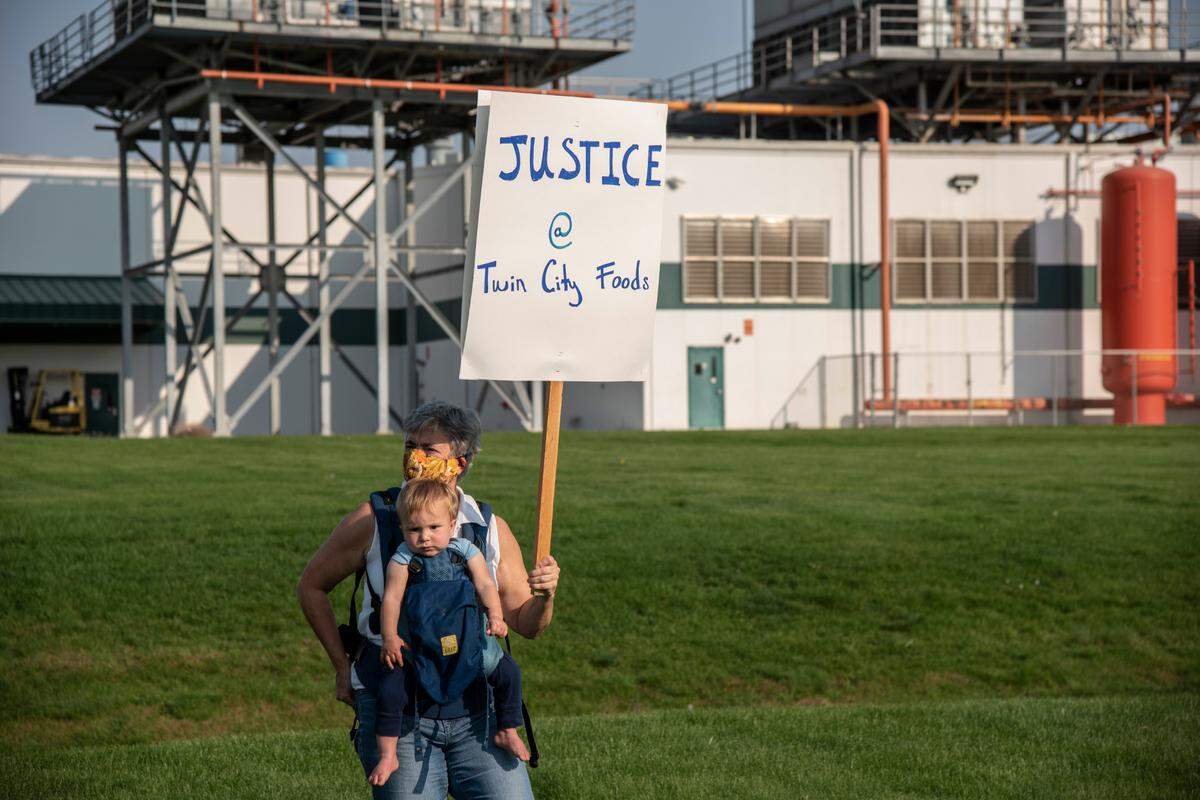
Union organizers said in a statement that Twin City Foods is not giving workers up-to-date information on sick or quarantined workers.
One of its concerns is that workers receive just six days of paid leave a year for all uses.
Workers raise issues
“I was quarantined for a week because a family member tested positive for the virus. I had to cut back on groceries that week for me, my wife, and my 6-month-old daughter because I wasn’t getting a paycheck,” says Henry Pineda, a machine operator at Twin City Foods, in a comment relayed by the union.
Jose Rafael Garcia, 57, said in August he developed COVID-suspected symptoms and quarantined at home while waiting for his test results. He spoke to the Herald in Spanish with a union member interpreting.
He notified Twin City Foods on Aug. 29 that the test had come back negative and was told he would get a call telling him when to return to work, he said.
With four days and no call back, he began repeatedly calling to get an answer until he was told he was no longer an employee, he said.
“Workers should not be afraid to declare symptoms,” he said.
He had worked as a general laborer at the plant, doing work ranging from cleaning to hand packing produce.
He said the plant had been lax about COVID precautions.
Sometimes after the company began providing masks to employees, the supply of masks would run out. Workers were allowed to enter the plant without face coverings, he said.
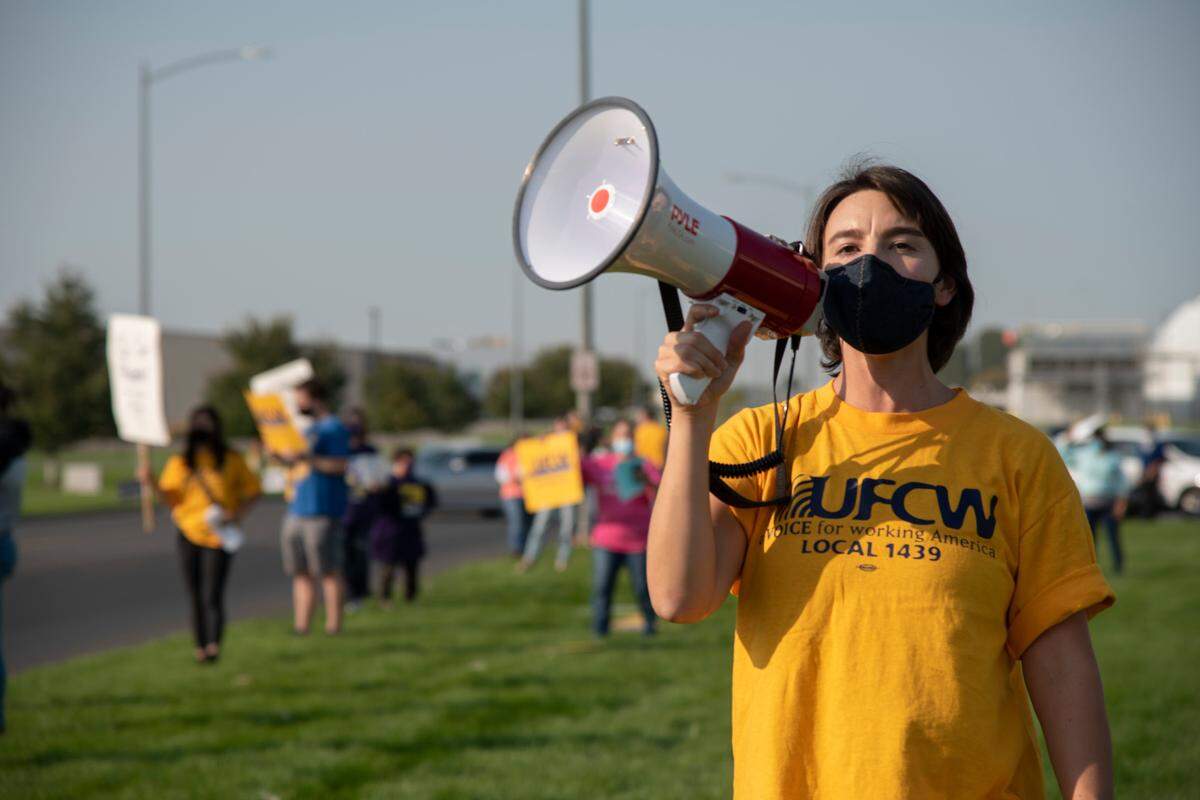
Workers were supposed to sanitize their hands when they entered the plant, but sometimes there was no hand sanitizer.
Temperature checks were done when workers entered the plant, but for one week the thermometer was not working, he said. At other times there was no supervisor on hand to check temperatures.
He thinks the plant needs fewer workers at a time in the facility to allow social distancing to be maintained and that the plant should be more rigorous about disinfecting and providing hand sanitizer, he said.
The employee who asked not to be identified said there have been some improvement. Workers must wear face coverings and hand sanitizer is available.
But physical distancing remains difficult.
“We are working one on top of another,” she said. “In the cafeteria there are four or five tables for all the employees.”
An area was set up with tables outside, but it is near the loading dock where workers have to contend with dust and wind while they eat, she said.
Twin City Foods responds
The union local says that the company’s ineffectual response to the coronavirus puts the Tri-Cities area community at risk.
But Twin City Foods said in a statement Sept. 29 that it has taken numerous steps beyond its already high standards, including additional sanitation, expanded production schedules, remote work for those who are able, physical distancing and specific employee training in all facilities.

Workers were offered masks even before they were recommended by the Centers for Disease Control and workers also now are allowed to bring homemade masks to work, Roehl said.
The company is monitoring local, state and global safety and health recommendations daily and making adjustments based on the best available guidelines, he said.
Its processes and procedures were tested when several employees contracted the virus, Roehl said in a statement.
“Our team immediately partnered with our public health professionals and executed our emergency action plan,” he said. “While many challenges lay ahead, the results of our first true test have provided significant comfort to our organization and communities and have been recognized by the public health professionals we work with as a model for other employers.”
The Washington state Department of Labor and Industries has twice inspected the Pasco plant and confirmed that it complied with all regulations and guidelines, he said.
The information the company can release about COVID-19 cases in employees in the plant is limited by federal medical privacy regulations, he said.
Union support
“The company doesn’t understand that even though we work with machines, we’re human beings,” said Octavio Zamudio, a machine operator, whose comments were provided by the union.
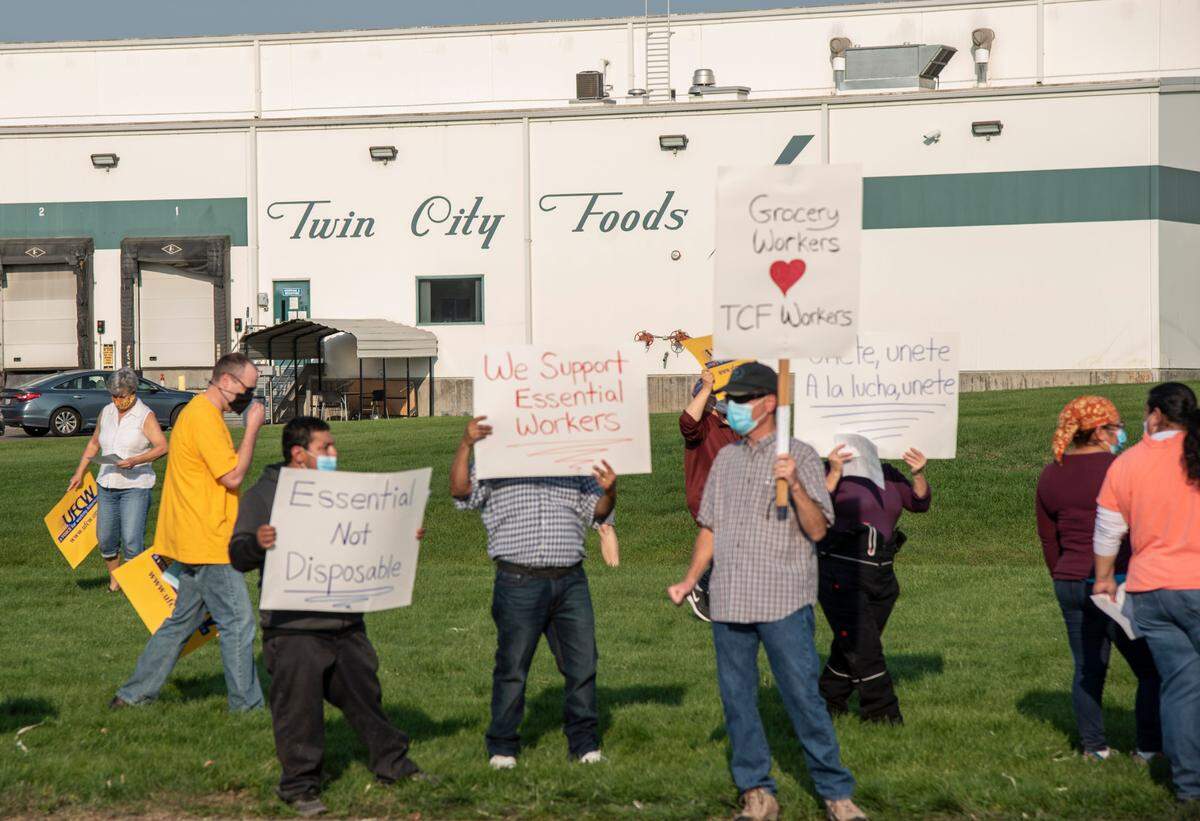
“We need a union because it’s the only way to protect ourselves and our families,” he said. “We deserve the same protections and benefits as other essential employees like hazard pay, affordable healthcare and quarantine pay.”
The unionizing effort has been supported by council members in three area towns, as the plant draws workers from across the Tri-Cities.
Workers are out without pay because of COVID-19, said Kennewick Councilman Jim Millbauer, at a recent council meeting.
“Workers should not have to endure the things they were enduring as essential workers in the food production line and the things they do for us, I feel they are not being treated fairly,” he said. “I support them legally going for the vote.”
Blanche Barajas, Pasco’s mayor pro tem, said the plant’s workers put their lives and their families at risk to earn a paycheck to support their families.
“Essential workers in the processing industry keep food on our tables,” said West Richland Councilwoman Kate Moran. “The least we can do is make sure that they have protections and a voice at work so that their families can survive and thrive.”
Other local council members who have publicly supported the union vote include Pasco Councilwoman Zahra Roach, Kennewick Mayor Pro Tem Steve Lee and Kennewick Councilman Charles Torelli.
A rally was held at 3:30 p.m. Friday outside the Pasco plant to draw attention to conditions.
This story was originally published October 1, 2020 at 5:00 AM.