
Warning: Tri-Cities will feel pain of federal changes to health care
AI-generated summary reviewed by our newsroom.
- Medicaid cuts and expiring tax credits threaten regional health care access
- Tri-Cities residents may face steep premium hikes and lost insurance coverage
- Insurers request state approval for largest premium increases in five years
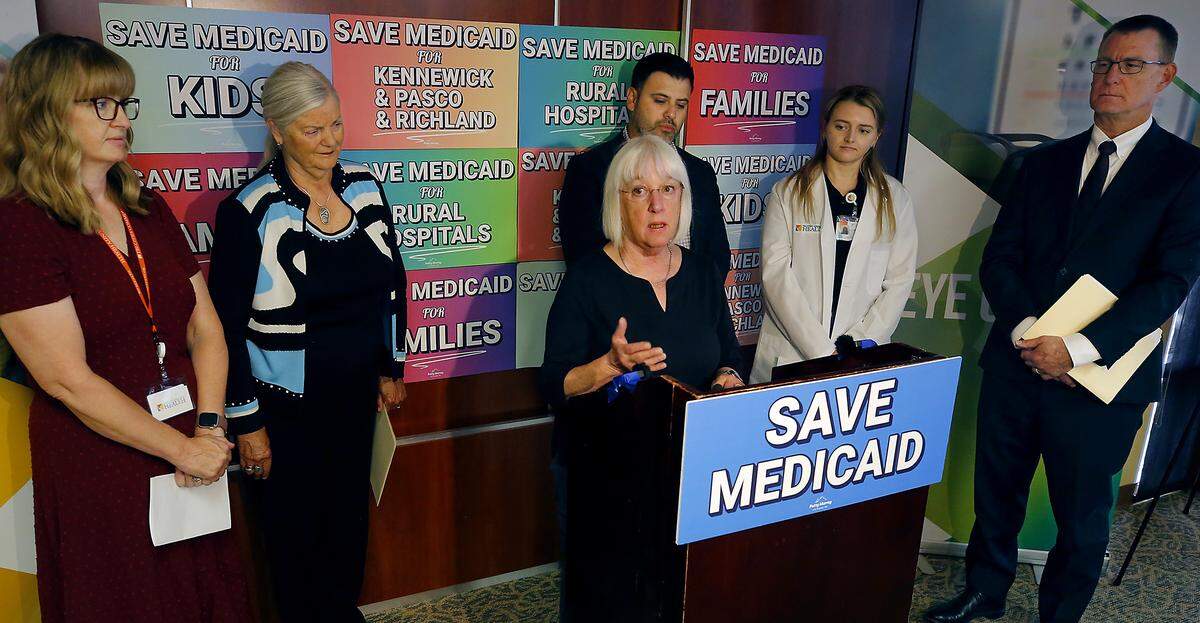
Changes to the nation’s system of health care coverage threaten to leave few in the Tri-Cities area untouched, warned health care leaders who joined Sen. Patty Murray, D-Wash., in Pasco this week.
“The cold, hard reality is that Republicans signed into law a bill that cuts Medicaid, kicks people off their health care, drives up health care costs and shutters health care providers across the country,” said Murray at a news conference at Tri-Cities Community Health.
She was there with officials from a birthing center, a Central Washington hospital and family care centers to “raise the alarm and set the record straight,” she said.
The stability of the entire healthcare system is threatened, said Brian Gibbons, president of Astria Health.
Health care will be more expensive and more difficult to access due to the One Big Beautiful Bill signed by President Trump and also the possibility that certain health insurance tax credits that lower the costs for middle-class families and small business owners will expire, she said.
“Everyone needs to understand — right now— that this is going to send premiums skyrocketing,” she said.
As a result, nearly 150,000 who purchase health insurance through the state’s health insurance exchange, Washington Healthplanfinder, could be priced out of the exchange, she said. They are people who do not have health insurance through their employers or a government program.
The Washington Health Benefit Exchange agrees that the expiration of the tax credits would hit the state hard. Its estimate is that as many as 80,000 would drop their coverage without the benefit of credits.
Now Washington has more than 200,000 who save $1,300 a year on average due to the tax credits that Republicans appear ready to allow to expire at the end of the year, Murray said.
“And even those who aren’t priced out entirely are going to take a huge hit to their family budgets,” she said.
She gave the example of a couple, both age 60, who make $82,000 a year could see their premiums triple from just under $7,000 to more than $22,000 a year.
The impacts are already being seen, Murray said.
Marketplace insurers have filed requests with the state insurance commissioner for the largest premium increases in more than five years, Murray said.
The Washington state Office of the Insurance Commissioner has reported that an average rate increase of 21% has been requested, in part due to the possible expiration of tax credits.
Maternity care and childbirth
Under the One Big Beautiful Bill that is now law, Washington state will lose $31 billion to $51 billion in federal Medicaid funding over the next decade, the largest ever cut to the program, which in Washington state is called Apple Health.
“People who lose Medicaid eligibility due to these cuts will still give birth — often arriving in labor at emergency departments without prenatal care,” predicted Cynthia Flynn, manager parter at Columbia Birth Center in Richland and the past president of the American Association of Birth Centers.
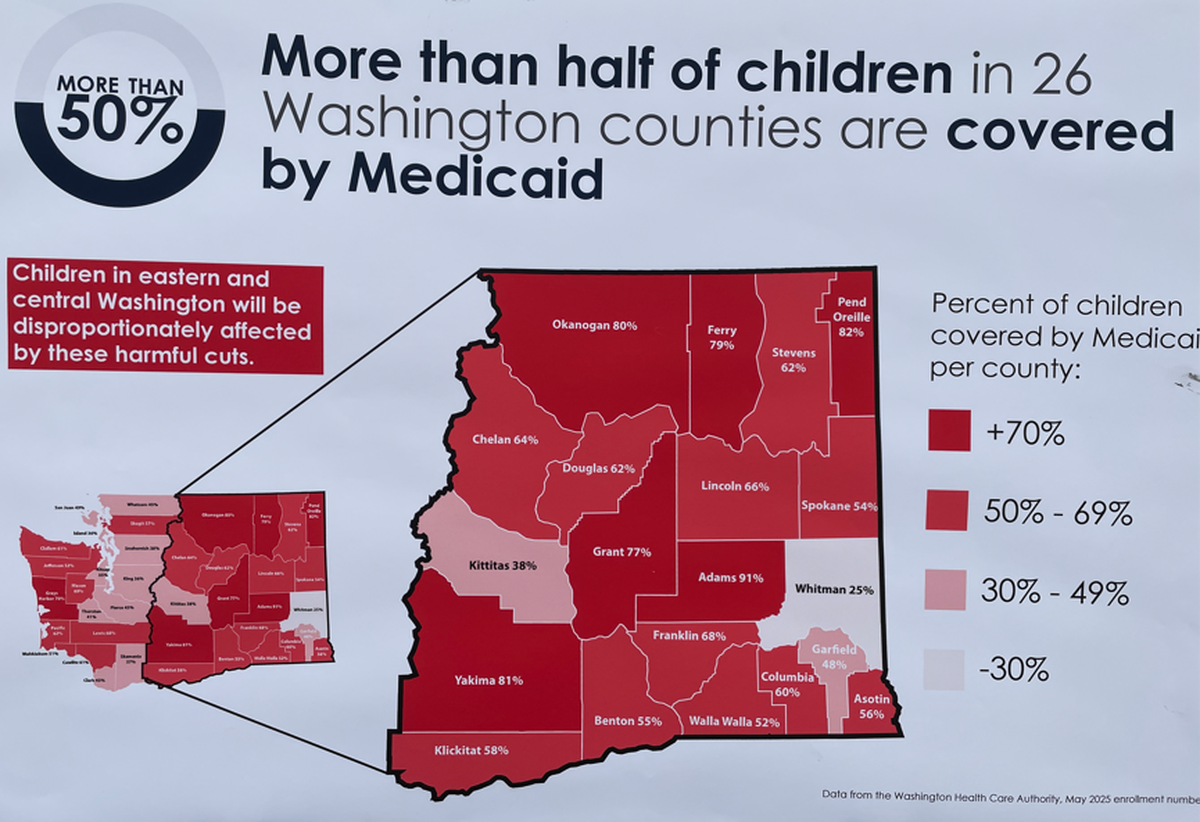
About 35% of births in Washington state are covered by Apple Health, with that percentage higher in the 4th Congressional District that includes the Tri-Cities and much of Central Washington.
Flynn has worked abroad in countries where only the wealthy receive prenatal care and seen the tragic consequences, including stillborn babies and hemorrhaging mothers.
The United States already ranks 69th in maternal mortality worldwide — meaning U.S. mothers are less likely to survive childbirth than mothers in 68 other countries — and is the only industrialized country to have a rising maternal mortality rate, she said.
“Reducing Medicaid access and reimbursement will only exacerbate this alarming trend,” she said. “Our health system is failing, and cutting Medicaid does not improve maternal and infant health.”
Stress on hospitals
The reality of the changes approved in the nation’s health care system is that more patients will arrive at hospitals without insurance or the means to pay, said Gibbons, of Astria Health, which has hospitals and health centers from Yakima to Grandview.
Under federal law, the Emergency Medical Treatment and Labor Act, or EMTALA, care must be provided to them, even if they have no medical coverage or money to pay, he said.
“We are proud to serve everyone who walks through our doors,” he said. “But here’s the truth — the math no longer works.”

EMTALA is an unfunded mandate that puts hospitals like Astria Health’s rural facilities at risk, he said.
“In communities like ours, where Medicaid is currently the lifeline, cuts to reimbursement shift the entire burden onto hospitals,” he said. “These are communities with very few large employers and limited access to private insurance.”
There is a misperception circulating that the One Big Beautiful Bill only affects health care access for noncitizens, he said.
“But the truth is far more alarming,” he said. “When hospitals like ours are forced to close departments, consolidate services or even shut down entirely due to funding shortfalls, it’s not just one group that suffers — it’s everyone ... working families, seniors and children.”
Tri-Cities Community Health
If Tri-Cities Community Health is unable to sustain services as patients lose Medicaid funding, they will have nowhere else to go but emergency rooms for care, said Kristy Needham, chief executive of the agency that serves 29,000 in the Tri-Cities region.
Tri-Cities Community Health is a safety net provider for those with limited access to health care and receives federal funding.
“We all know that the ER is not the right place for managing chronic conditions like diabetes or asthma, for treating depression, or for getting a child’s vaccine,” she said. “It’s more expensive, less personal and already overburdened.”
To remain solvent, hospitals need to find ways to pay for services, including passing costs of uncompensated care to all patients and their insurers.
The One Big Beautiful Bill is intended to reduce Medicaid fraud and to require people who are not disabled and not caring for children to work, volunteer or go to school in order to qualify for Medicaid, or Apple Health in Washington state.
But the reality is that the vast majority of those on Apple Health already are working, Murray said.
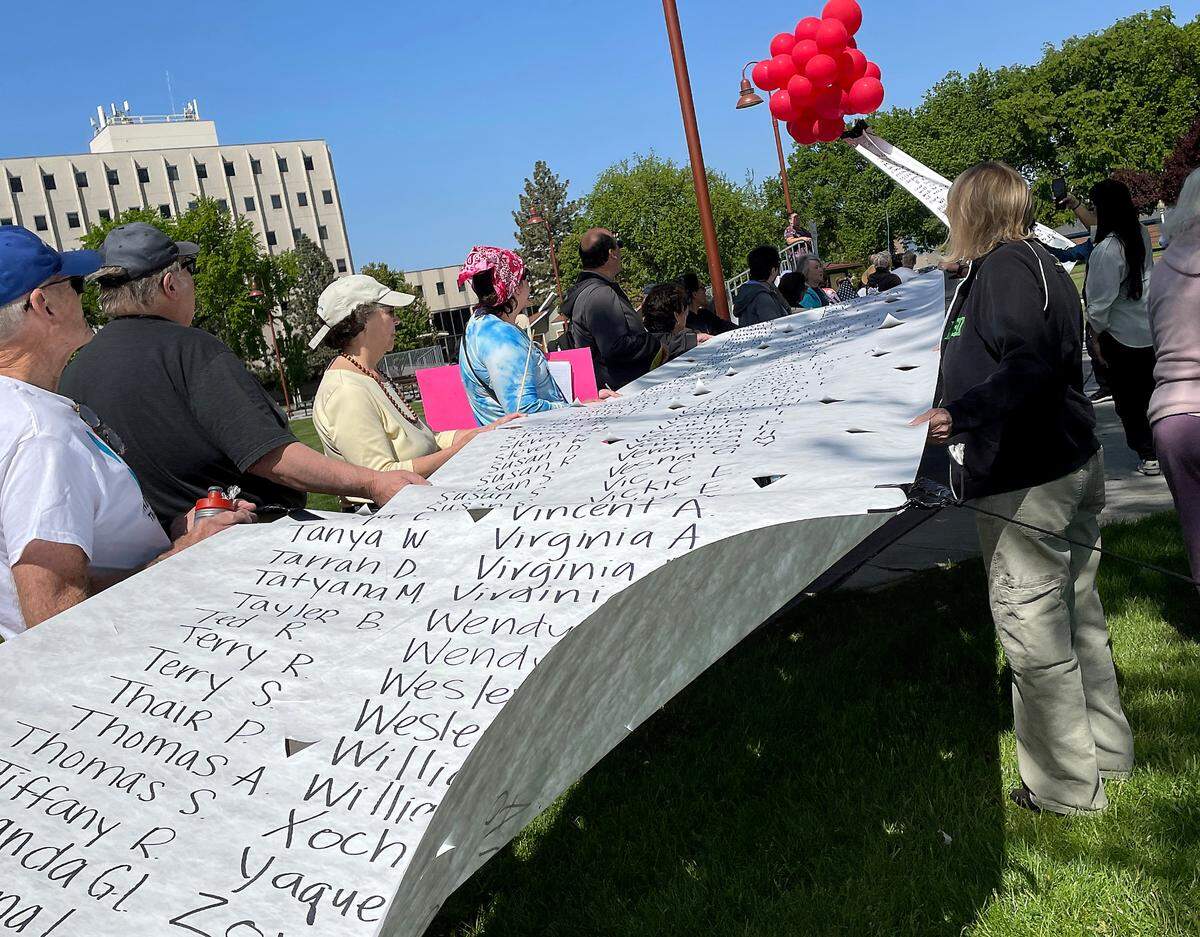
In rural areas jobs can be difficult to find and hours can vary, she pointed out. If they drop below 20 in a week, Medicaid coverage could be lost under the new requirements.
Families need to understand what is happening to health care coverage, Murray said.
“Because the health care cuts in Trump’s bill are going to hit hospitals and health care providers right in their budgets,” she said. “Hospitals in Washington state alone could lose $662 million in Medicaid revenue every year — forcing hospitals to lay off staff, cut services or even close their doors.”
It doesn’t matter what insurance covers you if you don’t have health care services available, she said.
“Americans don’t want to see their community health center shutter, or the hospital they rely on for care close down services,” she said. “They don’t want to lose their health insurance, and they don’t want their neighbors to either.”