
Eastern WA medical professionals take a clear stand on Pasco water fluoridation
AI-generated summary reviewed by our newsroom.
- Pasco City Council considers ending water fluoridation.
- Medical, dental leaders cite 75 years of studies showing fluoride's safety, benefits.
- Two sessions scheduled for public input starting Aug. 5.
Medical professionals are urging the Pasco City Council to look at more than 75 years of data and scientific studies on the safety and benefits of adding fluoride at carefully controlled levels to municipal water supplies.
It reduces cavities, it saves money in the long run for people’s health care and the levels at which cities provide fluoride in their water system are safe, said Dr. Steven Krager, the health officer for Benton and Franklin counties.
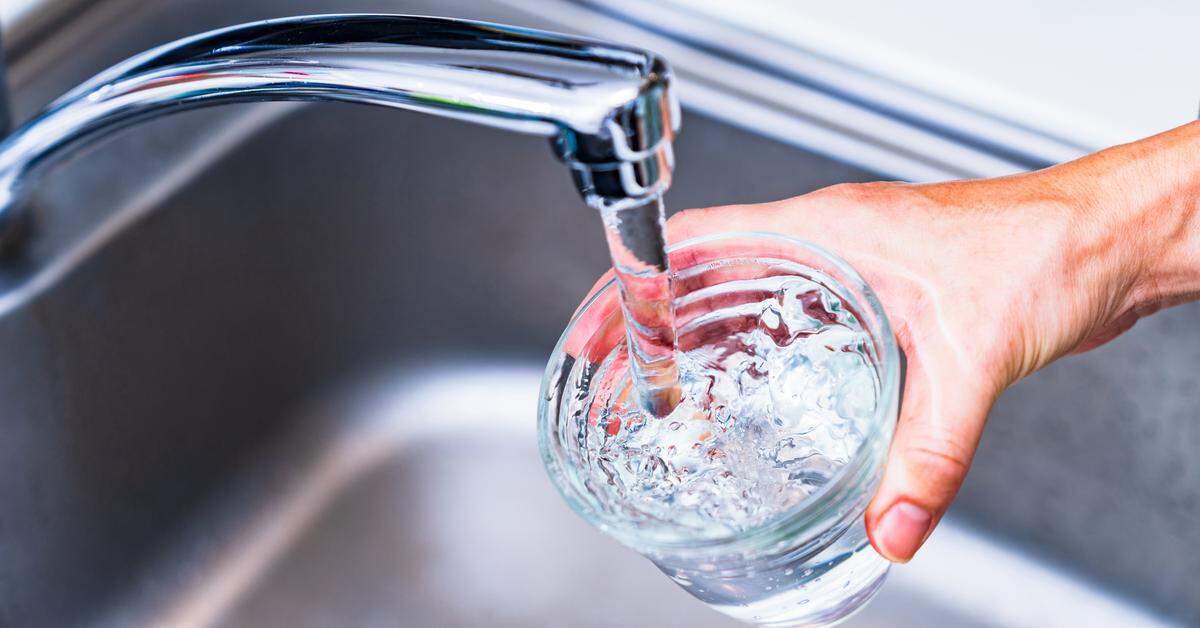
The Pasco City Council is considering ending the addition of fluoride to the city’s drinking water.
During an initial discussion June 2, four of the seven council members said they favored ending the city’s program to add fluoride to the city’s water supply.
However, before making a final decision, the council plans two sessions to hear from the public.
The first was Tuesday, Aug. 5, and the second will be 6 to 8 p.m. Sept. 17 at the Pasco City Council Chambers, 525 N. Third Ave.
People are asked to register if they plan to attend or speak virtually at either session. Registration information is posted at pasco-wa.gov/1693/Fluoride.
Fluoride has been added to Pasco water since 1998, to reach the level that the Washington state Department of Health says is optimal. Currently that is 0.7 parts per million, a boost from the naturally occurring level in Pasco water of about 0.2 ppm.
The push to add fluoride to Pasco water initially came from what was then the Washington Dental Service Foundation Board. Childhood tooth decay was the worst then in the state in three counties — Yakima, Adams and Franklin.
The foundation approached the Pasco City Council, which voted unanimously to begin adding fluoride to the Pasco water supply using grant money.
As of 2015-16, Franklin County’s rate of dental decay in children was the same as that for children statewide, according to the 2018 Washington State Health Assessment.
Adams and Yakima counties were listed as among four of 20 counties with data available that had the highest rates.
Lasting fluoride benefits
Dentist Spencer Jilek, who practiced in Pasco for 42 years before retiring, was on the foundation board that helped bring city fluoridated water to Pasco.
“We in Pasco have quite a few low income families who don’t have the advantages of dental insurance and regular dental visits,” Jilek said recently.
Fluoridated water has the biggest impact on low-income populations as the most equitable way to deliver preventative care, said Othello Dentist Chris Dorow, the president of the Washington State Dental Association.
“When you do it through water, it is going to reach everyone,” he said. “... I don’t care about fluoride as much as I care about people having the best dental health, and this very well-studied element is a good way to provide the best.”
Franklin County, which includes Pasco, also has a majority of residents, 54%, who are Hispanic and are statistically at higher risk for tooth decay in Washington state.
Hispanic children in second- and third-grades have a 50% higher rate of tooth decay compared to non-Hispanic white students, and nearly double the rate of severe decay, according to the Washington State Smile Survey.

Fluoridated water is especially helpful for children, said Kennewick Dentist Lilo Black, the president of the Benton Franklin Dental Society.
Fluoride that is ingested helps developing teeth, she said.
Pregnant women who have the benefit of fluoridated water have babies with teeth that are more resistant to cavities. Acid that then is produced by plaque bacteria is less able to break down their tooth enamel, she said.
Once children are born, their permanent teeth start to develop and benefit from ingested fluoridated water, she said.
The benefit will continue into adulthood with teeth that are forever more resistant to decay, she said.
Fluoride ‘nature’s cavity fighter’
“Basically, every (major) pediatric and dental society across the country still endorses fluoride in water systems,” Krager said.
The American Academy of Pediatrics says that tooth decay, which is almost completely preventable, is the most common chronic condition experienced by children. Water fluoridation is an equitable and inexpensive way to ensure that prevention of dental disease reaches everyone in a community, it says.
The American Dental Association calls fluoride “nature’s cavity fighter,” which occurs naturally in rivers and lakes.
“Seventy years of research, thousands of studies and the experience of more than 210 million Americans tell us that water fluoridation is effective in preventing cavities and is safe for children and adults,” it said.
It reduces tooth decay by at least 25% in children and adults, even in the era of widespread availability of fluoride from other sources, such as fluoridated toothpaste, it said.
The Centers for Disease Control and Prevention named community water fluoridation as one of the 10 great public health achievements of the 20th century.
Nevertheless in May, Utah banned adding fluoride to public drinking water, against the advice of the American Dental Association.
Denying public health measures to Americans is “disgraceful,” it said in a press release as the Utah governor signed a bill banning community water fluoridation into law. Water fluoridation prevents painful dental disease, it said.

“As a father and a dentist, it is disheartening to see that a proven, public health policy, which exists for the greater good of an entire community’s oral health, has been dismantled based on distorted pseudo-science,” said Dentist Brett Kessler, president of the American Dental Association, in a statement.
The city of Calgary in Canada provides a demonstration of the value of fluoridated water, the American Dental Association said.
Calgary fluoridated its drinking water for 20 years until 2011, but then stopped largely as a cost-saving measure.
University of Calgary researchers who later compared tooth decay in children in Calgary to those in nearby Edmonton, where fluoridation of water continued, concluded that Calgary children had a significantly higher number of cavities than children in Edmonton.
Residents voted to resume fluoridating their water 10 years after the practice was stopped and the city spent $28 million on the infrastructure needed to resume fluoridation this June after supply chain delays.
“Backed by experts. Supported by Calgarians,” the city posted on its website.
Fluoride skepticism
Along with an increase of skepticism about vaccines has come skepticism about the safety of fluoride.
Opponents to fluoridated water have most recently cited a review published online in JAMA Pediatrics in January that looked at 74 studies to find an association between fluoridated water and lower IQ scores in children.
But Jilek was highly skeptical, questioning the integrity of the studies that were looked at and saying the purported link between lowered IQ and fluoridated water is questionable. More studies need to be done, he said.
Such studies rely on data from India and China, where the amount of fluoride is not controlled as it is in the United States, he said.

Concerns also have been raised about how IQ levels were measured.
Dorow said that other studies have not found the same result.
Nearly anything can be toxic in a large enough amount — the difference between poison and medicine is dose, he said.
“The most important thing is that it has been proven by multiple studies done with the scientific method that the use of the therapeutic dose of fluoride ... decreased decay rate by 25%,” Dorow said.
Jilek pointed out that tooth pain was one of the leading causes of school absenteeism as the Pasco council was initially deciding whether to add fluoride to its water system.
At the June 16 Pasco City Council meeting, former Pasco councilwoman and retired educator Rebecca Francik said that within five years of fluoride being added to the city’s water in 1998, she and other teachers in the Pasco School District noticed fewer children with tooth pain and tooth decay, and fewer students absent or being sent home from school.
“What changed is we put fluoride in the water,” Francik said. “It made a tremendous difference in what we saw in the school systems. The (students) weren’t going out for toothaches.”
Dentists who see the value of fluoridated water are asking the Pasco council to consider the matter carefully, before making a decision on whether to end the service.
“I don’t think we should be making ... emotionally-based decisions on topics like this,” Black said. “I think we really need to ask for our council members to do their due diligence and to seek out proper sources.”
This story was originally published August 5, 2025 at 5:00 AM.