
Is Puget Sound sewer sludge headed to Tri-Cities for disposal? What we found out
The rumor that a Seattle suburb wants to send a byproduct of the sewage treatment process to Eastern Washington is circulating in Tri-Cities political and business circles.
Some are saying the city of Bellevue is looking for land in or near Pasco to bring dry sludge from its sewage treatment system.
“Possibly there is some economic use of the dried waste but the idea of their poop in our backyard has a funny smell to it,” real estate executive Dallas Green observed about the persistent rumor.
We found he was right, it isn’t totally accurate, but there is some truth to it.
Bellevue sewage, for the record, is treated at King County facilities, not city-owned ones.
The rumor is connected to last year’s sale of the Kahlotus Cattle Ranch, a 1,174-acre spread near Connell, to entrepreneurs who want to turn it into a soil farm.
SolarSoil Farm would bring highly treated sewage sludge from Bellingham, about 90 miles north of Bellevue. The farm would dry it out and use is as soil to support bamboo-type crops. The bamboo could be used to produce toilet paper or similar products.
The sludge, dirt and crops would be contained in engineered lagoons that would be double lined and covered if needed to control methane and odor. The site is about 36 miles north of Pasco.
It is the brainchild of two Bellingham entrepreneurs, Brent Cowden, a truck company owner, and Larry McCarter, a garbage company owner. Cowden is managing partner. McCarter is general manager. The venture is self-funded.
Cowden, operating through a limited liability company, paid $1.7 million for the ranch, Franklin County property records show.
McCarter confirmed to the Tri-City Herald that the property on Mesa Kahlotus Road is the site of their SolarSoil project. The proposal also is being called the Connell Soil Project.
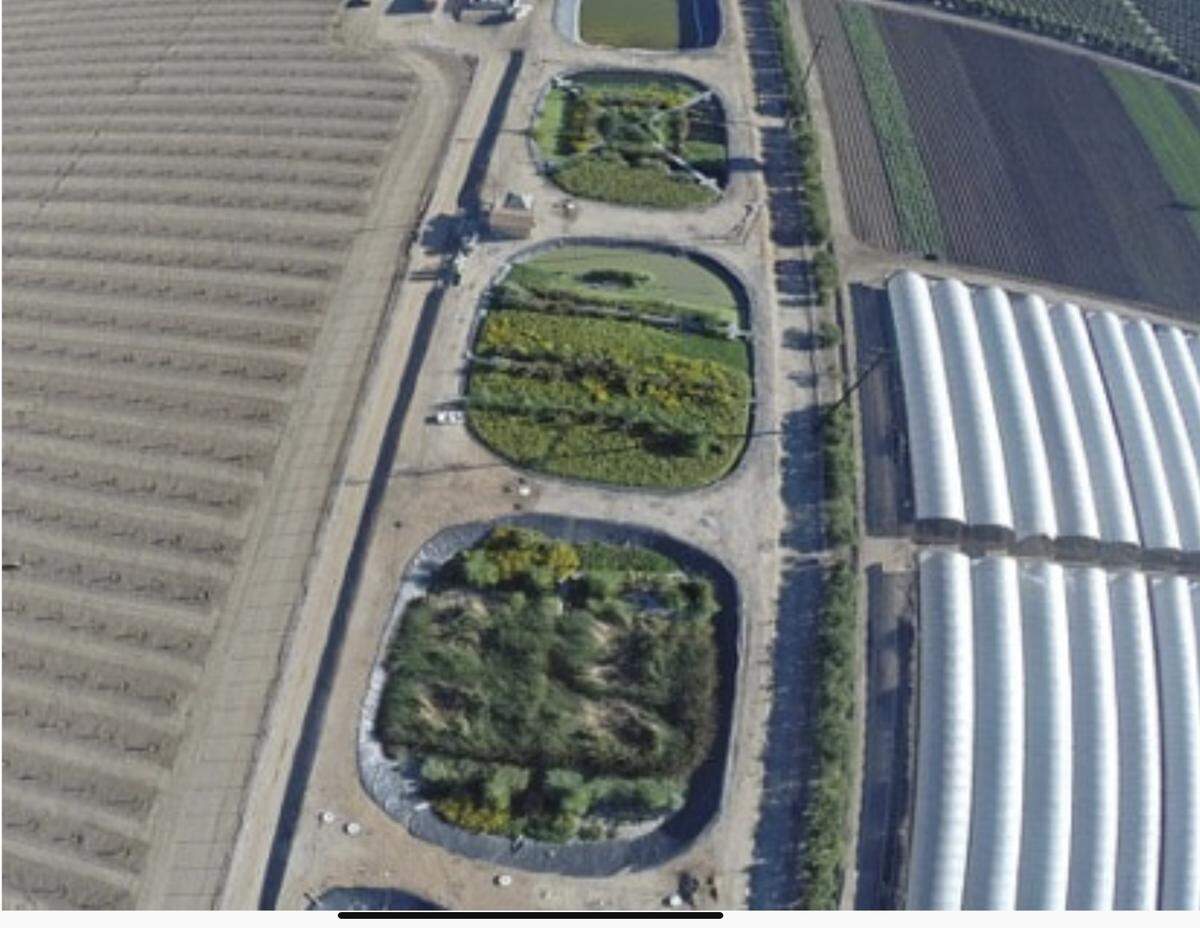
Concept is preliminary
The concept is very much in its formative stage and there is no guarantee it will come to fruition.
SolarSoil Farm has not applied to Franklin County for the conditional use permit it needs. It does not have a contract with Bellingham.
McCarter is hopeful it will be selected by the city of nearly 100,000 residents as a solution to the environmental challenges it faces with its current practice of incinerating its waste. The city’s sewage plant produces about 18 tons of sludge a day. That’s about half a truck load.
Derrick Braaten, Franklin County’s planning and building director, confirmed that officials met with a soil farm representative earlier this year. The project will require a conditional use permit or CUP, he said.
He referred questions to McCarter and Cowden.
“Sewage sludge handling has long been a significant burden on municipal governments, exacerbated by new EPA rulings,” they wrote in a statement.
“Traditional methods have proven toxic, but SolarSoil Farm envisions a future where sewage sludge management is not only safe but also environmentally beneficial. By turning sewage into renewable fiber products, such as toilet paper, SSF aims to revolutionize waste management,” they wrote.
In a followup interview, McCarter told the Herald the company has hired engineers to design the lagoon system and work on the permit application.
He hopes to break ground in 2025.
Clean air violations
McCarter said he instigated the soil farm concept as he watched the city of Bellingham wrestle with legal challenges to its longstanding practice of incinerating sludge at its Post Point treatment plant.
In March, the Northwest Clean Air Agency, which enforces state and federal laws on air quality, cited the city for violations associated with the incinerators.
In April, the city indicated it was updating its incinerators to reduce carbon emissions. The statement said it was seeking other options for disposing of sludge after abandoning a digester plan as too expensive. . Bellingham officials could not be reached Friday to comment on their interest in the solution proposed by SolarSoil Farm.
Sludge is the nutrient-and-chemical rich material left after wastewater from showers, sinks, drains and toilets moves through the treatment process.
A related term, “biosolids,” refers to sludge that is further treated to remove pollution and pathogens to meet EPA standards. The level of treatment determines how it can be disposed of. Biosolids may be used as fertilizer on crops.
The EPA notes the terms are used interchangeably. SolarSoil is concerned with sludge.
McCarter noted that other cities have mothballed their sewage sludge incinerators. Edmonds and Lynnwood both abandoned the practice.
Lynnwood agreed to stop incinerating sludge by May 31 after it was fined by the Environmental Protection Agency for air quality violations last fall.
Elegant outlet?
McCarter called the soil farm offers an elegant outlet for treated sludge that’s based on his 30 years in the garbage hauling business.
His company hauls 500-600 tons of household garbage from Whatcom County each day. The 18 tons of sludge coming out of tits wastewater plan struck him as a solvable challenge.
“There’s got to be a way,” he said. “Put it somewhere safe, where the nutrient value can be extracted within the protective shell of a double lined, protected lagoon.”
SolarSoil would handle only the highly processed sludge, not raw sewage. The Environmental Protection Agency regulates wastewater treatment. Isolating material in lagoons is not a new idea.
“I’m not inventing it. It’s just that nobody is doing it,” he said.
Franklin County offers good conditions for the concept, namely a hot, dry climate.
“You guys have an evaporation rate like no other,” he said.
The farm would operate indefinitely, but is preparing a close out plan as part of the startup.
Sludge-turned-soil could be used as a cover material for Waste Management’s landfill near Washtucna if its tests clear any pollutants.