U.S. housing prices are finally falling. Will Tri-Cities see the same ‘big drop’?
National housing experts say home prices should be falling, but that isn’t happening in the Tri-Cities. But experts tell the Tri-City Herald that could be a good thing for both buyers and sellers.
While many major metro areas are seeing a jarring shift from a historic sellers market to free-falling home prices, the Tri-Cities has found itself in something closer to a balanced market.
Fortune magazine recently predicted the U.S. would see the second largest home price drop since the Great Depression.
Tri-City Association of Realtors President Ron Almberg said that they don’t expect to see homes on the lower end of the price range decline here because there is still strong demand for houses in the Tri-Cities area.
Still, higher end homes are seeing some adjustments, he said, because buyers have stronger bargaining positions now.
Almberg said the skyrocketing home values seen over the past two years, with a nearly 20% increase last year, are cooling. Average and median home sale prices in the Tri-Cities have risen about $150,000 since 2019, but over the last few months the average has stopped climbing drastically, according to data from the real estate association.
Home prices are expected to level off and see a much more manageable increase of about 4% this year. There are more homes on the market and sitting longer than the Tri-Cities has seen in several years.
Homes available
At the beginning of 2022, homes were being snapped up within a week or two of hitting the market, and now they’re averaging closer to 50 days, Almberg said.
While inventory in the Tri-Cities area remains low, especially for the most affordable properties, there are now significantly more on the market than over the past two years.
Almberg said the current inventory is about 700, compared to the record low of about 150 in March 2021.
“The good news is buyers have a lot more selection out there, realtors are able to do open houses again,” he said. “Anything under $350,000 is probably seeing multiple offers, but in your medium and upper range there isn’t going to be a bidding war.”
They’re also beginning to see buyers able to negotiate a little more on things like closing costs, minor improvements and landscaping, Almberg said.
It’s still a great market to be a seller though, he said.
Not only are homes unlikely to lose value, but people looking to move to something bigger will be able to capitalize on the value their current home has built while being able to negotiate a better deal on their next.
Interest rates
As long as builders don’t overextend themselves, they should be insulated from national trends as well, Jeff Losey, president of the Homebuilders Association of the Tri-Cities, told the Herald.
The biggest shift he expects builders to see is a slow down in remodeling due to increased interest rates.
“At the beginning of the pandemic, there was a lot more focus on remodeling your homes,” Losey said. “If most people have home loans south of 3%, them wanting to refinance (to pay for remodeling) isn’t going to happen at 6%.”
Losey said it’s important to keep in mind that while there are national price drops for new homes, what is happening today is not the same as 2008 when the market collapsed.
“Those types of loans went by the wayside,” Losey said. “The bottom isn’t going to fall out like someone pulled the plug on a bathtub, so if you’re waiting for a big drop it’s not going to happen.”
He said the primary concern in the Tri-Cities right now is building enough affordable homes, where the demand is highest.
Supply chain issues are also still a problem, with builders still struggling to get appliances that meet Washington’s high energy standards.
Losey said he expects to see more variation in the types of homes built, such as townhomes and duplexes.
A while home prices have certainly gone up significantly, the Tri-Cities is still in better shape than many metro areas, he said.
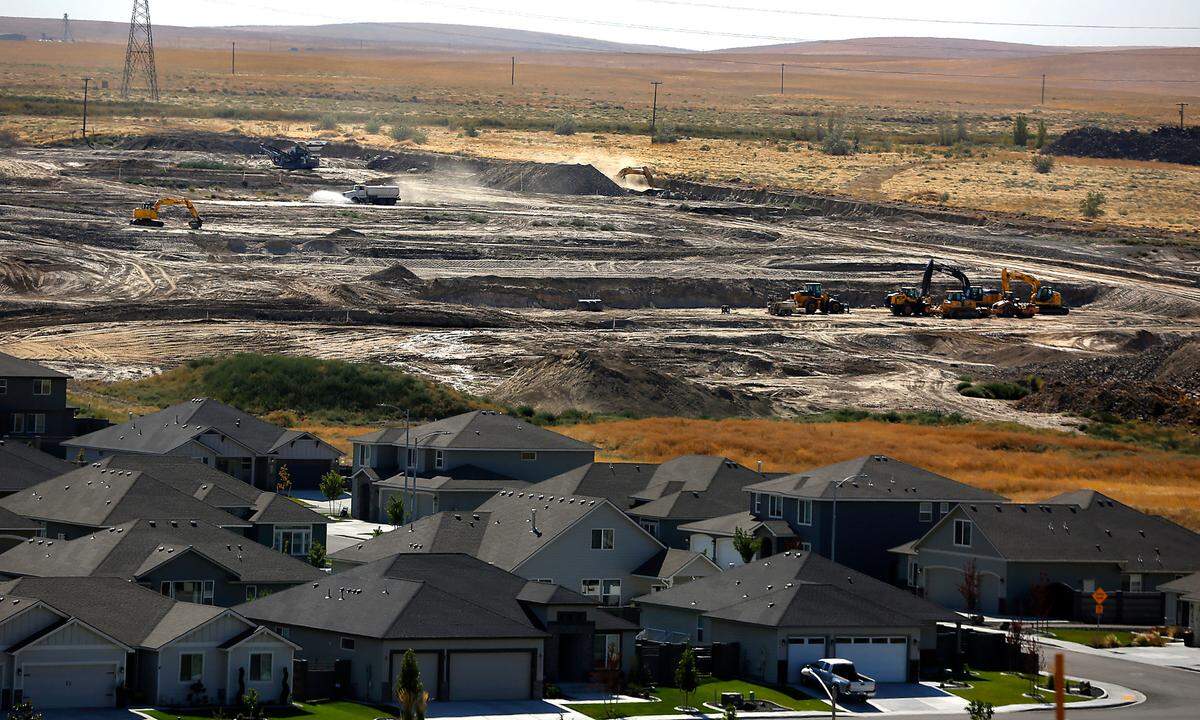
He said one of the areas likely to see a run on homes in the $350,000 to $400,000 range is Southridge in Kennewick, where Hayden Homes is working on a large development.
Losey said the primary driver of home prices in the Tri-Cities is the cost of lots to build on.
“We’ve started using the word ‘attainable housing,’ because were finding most of the new homes being built are unattainable for Tri-Citians based on what they can afford,” Losey said.
“The first thing you have to get past is the cost of dirt,” he said. “What used to be a regular infill lot, even a couple years ago was south of $100,000. Now you’re paying $160,000 to $190,000 for that same lot.”
He said that as lots start nearing $200,000, it’s almost impossible to build a home that will sell for less than $400,000.
Local trends
His advice to potential buyers is to pay attention to what they see locally, rather than national trends.
“We are still a very, very attractive market for home buying,” he said. “All real estate is local. Pay attention to the local market, and keep in mind that what they’re hearing in the national news doesn’t necessarily reflect our local market.”
“I hear a lot of alarm over national news, and it doesn’t reflect the reality on the ground of what we’re seeing in our local market here,” Losey said.
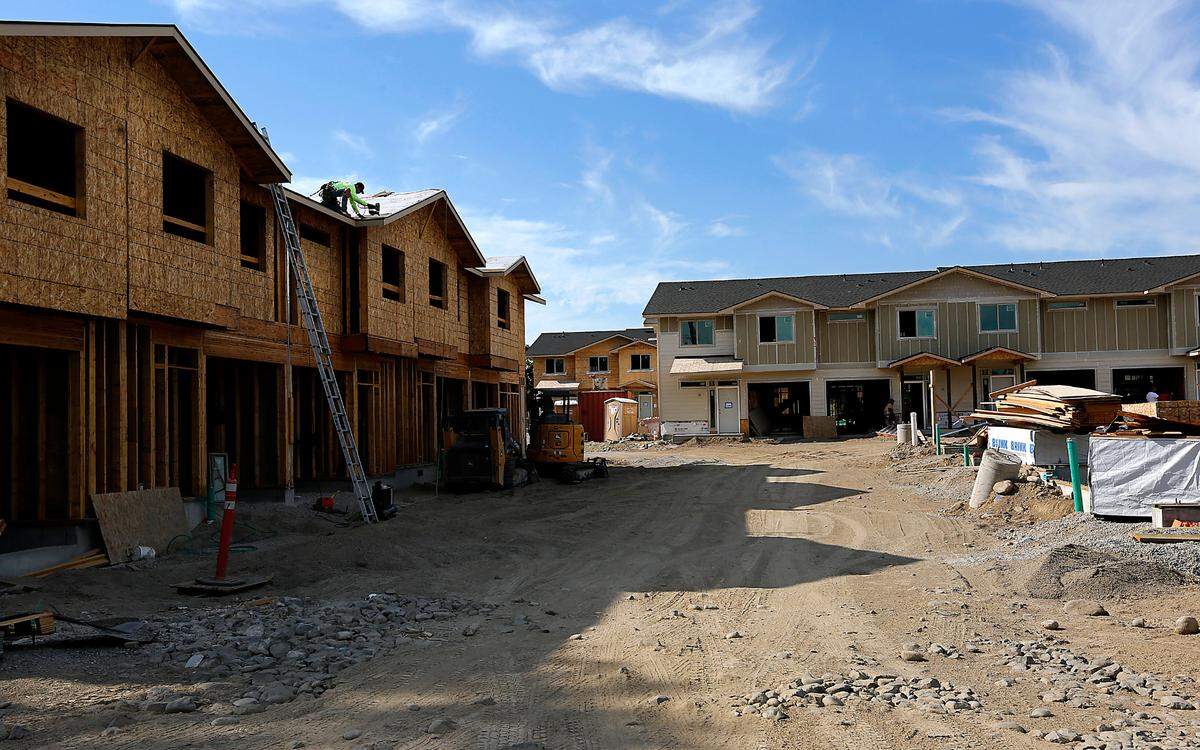
Building statistics provided by the homebuilders association show that the value of permits for homes being built this year is still in line with strong, pre-pandemic numbers.
While the number of homes built and their value will be less than 2020 or 2021, it indicates that the market is settling after a historic spike.
Pasco has seen the largest dip in new home permits this year, at 194 through the end of September compared to a five-year average of 385 for the same time period.
That isn’t necessarily indicative of a slow down in Pasco though. The number of build-ready lots has dwindled, but the city is making huge efforts to set up massive growth on the west side in the Broadmoor development and to its north, where an annexation is in progress.
Grading work has already begun for future subdivisions in Broadmoor that will bring 1,300 new homes, and thousands more are expected in the area in the next few years.
Richland also will see significant growth in the Badger Mountain South area, where several new subdivisions are in progress. Those communities also have planned townhomes.
The total value of permits for new homes in Benton and Franklin counties year-to-date is $337 million, compared to $416 million in 2021 and $341 million in 2020 during the same time period.