Exclusive | Tri-Cities home prices hit ‘crazy’ historic high. New advice for buyers and sellers
Home sale prices in the Tri-Cities have more than doubled in 10 years, and last month home prices hit their highest ever.
Year end statistics show that both the average and median price of homes sold in the Tri-Cities rose 116% since 2011. And the past five years in particular saw especially sharp price increases.
In January, median home sale prices in the Tri-Cities set a record at $415,000, with averages reaching an all-time high of $478,000.
Experts told the Herald that 2021 was a particularly rough year for home prices due to a variety of factors ranging from the COVID pandemic to supply chain shortages and labor woes.
Jeff Losey, executive director for the Homebuilders Association of Tri-Cities, told the Herald that normally in an economic downturn, home sales slow down.
The opposite happened nationally, and in the Tri-Cities, since the pandemic began, with home sale prices hitting record highs and inventories nationwide at their lowest levels in history.
“It’s crazy how fast they’ve increased just in one year on some of these homes, it makes no sense and it’s throwing the market into a tailspin,” Losey said.
Median home sale prices in the Tri-Cities rose 16.3% year-over-year, and in terms of pure dollar amounts, the $53,000 jump was twice that of the average increase seen over the previous five years.
But Tri-City Association of Realtors President Ron Almberg said while home prices have risen, they haven’t spiked.
In many areas, real estate prices soared dramatically after a long recovery from the 2008 economic downturn, whereas in the Tri-Cities home prices leveled off and built at a steadier pace.
Experts told the Herald that 2021 was a particularly rough year for home prices due to a variety of factors ranging from the COVID pandemic to supply chain shortages and labor woes.
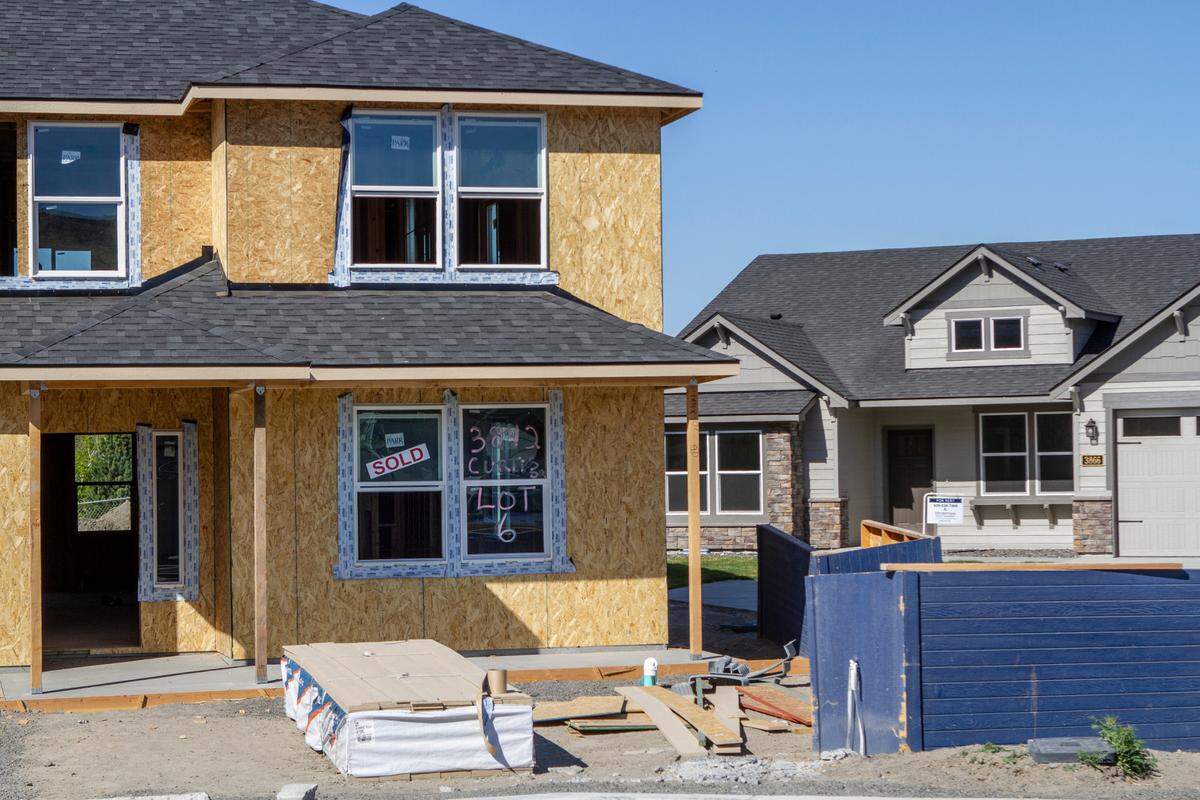
Homebuilders Association of Tri-Cities Executive Director Jeff Losey said that normally in an economic downturn, home sales slow down. The opposite has happened since the coronavirus pandemic began, with home sale prices hitting record highs and inventories nationwide at their lowest levels in history.
“It’s crazy how fast they’ve increased just in one year on some of these homes, it makes no sense and it’s throwing the market into a tailspin,” Losey said.
Median home sale prices in the Tri-Cities rose 16.31% year-over-year, and in terms of pure dollar amounts, the $53,000 jump was twice that of the average increase seen over the previous five years.
Rising costs
In 2011, the median home sale price in the Tri-Cities was $174,900.
The Tri-Cities saw 2021 end with median home sale prices reaching $378,000, a 116% increase.
While areas such as Seattle and Portland saw similar increases, theirs began at the bottom of a slump in home prices, which took about 6 years to recover to pre-recession prices.
“In the Tri-Cities we have been very blessed and we’ve really been in a unique area that we have not trended with national numbers. We’ve always been a little different, and because of the government dollars we see coming into the area we’re more protected,” Almberg said.
“We don’t see the spikes in the other directions either. Have home values appreciated here dramatically? Yes, but not anything like we’ve seen in the Seattle, Vancouver, Portland markets,” he said.
Unlike many large metropolitan areas, the Tri-Cities did not see home sale prices plummet after the 2008 financial crisis. Instead home sale prices held relatively steady, with slight increases until 2014 when prices began trending upward nationwide.
It took areas like Seattle until 2014 to recover to pre-recession home prices, and as such their 10-year home sale price increases appear much more drastic.
In the past five years though, the Tri-Cities has proven to be one of the hottest markets around.
From 2017 to 2021 the Tri-Cities saw home sale prices increase as sharply as cities like Seattle and Austin, Texas, at roughly 68%.
That’s about triple the national rate median home sale prices increased — nearly 23%— during that same period.
That’s also higher than the Washington state average of 62% in that time, according to data from real estate aggregator Neighborhoodscout.com.
An analysis by SeattlePI shows that while prices have slowed down a bit in Seattle, the surrounding metro area has seen much larger increases in prices since the COVID pandemic began.
The east and southeast portions of King County saw increases of more than 26% last year, 10% higher than the Tri-Cities.
While the Tri-Cities may not have the fastest rising home prices in the state just yet, the area does boast stability not seen in major metro areas.
Almberg said there is very little risk of home prices losing value here when markets are volatile.
Supply and demand
With home inventory at a historic low, the Tri-Cities saw an average of just 290 active listings in January, home prices will continue to rise, but not because builders are building more expensive homes.
One area of relative stability over the past five years has been the average cost of new homes built, according to data from the Homebuilders Association.
The costs stayed relatively flat from 2017 to 2020, and then saw a slight increase last year as the pandemic, supply chain issues and labor shortages created difficulty delivering new homes to market.
Losey said the time it takes to build homes is becoming a far larger issue. He said that part of that issue is that bidding on materials has become much more difficult. Builders can no longer solicit a bid a month out for materials, and are now competing for pricing materials often in just 24 hours.
Losey estimates projects that once took 3 to 4 months to complete now stretch out to 6 to 8 months, or longer.
Because the prices of materials are shifting so quickly, Losey said it’s also harder for developers to list new builds.
Losey said that developers can no longer just build a house to specifications and list it ahead of time, they’re having to wait until the point the home is complete because costs may have shifted during the building process.
For example, when beginning a build, they simply cannot predict what electrical, HVAC and appliance costs are going to be months down the road.
Labor shortage
He said that one bright spot in the Tri-Cities is that the local school districts have strong trade skill education programs, which has helped developers mitigate the impact of a nationwide labor shortage.
“There are plenty of jobs to be had if we could find those skilled workers to take those positions. It’s been an issue for the last decade, but this market has made it worse,” Losey said.
“The one thing I would say about that, knowing what other areas have to work with as far as vocational skills training goes, is that Tri-Tech does a spectacular job reaching out to elementary age kids to find their skill center.”
Losey said one recent example is an electrical program that began with 50 slots for students, but had more than 100 applicants.
Finding stability
Almberg estimates that before prices in the Tri-Cities will stabilize, the area’s inventory will need to climb back to about 1,200 active listings.
That’s a feat that both Almberg and Losey estimate will take several years.
“As a matter of fact, if we continue to build at the rate that we’re building, we will not overcome the lack of inventory for another 10 years, unless we’re able to change zoning laws and density laws to allow for more options,” Almberg said.
Almberg pointed to an initiative by Gov. Jay Inslee and the Washington state legislature to make some big changes to development and zoning laws in order to allow more “middle housing” to be built.
Under the proposal, local zoning laws would be required to allow middle housing within a half mile of major transit stops in cities with populations over 25,000.
It would also allow four-plexes, tri-plexes, and duplexes to be built on most other lots throughout the cities. For cities with a population above 10,000, they would also have to allow duplexes to be built on most lots.
Almberg said that another big reason for high home prices is that the price of the lot itself has risen dramatically, estimating that an average lot costing $35,000 to $45,000 a decade ago is now going for more than $125,000 in the Tri-Cities.
Changes to density requirements would allow developers to divide that cost between multiple units.
Losey said that the current inventory crunch can be attributed to factors such as mitigating the 2008 downturn and a new generation of residents ready to become first-time home buyers.
“We kind of hit a perfect storm, we’re so low on inventory, and after the market crashed in 2008, there was a huge decline in the number of homes being built,” Losey said. “The number of homes being built had been in decline for a number of years until 2014 or 15 and what happened at the same time was we had a lot of buyers coming into the market.”
In 2011, there were 2,881 homes sold in the Tri-Cities. That number rose dramatically, to about 5,000 homes sold in both 2020 and 2021. New homes being built account for about 1,650 homes for each of the past three years.
Where new homes are being built also shifted because new lots are being snapped up as soon as the infrastructure is in place.
Because of lot availability, in 2021 Richland knocked Pasco off the top of the list for the most new homes set to be built, and West Richland overtook Kennewick in permits requested for new homes.
Avoiding buyer’s remorse
These factors combine to make a very tough to navigate real estate market. Almberg estimates he’s been seeing seven offers on average for every home sold.
“In this market because there’s so few homes available, you get whatever you can,” Losey said.
Almberg said there is some good news though. He expects price increases will slow down some in the next year.
“It sounds to me like we’re going to see a much more reasonable appreciation rate, between 9% and 12%, and maybe lower in some places,” Almberg said. “Because it’s coming to a place where, for first-time home buyers, it’s just not affordable to buy homes and I think that will slow down the market a little bit.”
He also has some advice potential buyers can take to ensure the process runs smoothly, and they don’t get in over their head in a bidding war.
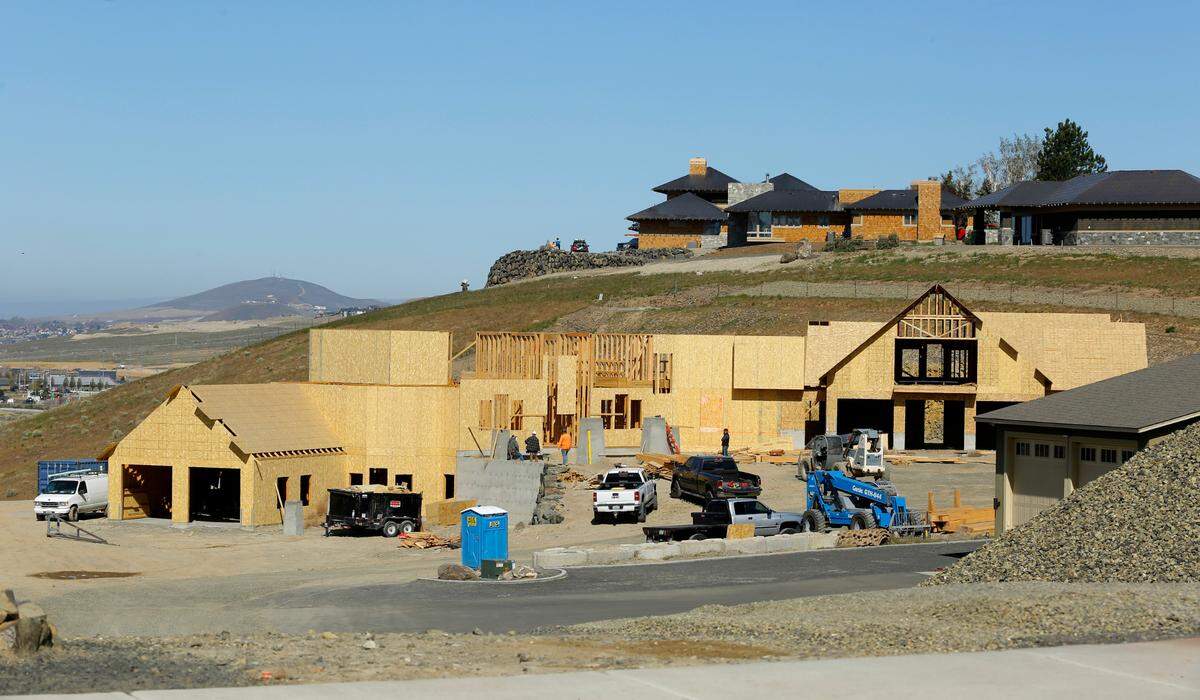
“They may have to lower their expectations of what they can afford, what $500,000 used to buy you is not what you can expect today,” he said.
“Go in with a long-term plan, don’t think short term. The home that you’re buying is probably not going to be your forever home, but you’ll be able build equity and, in turn, wealth,” he said.
While websites like Zillow have made it easier than ever to buy a home, Almberg recommends working with a local team who know the area and are savvy enough to negotiate a good deal for you and the seller.
“There are a lot of decisions that have to be made when you’re in a multiple offer situation. They’re taking into consideration not only the numbers, but who they’re dealing with, and local lenders and Realtors who can make the process move smoothly,” he said.
“A company outside of the state is probably not going to be able to provide that level of service. If I know the agent on the other side and their lender, the tip of the hat is probably going to go to them.”
He also said that working with a local team means they can coordinate more easily and ensure both sides get the maximum benefit. A local team on both sides can also help sellers close more quickly.
Almberg said that while it’s true that homes are getting more expensive, the relatively protected market in the Tri-Cities means that buying a home here is a solid investment opportunity.
“I think that while it’s tough for home buyers, they have to see this as a long-term investment, as part of their investment strategy and it’s still a wise investment when it comes to making your money work for you,” he said.
”The leverage home ownership offers, and being able to build wealth and value in your portfolio — home ownership is still the way to go,” he said.