
10 years, 3 failed elections. How the Mariners helped Kennewick grow its convention center
It took more than a decade and three rejections by voters at the ballot box, but it’s go time for Kennewick’s cherished dream of a vast new convention center to bring meetings, sporting events and even concerts to town.
The $71.3 million expansion of the Three Rivers Convention Center is finally happening. And it’s oddly thanks in part to the Seattle Mariners.
A sales tax initiative approved by the state Legislature more than 20 years ago to build then-Safeco Field will help bring events back to the Tri-Cities that now choose larger venues in Seattle, Portland, Boise and Spokane.
“Our intent is to get more people in town,” said Corey Pearson, the Kennewick Public Facilities District executive director. “New dollars is the goal.”
The city and its public facilities district will break out the golden shovels for a ceremonial ground breaking at 3 p.m. March 24 at the site, 7016 Grandridge Blvd.
Work for the future parking lot starts April 1. The expanded convention center will be ready for guests by fall 2026, said Calvin Dudney, board president for the Kennewick Public Facilities District, and Pearson.
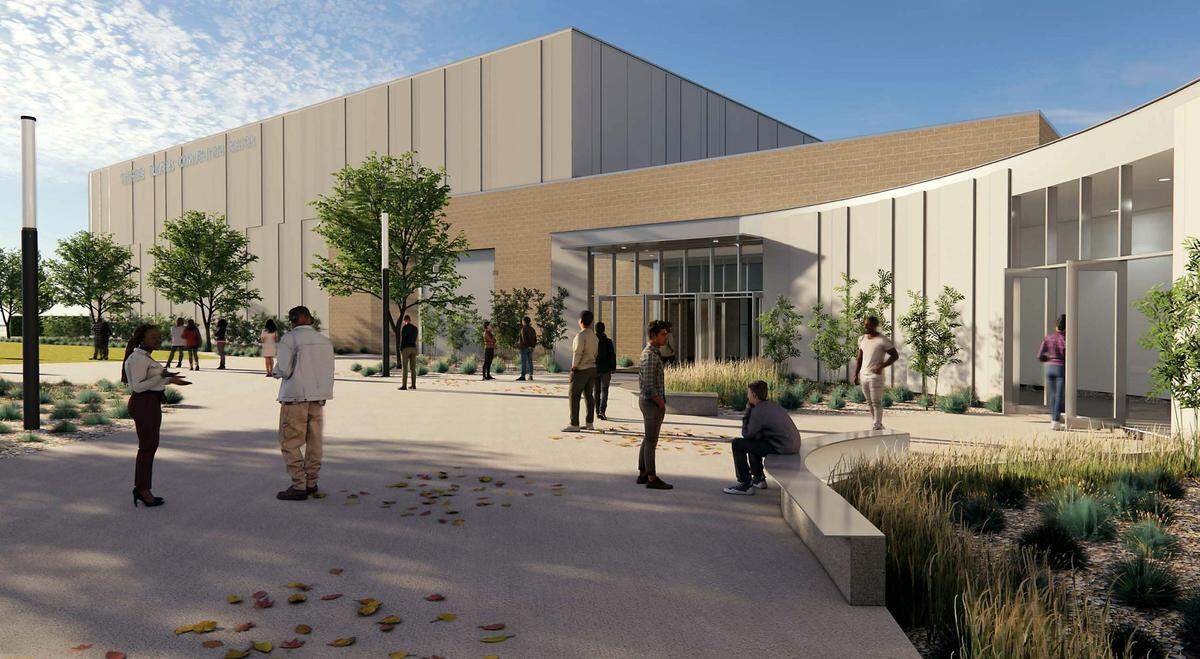
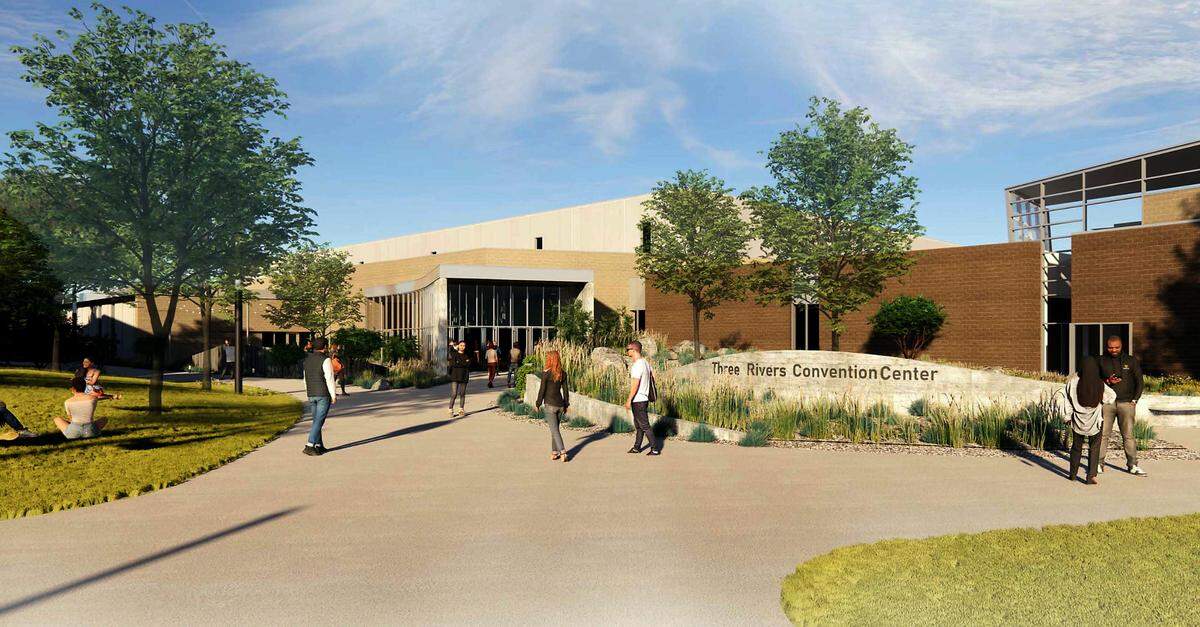
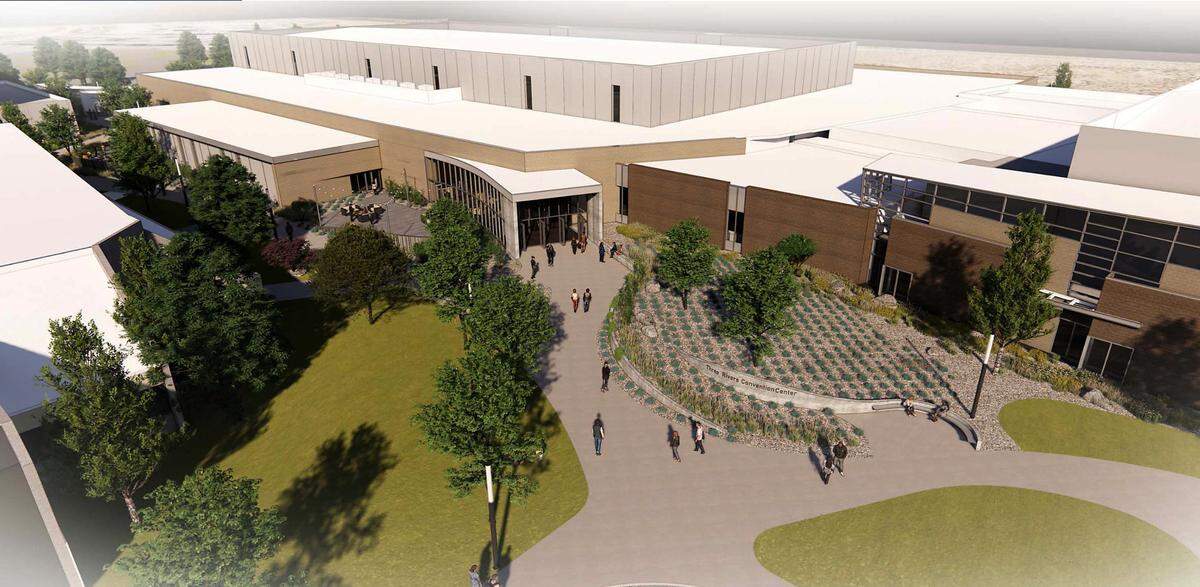
The project is adding 115,000 square feet of space, including a spacious meeting hall, breakout rooms, restrooms and a lobby. Work includes a refresh of the existing convention center so that it merges seamlessly with the new addition.
The same team that designed and built the original — Lydig Construction and ALSC Architects — is leading the expansion.
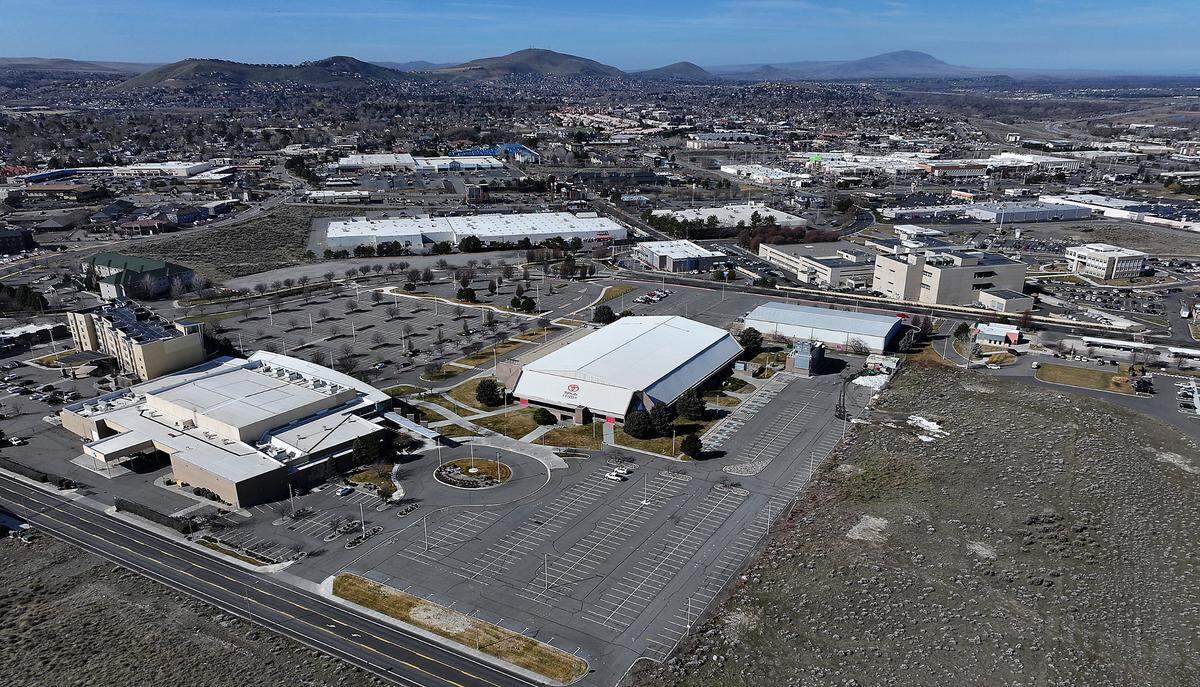
The Three Rivers Complex, which includes the convention center, a SpringHill Suites hotel and the Toyota Center, hosts regional conferences, trade shows, sports competitions, and other events. It is a pillar of the Tri-Cities’ $600 million tourism industry and is managed by a contractor, VenuWorks.
The addition is centered on a 60,000-square-foot meeting hall. For context, it can be configured with six basketball courts, 20 pickleball courts, nine volleyball courts or 24 wrestling circles.
It can be broken into smaller spaces too, but the size is key.
The expansion is expected to add 200,000 attendees annually, translating to demand for 70,600 hotel rooms throughout the Tri-Cities.
The project is about 80% designed and bids have locked in the cost of steel and other building materials at pre-tariff prices, officials said.
The convention center expansion will be built in tandem with a privately-financed, five-story, AC Marriott Hotel. The city and facilities district tapped A-1 Hospitality, a Tri-Cities hotel operator, as its private partner on the redevelopment of the convention center campus.
A-1, led by Vijay Patel and son, Taran, applied for building permits authorizing construction of the 162-room hotel in December. The hotel will be topped by an upscale restaurant and will physically connect to the meeting center.
The building permit and permits for mechanical and plumbing systems are pending, according to city records.
Who will pay?
The $38 million hotel is a private venture. Taran Patel confirmed it will be financed by a traditional loan. The company initially considered using the federal EB-5 immigrant investor program, which rewards investors who finance job-creating projects with green cards.
The convention center expansion is a public project and will be funded with bonds that will be repaid from convention center earnings and the sales tax stream authorized by the state Legislature
The Kennewick Public Facilities District will sell bonds to cover the construction cost and is responsible for the debt. The Kennewick City Council signed off on the bond sale in February, a necessary step since it is backing the issue.
Pearson and Dudney said the district pledged to repay bond holders with convention center earnings and revenue from the non-voted sales tax.
The Washington Legislature created public facilities districts as part of a package that built a new home for the Seattle Mariners, then called Safeco Field.
The same law authorized an 0.033% sales tax and allowed larger rural communities to tap into it to build their own public facilities. Officially, the 0.033 money is considered a rebate.
The tax is supposed to end in 2041 but the 2025 Legislature is considering a bill to extend it by 25 years. House Bill 1011 passed out of the House on a 95-1 vote March 11. East Yakima’s Rep. Jeremie Dufault, R-15th cast the lone “no” vote. It now moves to the Senate.
Kennewick used its 0.033 money to build the original convention center in 2004. Benton County and the city of Pasco didn’t have projects of their own, so they dedicated their share to the convention center. Richland built the Reach Museum at the Wye with bonds backed by its 0.033 money.
The sales tax is one revenue source. The Three Rivers Complex also earns money from events, about $3 million a year. Kennewick’s 0.033 money generates about $1 million a year. It receives another $1 million through Benton County and Pasco’s contributions.
Bond payments will come from that $5 million stream. Debt on the original convention center construction will be retired two years early as part of the expansion project to simplify accounting.
Saying ‘no’ to sales taxes
The same law that created public facilities districts also let them ask their voters to raise local sales taxes by one- or two-tenths of a percent to build stadiums, aquatics centers, performing arts centers and other “facilities.”
Six such measures have been submitted to Tri-Cities voters, who have been hostile to the idea.
In February, Richland voters rejected a two-tenths sales tax that would have built an $81 million performing arts center next to the Reach Museum. Of the six measures pitched to local voters to date, voters approved just one..
In 2022, Pasco voters agreed to impose a two-tenths sales tax to build an aquatics center in the Broadmoor area. Construction is getting started now.
Kennewick voters rejected requests to expand the convention center in 2013, 2016 and 2017.
The last failed with a 55% no vote. That project would have authorized a $45 million convention center expansion plus new ice rink and 2,000-seat theater marketed as “The Link.”
Pearson and Dudney said voters were clear they didn’t want to pay for a convention center they didn’t expect to use. That was good information and even affirmed that Three Rivers does its job. It’s not meant to compete with local venues. Rather, it provides space for events that bring out-of-town conventions and events to the Tri-Cities.
After the last, unambiguous loss, the convention center team plotted a path. The need was clear. At 21,000-square-feet, the Kennewick facility is too small for the regional events that bring thousands of people and vendors.
A Washington gathering of potato growers draws thousands for meet ups and a trade show. The organization renewed its contract for five years in 2024 but reports it has to keep a waiting list of vendors eager to participate.
Planners tossed the theater and ice rink and reviewed meeting halls of various sizes: 40,000, 60,000 or even 100,00 square feet.
Like Goldilocks, they found one was too small and one too large. But 60,000 was just right for sporting events and big meetings.
Future tax votes?
The Kennewick Public Facilities District can still levy a two-tenths of a percent sales tax or two cents on a $10 purchase, but only if voters say yes.
After three failed campaigns, officials aren’t eager to attempt a fourth. But they aren’t ruling it out.
Pearson and Dudney say voters have indicated they would support replacing the aging Toyota Center — now in its fourth decade — at some future date. It first opened in 1988 as a private hockey arena owned by a Canadian investor who wanted to bring hockey to Tri-Cities. The city of Kennewick acquired the failing facility in 2000 and awarded naming rights to Toyota in 2005.
The Three Rivers Campus master plan even reserves space for such a venue, along with a spot for a possible performing arts center.