
Want to help Maui? Here’s a brief guide to Hawai’ian history and why Lahaina matters
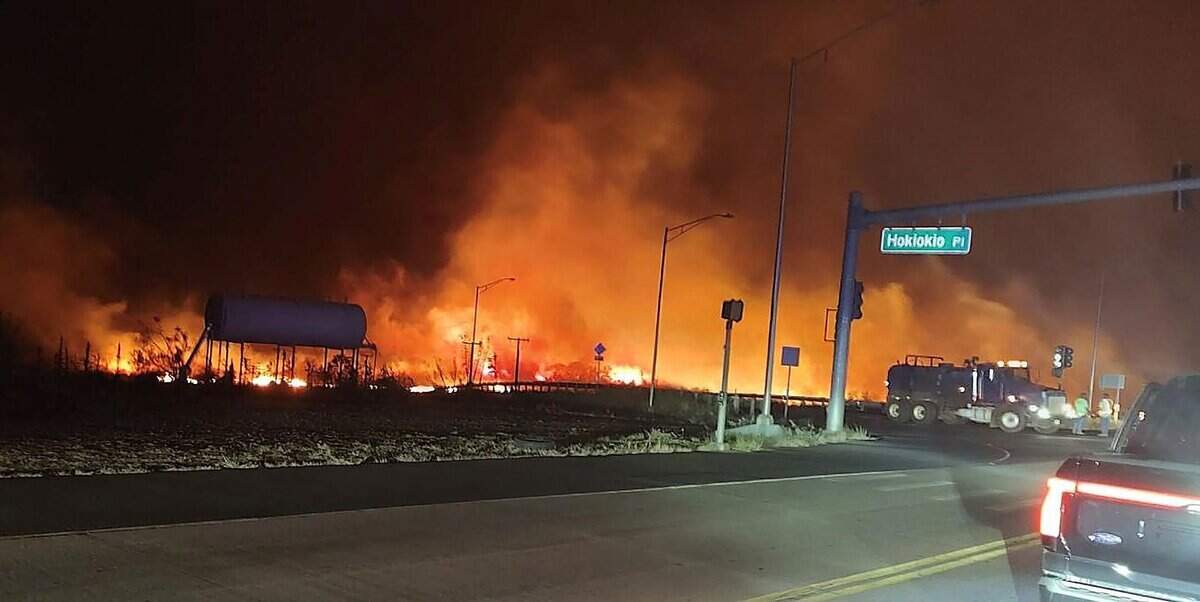
During massive tragedies such as the fires on Maui, it is human nature to want to help in any way possible. Monetary donations are being accepted by numerous organizations, listed here, but it is not clear at this time if physical donations can be shipped to those in need.
What if you can’t provide money or resources? How can you still help? Consider advocating for Native Hawaiʻian folks, amplifying their voices and offering support from the mainland.
You can also educate yourself further about Hawaiʻian history, culture and current events. McClatchy spoke with Jonathan Osorio, professor of Hawaiʻian Studies and dean of the Hawaiʻinuiākea School of Hawaiʻian Knowledge at the University of Hawaiʻi for some answers.
History before the Maui fires
The Hawaiʻian Islands have a rich and complex cultural history that is tied into much of what is happening in modern-day Hawaiʻi. Activists and other Native Hawaiʻians have voiced connections between the Maui fires and a history of damaging colonization and excessive use of essential resources, like water, going to support tourism.
Here is what Jonathan Osorio had to say:
Note: Answers have been edited for clarity and publication.
▪ Does Lāhaina have a historical significance?
JO: The town of Lāhaina is deeply connected to haole (American and European) economic imperialism and religious conversion that grew exponentially in Oceania through the 19th and 20th centuries. A home away from home for whaling crews and their ships, Lāhaina was a focal point of tension between Aliʻi (chiefs) who tried to stem the contagion of venereal diseases and alcoholism that sailors brought ashore employing missionary-inspired regulations, and other Aliʻi who worked more cooperatively with haole merchants and were suspicious of missionary intentions.
▪ How is the history of political power in Maui connected?
JO: The early Kingdom’s seat of power was in Lāhaina. It was there at Luaehu that Kamehameha III instituted constitutional government and set our nation on the path of modernizing its political and economic foundations in an attempt to coexist peacefully with global powers. American seizure of our government and lands in 1898 ushered in the militarization of hundreds of thousands of acres throughout Hawaiʻi, and an almost feudal control of Maui island by a handful of missionary-descended sugar and pineapple plantation owners. By the early 1960s, as sugar and pineapple faded, the emergence of colorful and historic towns like Lāhaina as tourist destinations were emblematic of Hawaiʻi’s shift to massive corporate tourism and land speculation, which has left the Kanaka Maoli (Native people) with little political representation, many living without shelter, insufficient nutrition and health care.
▪ Are climate change and industrialism part of the conversation here?
JO: Hawaiʻi is home to our people, as well as a magnet for investment and entertainment. So first and foremost is that this is a horrible tragedy that has killed people, erased their livelihoods, destroying artifacts and buildings that are significant historical resources for Kanaka Maoli, and instantly adding to a houseless population that could suffer enormous hardship for years to come. At the same time, we see in this tragedy the results of climate change driven by the same industrial economy that surged into the Pacific more than 250 years ago. The worst effects of climate change are maintained by the refusal of those industrial giants to restrain themselves despite decades of dire warning.
▪ What is the current state of climate change on the islands?
JO: What is happening to us in Hawaiʻi has already been demonstrated to hundreds of communities on other Pacific islands who have seen ocean rise inundate their homes and livelihoods and forced them to migrate, and there is much more of that to come. The unwillingness of the wealthy nations to seriously deal with this means consigning hundreds of thousands of Oceanic people to a very uncertain future, although at least Native people are refusing to simply surrender, and are employing community organization, political advocacy and legal opposition to try and carve a way for people to manage the environmental changes that are upon us.
▪ Any closing thoughts on Lāhaina?
JO: Lāhaina Town is gone. But Lāhaina is still there. It should never be rebuilt as a tourist spot but a place for people to begin, again, a Kanaka Maoli place that, with resources and will, can very quickly restore that land to productivity and be a place for the people who once sang songs of praise and gratitude for their home beside the sea.
Osorio shared the following poem:
“Pua Mana” composed by Irmgard Farden Aluli
Kuʻu home, i ka ulu o ka niu
ʻo ka niu kū kilakila
Napenape mālie
(My home is surrounded by coconut trees
That stand majestically
In the gentle breeze)
Historical background on Hawaiʻi
The Hawai’ian islands were a sovereign nation under the rule of Polynesian monarchs to the end of the 1800s. Political systems were in place, leading to a growing, successful economy. In 1887, force was used to gain the King’s signature on the Constitution of the Kingdom of Hawaiʻi, which revoked much of his monarchical authority. He died several years later, passing the crown to Queen Liliʻuokalani.
She attempted to construct an updated Hawaiʻian constitution in 1895. This led to a coup which saw Queen Liliʻuokalani overthrown and arrested, and later imprisoned for eight months. The events eventually led to Hawaiʻi’s annexation by the United States in 1898.
President Grover Cleveland unsuccessfully demanded the islands be returned and declared the overthrow to be illegal. During this time, Hawaiʻian culture was systemically assaulted — children were punished for speaking their native language in school. When President William McKinley took power, he agreed to annex the islands to be utilized as a naval base during the Spanish-American War. The islands remained a territory until 1959, when Hawaiʻi became the 50th U.S. state, despite protests from locals.
The American government recognized the illegal nature of Hawaiʻi’s overthrow in the 1993 Apology Resolution. To this day, Native Hawai’ians are not formally recognized by the federal government, though their status has long been recognized through federal statutes. The Office of Native Hawai’ian Relations at the U.S. Department of the Interior acts as a liaison between Native Hawai’ians and the federal government.
Resources on Hawaiʻian history and culture
For further education, these resources are available online:
- Aloha ʻĀina o Hawaiʻi: Offers educational activities for the general public on Hawaiian culture
- Awaiaulu: Educational organization providing accessible information to bridge past Hawaiʻian knowledge to the present and future
- Bernice Pauahi Bishop Museum: Designated Hawaiʻi State Museum of Natural and Cultural History, offering online and in-person education for kids and adults.
- Hawaiʻian Historical Society: Offers digital resources on Hawaiʻian culture
- Kaʻiwakīloumoku Hawaiʻian Cultural Center
- Kamakako’i: Digital resources through the Office of Hawaiʻian Affairs with information on matters important to the Native Hawaiʻian community
- Ulukau: Collections of books, newspapers, audio, video, dictionaries and more archived Hawaiʻian cultural works
This story was originally published August 14, 2023 at 11:37 AM.