
State halts opening of Tri-Cities bars and wineries that don’t serve food
Tri-Cities wineries and bars still must keep their doors closed if they aren’t serving food made in their own kitchens.
After some back-and-forth over the definition of “restaurant,” the state notified Tri-Cities health officials Thursday that breweries, wineries and places serving only alcohol cannot reopen as first believed.
That means, for example, a microbrewery that brings in a food truck to serve meals still can’t open under the state’s modified Phase 1 guidelines.
Later Thursday, health officials said that wineries, breweries and bars were not ever intended to be included in the Tri-Cities reopening because of the risk of the spread of COVID.
Officials noted that wine tasting brings in visitors from outside the counties and similarly, drinking establishments promote a social setting where people gather for extended periods of time without masks.
The day before on Wednesday, Benton and Franklin health officials announced that wineries and other places serving alcohol in open containers but not food were permissible, as long as the establishment followed guidelines such as social distancing and limited seating.
However, the state health department officials contacted local officials Thursday with the bad news.
The decision is expected to be a blow for microbreweries such as Sage Brewing in Pasco.
“That is pretty devastating. This is going to hurt a lot of businesses,” said Tyson Crudup, who started the brewery in December, and was trying to reopen with outside tables.
“This outdoor seating could mean everything to us,” he told the Herald. “If we don’t have outdoor seating in a couple of months, we will have a serious problem.”
The brewer said his beer sales fell 75 percent during the COVID-19 shutdown.
“We are just barely struggling to make it,” Crudup said. “Even with the generosity from our landlord, we are operating day-to-day.”
Restaurants get creative
Other restaurants and bars have been hurrying to reopen outdoor seating areas on sidewalks and parking lots to take advantage of the modified Phase 1 reopening rules that started July 3.
From hay bales and rope to pop-up tents and decorative brick courtyards, business owners are finding ways to serve customers outside — whether or not they had a patio before the coronavirus pandemic.
“We were ecstatic that we were finally able to reopen — even on a limited basis,” said Michael Davidson, owner of Amendment XXI in Richland.
Davidson, who owns a Pasco law firm and was a homebuilder for decades, said that the fencing he first rented was not cost effective. Instead, he tapped into his construction knowledge and cobbled together a crew to create a decorative courtyard in just a day.
“It’s not necessarily permanent, but it has the intention of holding up for a longer duration,” Davidson said.
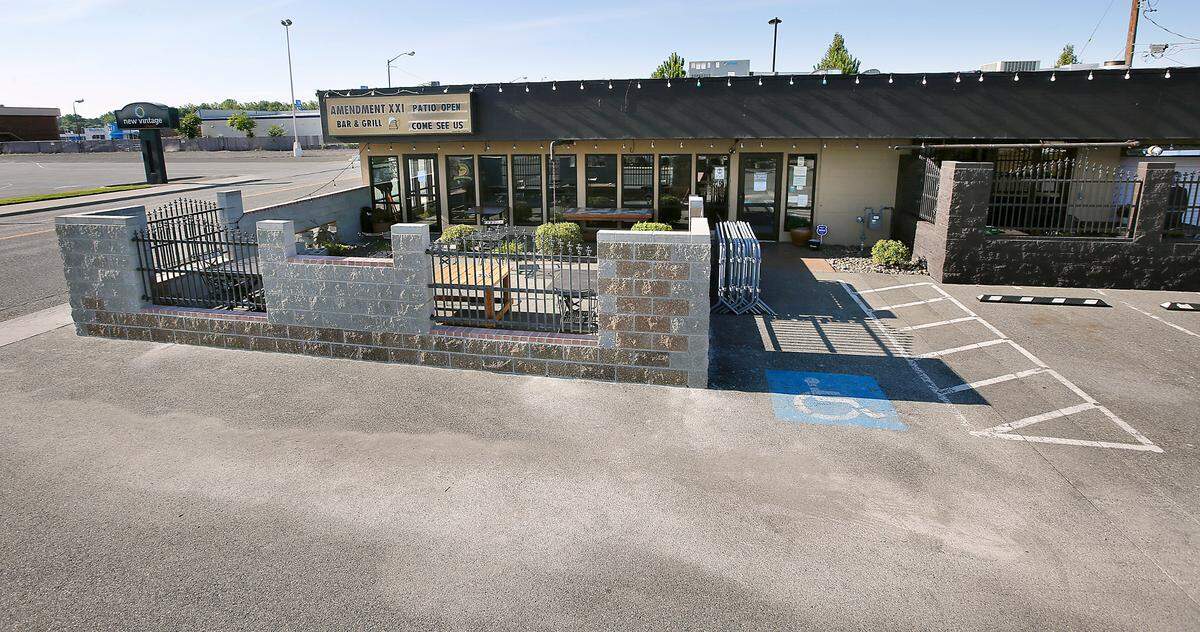
Between two outside courtyards, Davidson said Amendment XXI’s outside seating is just shy of about half of what the restaurant can hold inside — the threshold that is currently allowed in the counties.
The initial announcement by the Benton Franklin Health District indicated just half of pre-existing outdoor dining could be reopened.
It excluded establishments that never had outdoor seating or never served food, just snacks.
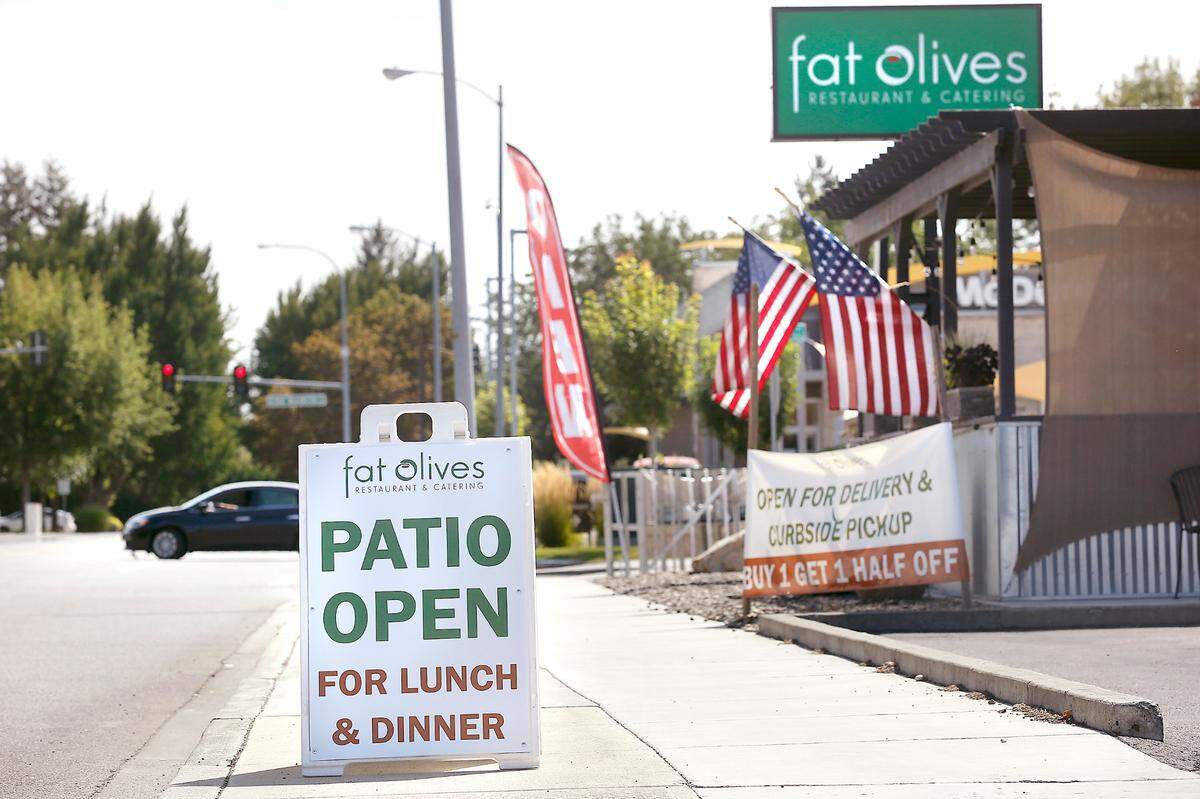
“Over the past week, we’ve been working with the state and staff to get clarification on what 50 percent of existing capacity meant,” Kathleen Clary-Cooke, a spokesperson for the health district told the Herald. “We really want to help restaurants and businesses while still keeping people safe.”
Indoor seating and bar-style seating still are not allowed.
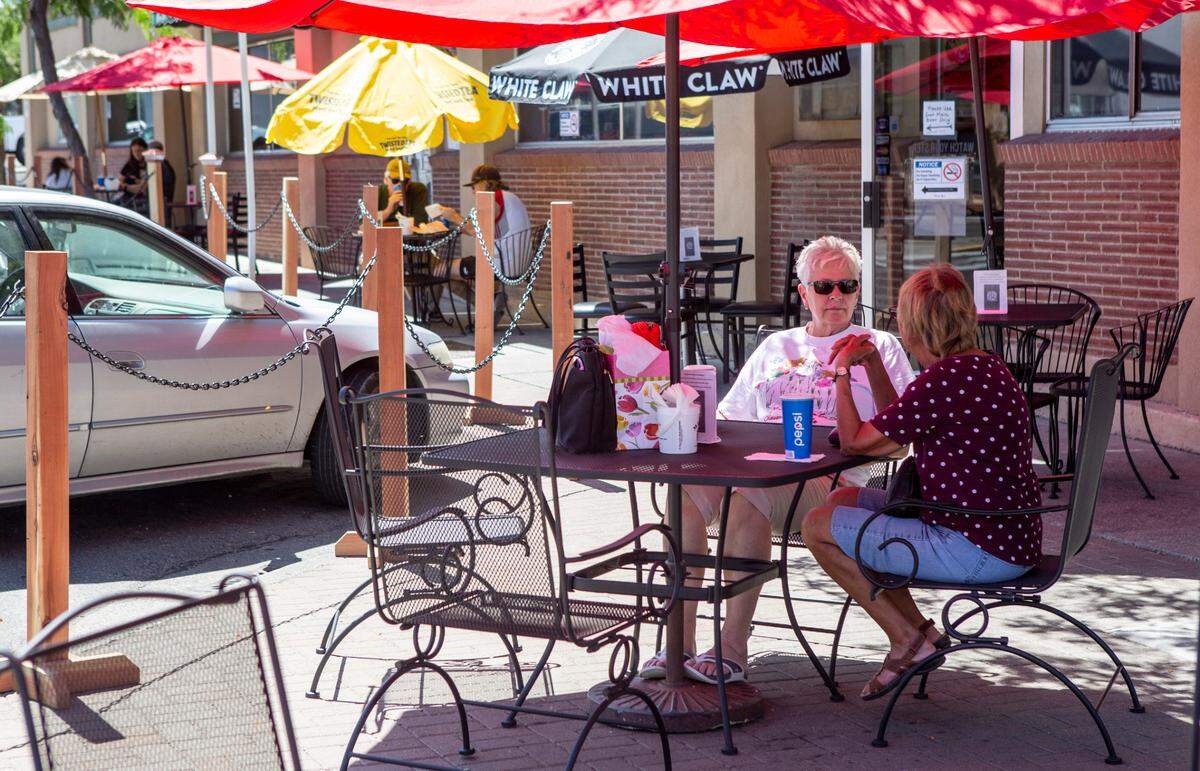
The city councils in Kennewick, Richland and Pasco approved new measures allowing restaurants to expand and add outside seating in their parking lots, creating the ability to serve more customers and bring in more revenue.
Each city has its own guidelines on what that looks like — including types and size of enclosures allowed and where seating is permitted.
Terri Rullman, the owner of the Sports Page Bar & Grill in downtown Kennewick, agreed the outside seating will help make the shutdown more survivable.
“I gotta love the Tri-Cities,” Rullman said. “A lot of people care about what is going on. They are so glad that they are able to eat at a table with a plate instead of out of a cardboard box.”
Rullman lined the sidewalk surrounding the bar and grill with wooden barriers.
She added tables and umbrellas and now can seat about 35 people — thought it still is far from the roughly 200 she can accommodate inside.
This story was originally published July 16, 2020 at 11:07 AM.