
Is generative AI killing local art? Thoughts from 4 Tri-Cities musicians
Generative AI is dominating our technology. Every day, the average person is exposed to AI-generated content repeatedly.
With such rapid growth over the past year, numerous industries and their workers are left playing catch up, requiring them to evolve to a new standard while determining their own ethical boundaries for the technology.
The creative sphere is particularly impacted, suddenly seeing entire industries change. Plus, everyone consuming art has to decide how much AI-generated content they want to consume.
These impacts are happening across the country, and the Tri-Cities music scene is no exception. Social media posts are being shared among frequent show-goers stating they won’t support local music utilizing AI-generated materials, including digital flyers.
Four Tri-Cities musicians and creatives gave their insights.
Tri-Cities musicians on generative AI
Some artists have made explicit statements against generative AI and are promoting local options to use instead.
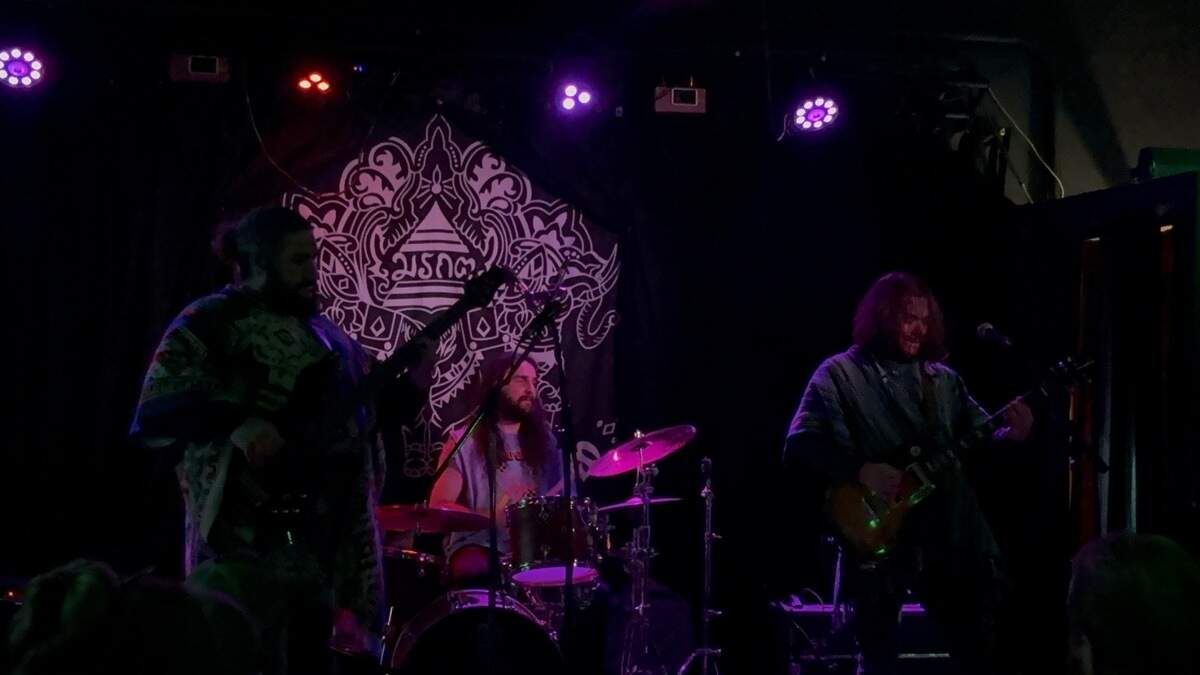
One such artist is 25-year-old Carson Garland. Originally from Tri-Cities, he’s currently based in Seattle and returns for gigs. Garland plays drums for Cadejos, a hard rock trio based here, and for Rice, a more classic rock trio that formed in Tri-Cities and relocated to Seattle. He also collaborates with jam band Wabi Sabi from time to time, and occasionally releases fully solo-made music.
Cadejos released an EP in February, “Hummingbird.” In the week leading up to the project’s release, the cover art was posted on the band’s Instagram in alternate colorways.
After the EP was released, the cover art was posted again with all of the featured colorways, with a message shouting out their graphic designer, Ezra Stanfield, aimed at encouraging others to use real artists over generative AI.
“Don’t use AI, use our guy,” said the band’s story sharing the post.
In an interview, Garland said he was behind the post. He had been thinking a lot about artists using generative AI, how it means missing out on hiring an artist, learning their style and going through the process together.
“You basically throw that entire experience away when you get onto a generative AI app,” Garland said. “Not only are you not supplying another artist business, you are robbing yourself of the experience of making the artistic process more meaningful.”
Garland clarified he’s not against artificial intelligence as a whole, but what he’s against is creating something entirely through generative AI.
So what is the difference?
AI versus generative AI
While the terms are often used interchangeably colloquially, there is a difference between traditional artificial intelligence and generative AI technology. As described by MIT, the primary distinction is their functionality; traditional AI is reactive, analyzing data to provide insights, whereas generative AI is proactive, creating a product based on learned patterns.
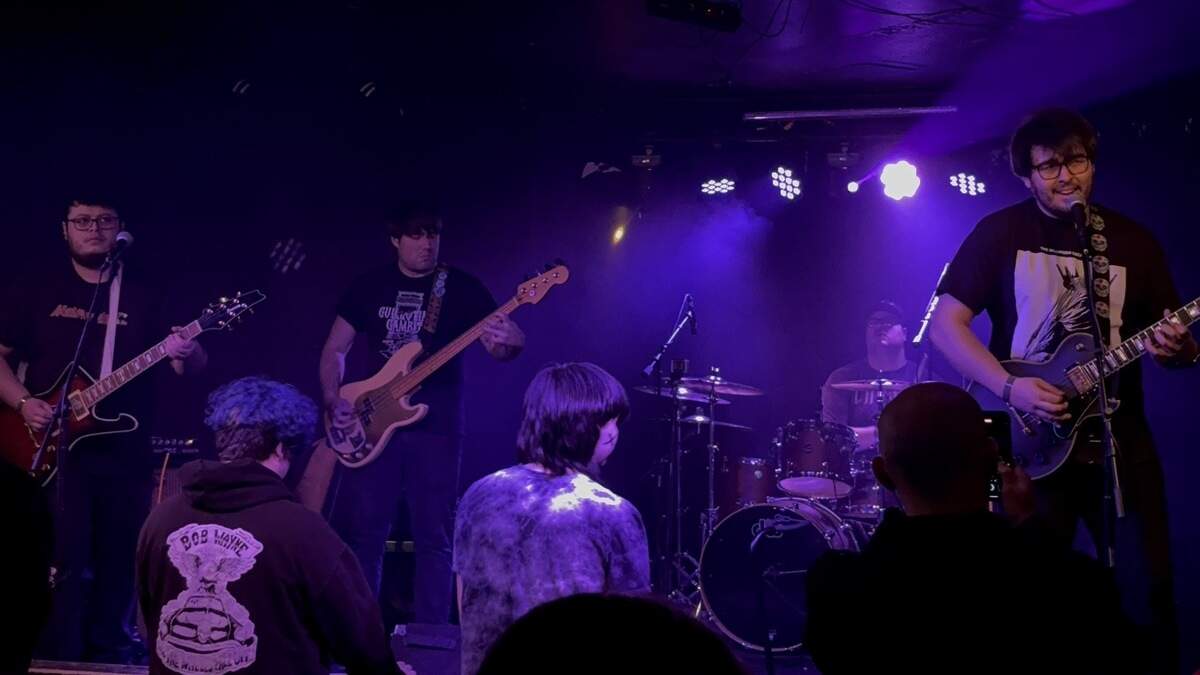
Caleb Warwick is a 26-year-old who grew up in Prosser. He plays guitar in Staring at the Sun, a four-piece alternative rock project, and by day, he’s a software engineer. His job involves a lot of web development and programming, specifically with science-based applications. Through this work, Warwick sees a lot of artificial intelligence.
He said there has been a recent boom in AI systems worldwide, especially in the U.S. He has to be familiar with AI’s limitations and when to utilize the technology. While there are benefits to using AI, he says it’s really case-by-case.
But what’s clear to him is the boundary when it comes to using generative AI in place of creativity.
“To keep it short, it’s bad. It’s not a good thing,” Warwick said. “I am fully against generative AI being used in creative spaces, that are used to generate what’s called ‘art’ instead of helping artists, for a multitude of reasons.”
Generative AI learns from billions of data points, and uses them to generate an entire product. Both Garland and Warwick mentioned that real artists’ work is used to train generative AI systems, often without the artists knowing.
“Visual AI is just a representation of some plagiarized version of an actual artist,” Garland said.
Warwick said generative AI steals from real artists, and it creates something worse in doing so.
“It’s only good if you’re using it in a way that is not a creative process,” Warwick said.
The final product is another reason the software engineer chooses to stay away from generative AI in creative spaces. He thinks it shows a lack of creativity and a prioritization of money over art. To him, that’s reason enough to not consume an artist’s material.
“You just effectively ruined any artistic credibility that you have, ultimately,” Warwick said. “Even if you’re a musician that’s trying to just generate visual art or whatever, your credibility is just diminished, because you don’t value art… Why should I listen to what you have to say? Why should I listen to your music?”
He believes it’s important for himself, as an artist, to support art spaces.
Generative AI in graphic design
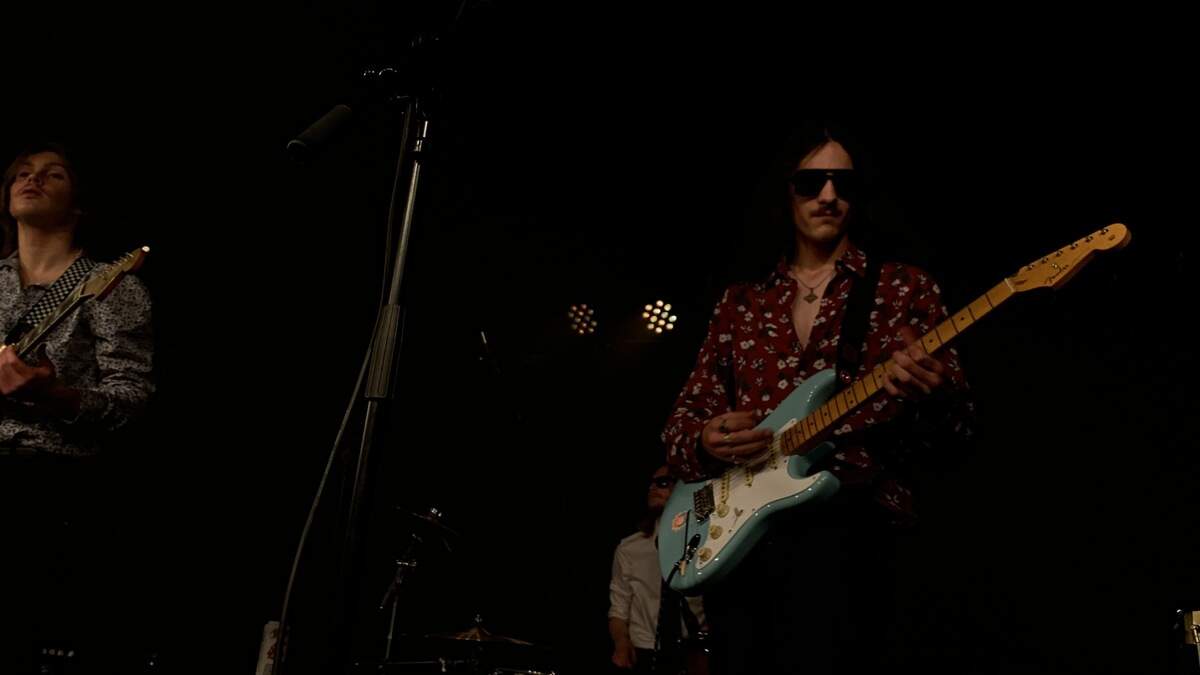
Luke Vesely, 22, is the lead guitarist of easyday, a four-piece indie rock band based in Tri-Cities. He’s also a graphic designer, having designed most of the band’s materials among other work.
He’s against generative AI in creative spaces too. He said a major reason for this is because AI-generated materials are missing the innate humanness that makes art special.
“What is art, if it is not your emotion? And how can a computer have emotion? It can’t,” Vesely said in an interview. “You write ‘Paint me something beautiful’ and it paints what it is told is beautiful, not what it thinks is beautiful.”
The guitarist said one of the major differences between human-created art and AI-generated materials is the fact that humans create something out of nothing, while generative AI creates something out of many existing somethings. He compared it to jungle juice at a frat party — cheap, dubious in origin and unable to be something truly new.
“It’s the ease,” Vesely said. “People are not fast, but would the ceiling of the Sistine Chapel be as highly regarded if it was just AI-programmed and someone traced over it? And it took them a couple hours instead of four years?”
He believes this is a big danger AI poses, that the ease of access could morph into sheer reliance, thus the devaluing of art once considered standard.
Over time, the art associated with a music release has gotten smaller, from the 12.5x12.5 inch standard of vinyls, to the 4.724x4.724 inch standard of CDs, to now just 3,000 pixels on a digital release. With this transition, Vesely says there is less appreciation for the complete release and the smaller choices.
“Because the album is not just the music,” Vesely said. “The album is the whole experience.”
To Vesely, every small decision reflects the music, and the musicians behind it. If none of it mattered, all music would be released with blank covers, he said. He spent hours creating the cover for easyday’s last album, and even longer hand-drawing the font used.
“There’s emotion in that, there’s frustration in that, there’s conscious decision-making,” Vesely said. “I think that those are powerful things.”
Warwick says artistic spaces are meant for humans, and when those communities are devoid of human art, it’s representative of greater issues. And, like Vesely, he says it devalues the existing art and the community.
Generative AI’s impact on community
While musicians have always had to jump hurdles to see success, the digital age has unique roadblocks, like the drastic drop in physical media sales, the small percentage earned from streams, decreased emphasis on smaller spaces and an oversaturated field.
Out of necessity, the Tri-Cities music scene is very community focused, based on the testimonials of many local artists. Growing your local connections is of huge importance to success in our scene.
Seeing this firsthand, Garland, Warwick and Vesely consider it important to support the scene around them. Working with other bands, as well as collaborating with artists of other mediums, supports the Tri-Cities music scene, not just their individual endeavors.
Warwick says to support your local creatives no matter their medium, because if you use generative AI in any medium that exists here, you’re killing the art.
Vesely said artists know artists here, so when you can’t do something yourself, you’ll always know someone here who can. He says the end product is better when it follows this personal connection.
Garland says it’s cooler to hire an artist than to complete a project by yourself. Or, if money is a factor, to doodle something quick, as long as it’s human.
“If artists can’t make money, I’m against it…” Garland said. “Artists have been screwed over for such a long time, and I vehemently want to be on the opposite end of anything that is trivializing making art.”
The musicians say that they believe normalizing generative AI in the scene hurts the community.
Embracing AI in creative spaces
But not all artists feel this way. Some are embracing the technology and integrating it into their artistic process.
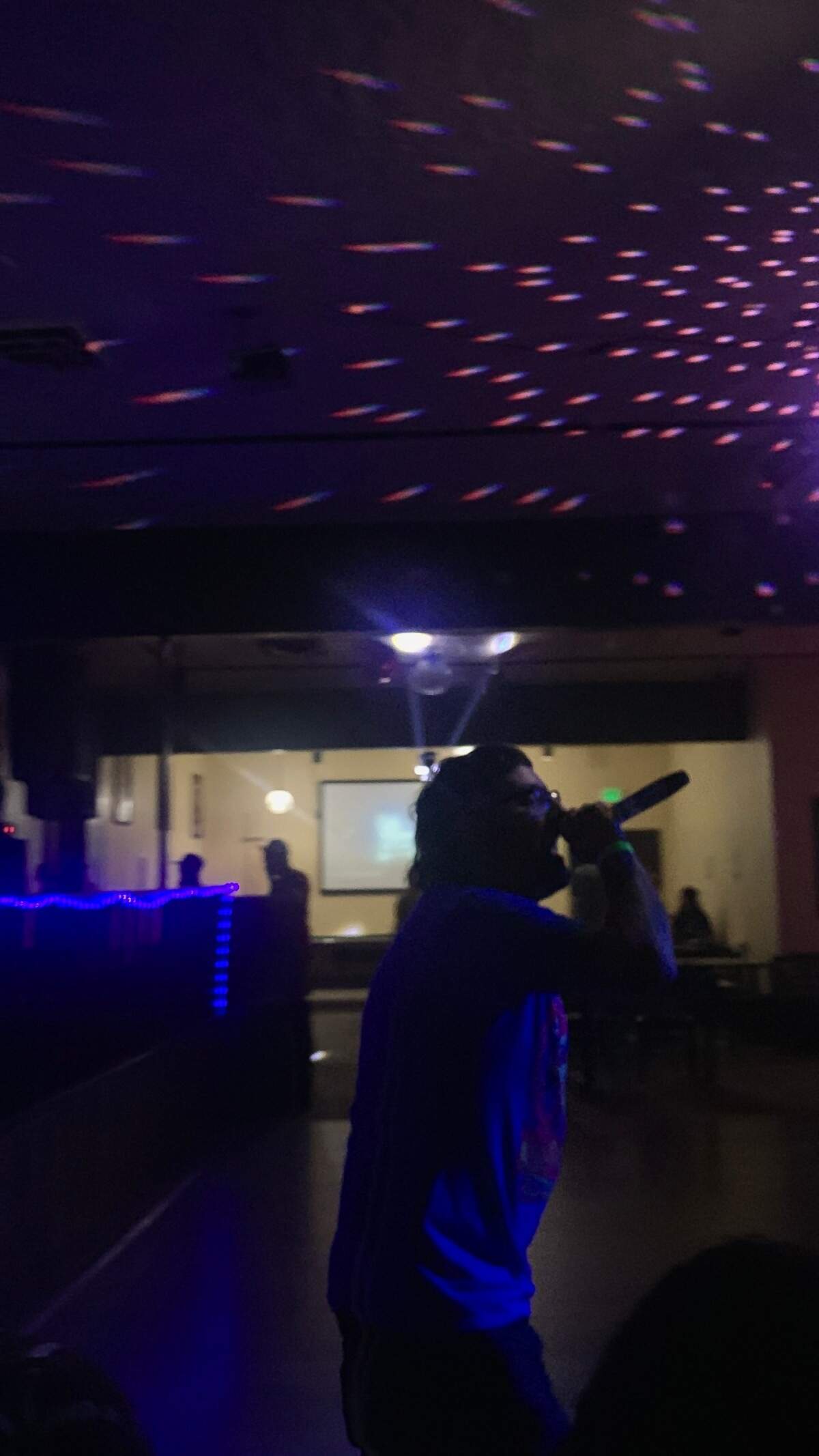
One such artist is Victor Navarrete, 37, who raps under the stage name Tory North. Born and raised in Tri-Cities, he’s been making music for decades.
Like Cadejos, he released an EP this year. But unlike Cadejos, he opted for AI-generated cover art for his EP, “When We Were Kids.”
He has a few reasons for embracing AI-generated content. He noted how easy it is to use the programs, and how cheap it is compared to human artists. But he also mentioned a more true-to-vision product.
“It’s just a lot easier for me to get my ideas into the real world,” Navarrete said. “I’ve worked with many graphic designers in the past, and a lot of times, it ends up being their idea, their version of what you’re trying to do.”
The rapper says the key to getting your ideal end product is being as descriptive as possible, as if you were writing descriptions for the visually impaired.
While he believes there are potential issues with generative AI, Navarrete says it’s his approach that sets him apart. To him, it can be positive to use generative AI creatively, so long as it’s a tool and not a crutch. If the core of the idea comes from an individual, he says that’s what matters.
“The core has to be essentially you, through and through, and then the topography can be what’s interchangeable,” Navarrete said. “That’s what allows me to keep my identity, and keep my integrity when it comes to any of the AI artistic approaches that I happen to choose at the given point.”
He says it’s important for artists to know who they are without generative AI tools, and that there should be a balance when using them.
“You have to develop the foundation of who you are as an artist before you start to lean heavy on technology, because it could be very phony, in a sense, where people can see where you’re using it as a crutch,” Navarrete said.
Navarrete also uses AI systems to assist in writing a book, as well as visual creation for his music. He said he uses generative AI for entertainment too, that he’ll listen to an AI version of himself cover other songs. The rapper said AI-generated songs are “fun.”
As far as his creative future, he’ll continue to use generative AI occasionally, mostly for efficiency and on smaller projects.
“That’s how I would utilize AI, is just hire it to do tasks that I would normally have to hire somebody from the outside to do,” Navarrete said.
If the choice is between hiring someone for $20 to get an hour of human-made work, or $20 for a month’s subscription to premium generative AI services, he says he will occasionally choose the latter.
Is AI innovative or a shortcut?
A few examples of AI in mainstream music were mentioned by the Tri-Cities musicians.
Drake released a song with an AI-generated verse modeled after Tupac. The song has since disappeared from official channels, following a cease and desist from Tupac’s estate.
On the other hand, The Beatles won a Grammy for the first time since 1997 for “Now and Then,” a song made possible by AI.
What’s the difference? Innovation, primarily. The Beatles used a traditional AI system to clean up recordings of John Lennon long-considered unusable. Without this system, the song would not have been mixable, but the content is still true to Lennon’s creative works.
“That is not generative AI, it’s AI used to filter out unwanted sounds, and that’s something I’m not super against, especially if it’s helping the creative process…” Warwick said.
Conversely, Drake created an entirely new verse, not based on anything Tupac left behind when he died.
One utilizes technology to resurrect music that would have otherwise been lost to time. The other takes another successful musician’s likeness and generates something based on his success.
Navarrete believes hip-hop specifically will lead the way when it comes to generative AI in music spaces. He says the genre is often at the forefront of innovation — like with the rise of electronic tracking and production — which comes with the best and worst iterations of development.
“I believe that AI will be utilized in its most efficient and least efficient form by the hip-hop community because of that same ease, that access, freedom ability that we carry,” Navarrete said. “Right now, I’m one of the guys who’s using it in a thoughtful, kind of creative way, with originality to it.”
He said that other artists will figure out how it can be used as a shortcut, and that’s where the use of AI as a crutch rather than a tool will rise.
To Warwick, a hip-hop fan, this difference between Drake’s and The Beatles’ uses of AI is similar to the difference between electronic music production and AI-generated materials. While live sound purists at the time criticized computer-made beats, at the end of the day, it was human creativity creating something new.
“That, at that time, was still innovation,” Warwick said. “That was a human being creating these sounds using a different format...”
He says generative AI in creative spaces is “not the same thing at all.” It will never be capable of innovation, he says, because it’s impossible for a computer to think like that. All it can do is create something based on existing works.
Generative AI’s potential ‘evils’
Multiple artists, including Navarrete, referred to the possible downsides of generative AI, beyond creative reliability. They specifically used the word “evil.”
The musicians cited real stories showcasing generative AI’s evil applications. From political propaganda to pornographic deepfakes, the ability to create realistic content without restrictions is causing negative headlines.
In particular, the negative environmental impact was stressed.
It’s estimated that 34 million images alone are generated by AI every day. Increased storage is needed to accommodate the increase in content — and data centers are being built at an unprecedented pace to store the massive hardware systems.
But each new generation uses valuable limited resources.
Generative AI systems require seven to eight times as much electricity as a typical system, according to MIT. This stresses the power grid and leaves behind high carbon dioxide emissions.
The tech’s hardware systems are cooled with water. With each new demand, a lot of water is used, though specific amounts are difficult to determine. According to a study out of the Yale School of the Environment, it’s estimated that a single session on Chat GPT-3 consumes a half-liter of water.
Moving forward in the age of AI
But no matter how many individuals oppose generative AI, the technology is here to stay. So how does an extremely community-oriented scene move forward?
Some of the artists are hopeful that AI-generated content will die out soon, that people will realize they prefer human-made art.
Especially without much legislative regulation, they all agree it’s more important than ever to set a standard during this transitional period, and that the community has to hold each other accountable. By continuing to celebrate creativity, we can establish priorities within our scenes, they say.
Warwick believes that people want human-made art, and as long as we set boundaries, that norm won’t change.
“Ultimately, you want more music in your town…” Warwick said. “Get rid of the idea of generating music, generating posters, generating anything, because if that’s in your space anywhere, that is effectively the death of that ever happening.”
They all hope for more regulation in the near future. Navarrete said that right now, generative AI is like an amusement park without guardrails.
Garland thinks artists should have to opt in to their content being used for model training, with no agreements buried in the Terms and Conditions. He added that artists should get a commission when their art is used for generated products.
“There absolutely needs to be some kind of regulation, if not for the sake of art, for the sake of probably the world, humanity in general,” Garland said.
But the biggest thing, several artists said, is supporting what’s real on the home front. Navarrete recommends supporting content with an individual aspect to it, where the artist is represented more than the computer system. Warwick recommends entirely avoiding generative AI in these spaces, opting instead to work with others and grow your own skills.
“Go to your local scene… help support them,” Warwick said. “It’s not expensive, it’s fun, you’ll meet some great people there. You’ll meet like-minded people, you’ll meet people who love art, and they’ll get you into new art. You’ll find something that you never knew existed, and you’ll fall in love with it, and you’ll understand art. Go do those things, help out, and everything will be OK.”
Karlee Van De Venter is a full-time reporter at the Tri-City Herald who contributes Arts and Entertainment coverage for Tumbleweird. This is a condensed version of this article; the extended version will appear in an upcoming edition of Tumbleweird through a co-publication agreement.
This story was originally published July 2, 2025 at 5:00 AM.