
Haiti to debut redesign World Cup jersey after FIFA rejects initial design as ‘political’
Once more Haiti’s efforts to express its national identity and fighting spirit on the global stage has run into resistance from an international sports governing body. Months after qualifying for its first FIFA World Cup in more than 50 years, Haiti’s men’s national soccer team will have to take to the field in a different uniform than the one originally designed for the tournament after FIFA rejected elements of the team’s soccer kits.
Soccer’s governing body, apparently viewed aspects of the Haitian design as a political statement, according to the team’s official sportswear manufacturer, Saeta.
“During the review process, FIFA determined that certain visual elements could be interpreted differently under its equipment regulation and ultimately requested modification to the design,” the company said in a statement late Tuesday night shared on social media.
The clash between FIFA and Saeta marks the second time in recent months that uniforms worn by Haitian athletes at an international competition have come under scrutiny. It also is the second time that designs by Saeta, the soccer teams’ official outfitter, have also been called into question.
READ MORE: How ‘Open Haiti’ hashtag became rallying cry for soccer, diaspora
In February, the Italian-Haitian designer Stella Jean was forced to make a last-minute change to uniforms for Haiti’s Winter Olympic team and delegation after the International Olympic Committee said they violated its rules prohibiting political, religious or racial propaganda at Olympic venues and on uniforms. The uniforms had depicted Louverture riding a red horse into battle. Jean was forced to paint over his face in her design inspired by a mixed-media portrait created more than 20 years ago by Haiti-born, Miami-based artist Edouard Duval-Carrié.
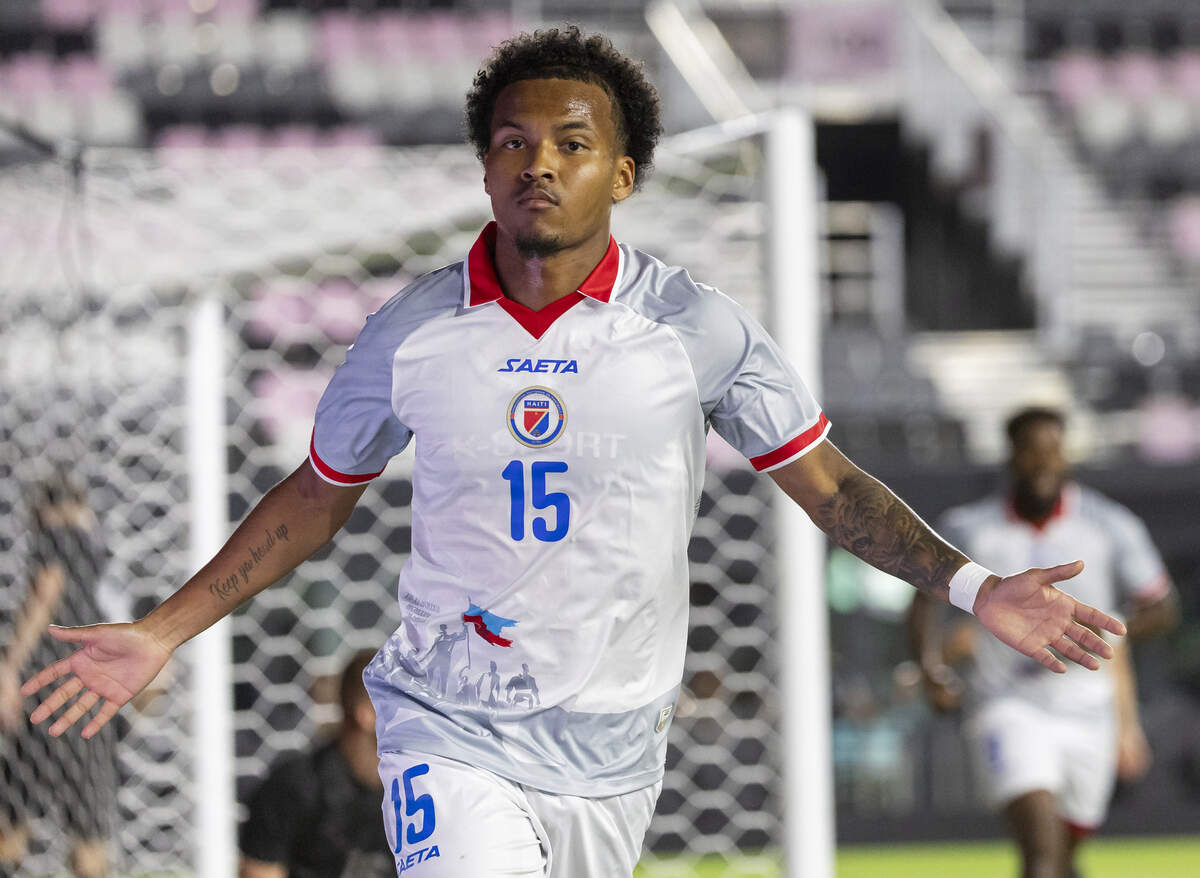
Months earlier, Saeta found itself at the center of cultural debate as fans and observers questioned whether geometric patterns on the white jerseys the men wore throughout their World Cup qualifying campaign were vèvè symbols, sacred Vodou imagery drawn during spiritual ceremonies. Other jerseys have featured images of the Haitian flag, and soldiers charging into battle — an ode to the revolutionary beginnings of the country, which qualified for this year’s World Cup on the 222nd anniversary of the Bataille de Vertières. The Nov. 18, 1803, historic event was the final decisive battle the island’s enslaved and former slaves led against Napoleon’s army to gain freedom from France.
Exactly which image or design element in the men’s official World Cup soccer kits prompted FIFA’s objections remains unclear. According to Saeta, the jerseys were designed in collaboration with the Haiti Football Federation to celebrate “the pride, resilience and spirit of the Haitian people.”
“Several concepts were developed and refined over a number of months and submitted trough FIFA standard approval process,” the Colombia-based sportswear company said. The final design, “was intended as a tribute to the men and women who contribute every day to Haiti’s future and was not intended as a political statement,” Saeta added.
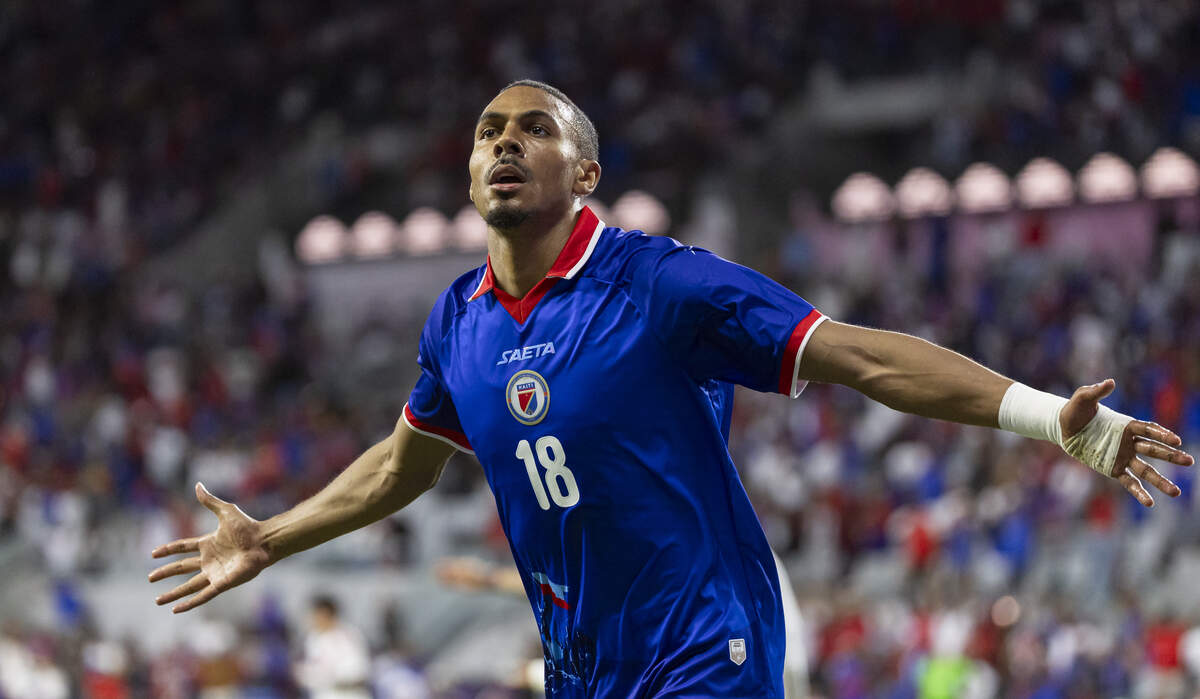
Neither Saeta nor FIFA has specified which elements were problematic. The Miami Herald has repeatedly sought comment from Saeta representative Sandra Carrero after learning about FIFA’s concerns last week, but received no response. A FIFA representative also did not provide additional details. As Haiti prepared to face Peru in Miami last week, Haitian Football Federation spokesman Thecieux Jeanty confirmed that the team would be wearing a different set of jerseys than they had initially planned for when Les Grenadiers open World Cup play against Scotland on June 13 in Boston. Haiti will then face Brazil in Philadelphia on June 19, followed by Morocco in Atlanta on June 24.
The team left its training camp in Port Saint Lucie for Atlantic City on Monday and will train at Stockton University. This is Haiti’s first World Cup berth in 52 years, and the excitement has fueled demand for authentic team jerseys among fans and supporters. But Saeta, which has been outfitting the team since coming to its rescue after the country’s devastating 2010 earthquake, has been struggling to keep up with demands, creating an opening for designers and other vendors selling unofficial merchandise.
This story was originally published June 10, 2026 at 5:58 AM with the headline "Haiti to debut redesign World Cup jersey after FIFA rejects initial design as ‘political’."