
New hydroplane course could play a role in who wins Gold Cup. Why the change?
AI-generated summary reviewed by our newsroom.
- Course redesign introduces asymmetry, impacting turn strategy and boat setup.
- Drivers must adapt tactics during four heats to secure lane choice for the final.
- Gold Cup returns to Tri-Cities for 60th Water Follies, honoring race heritage.
When the Apollo Gold Cup ends Sunday afternoon, the winning driver and team will have successfully made it through a battering ram of Columbia River water, six other fast unlimited hydroplanes, and five heats of racing.
The question of a course change also comes into play.
Race director Aaron Stephens says drivers and teams will have to factor that changed course.
“It will be an adjustment, because it’s a new course,” said Stephens, now in his eight year as race director in the Tri-Cities. “The entrance to Turn 1 to the exit (of the east end turn) is a little bit wide.”
“But Turns 3 and 4 (west end) are a little more narrow.”
So the course is a little asymmetrical.
Stephens said the change was necessary thanks to new safety rules made by H1 Unlimited.
With a narrow course, boats will avoid the shallow depths of the course on the Franklin County side.
Stephens doesn’t believe it will change the speed.
“I think you’ll still see the average lap speed to be the same for everyone,” said Stephens.
There are four drivers in this field who have won on the Columbia River before.
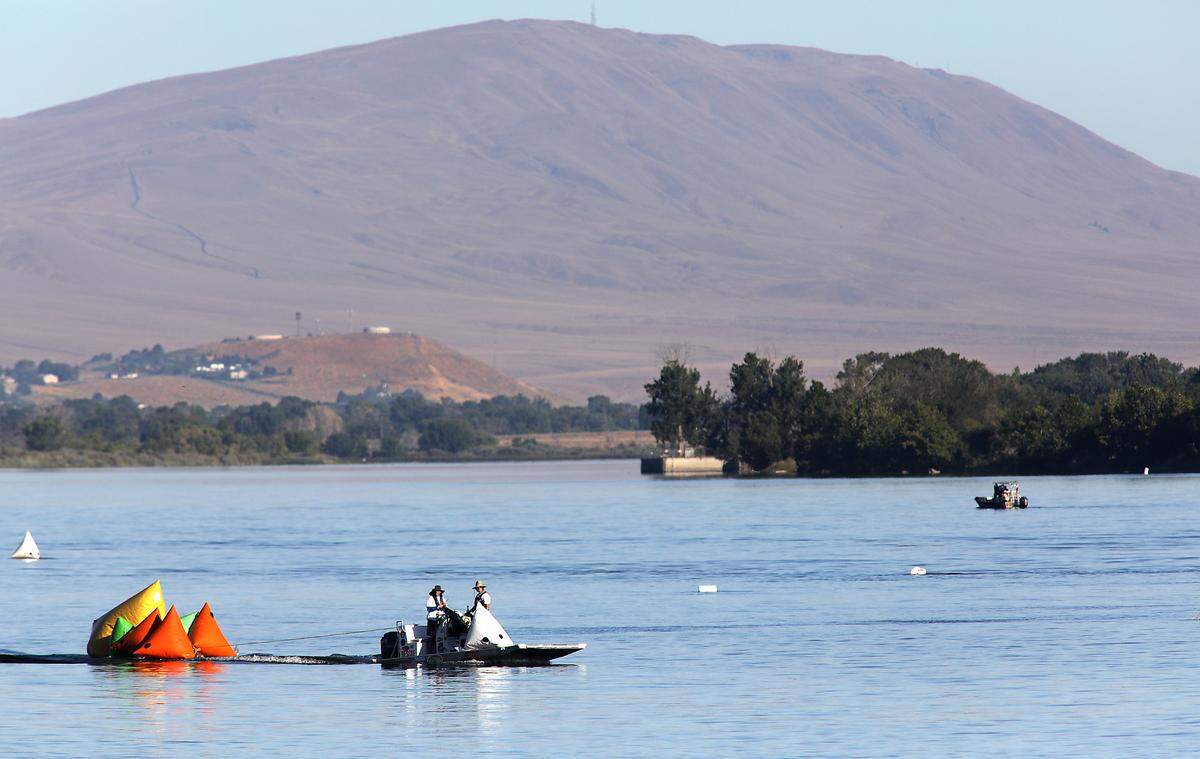
Some of them believe the change — the straightaways will be longer than in the past, but it’s still a 2.5-mile course — will play into the strategy.
Boats will pick up more speed heading into the turns.
Corey Peabody, who drives the U-9 Miss Beacon Plumbing, believes strategy may need to be changed.
“Yes, the course change changes a lot of things,” said Peabody. “Before both turns were the same size, and now you have two different size turns. Which one do you set the boat up for? Or do you set up straightaway? The smaller turn is going to scrub a lot of speed off and that could mean your run to the start could take longer if you run a taller box and then you could put yourself into a tunnel going into turn one.”
Peabody has won three of the last four races run on the Columbia; in 2021, 2023 and 2024.
But he didn’t have a boat — he had flipped it in an earlier race — the year he didn’t win, in 2022.
Still, as BMR Racing owner Bruce Ratchford says, “This is Corey Peabody’s piece of water.”
Peabody still isn’t sure about the game plan for the weekend.
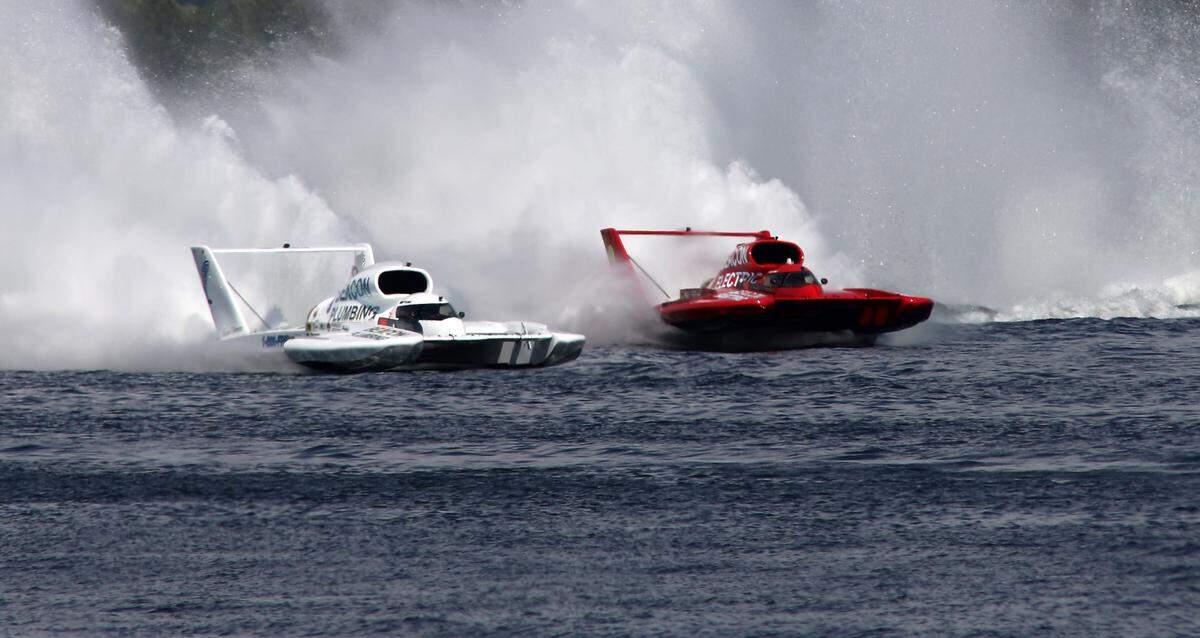
“All sorts of things to consider,” he said. “We worked on some things back during the test session (in May), but we will see if that is what we will run during the race. That decision won’t be made until Friday night. We need to collect the data and then we will be able to make our best decision.”
Andrew Tate has won once in the Tri-Cities, in 2018.
Now, last year’s national high points driving champion, Tate is taking a cautious approach with that changed turn in the west as he drives the U-91 Goodman Real Estate boat for Ratchford.
“I think we’ll learn more about that throughout the course of the weekend,” said Tate. “The course is a bit of an unknown variable heading into the Gold Cup, which is strange. We were able to test preseason, but we were out on the course by ourselves.
“And even then, we were warned that the course could be different come race weekend. Everything changes with multiple boats on the race course.”
Tate isn’t keen on changing the course.
“We’ve made some hasty decisions on course changes at two of our most historic race sites (Madison and Tri-Cities),” Tate said. “When’s the last time they changed the shape of the Brickyard, or Daytona International Speedway?”
For Dave Villwock and J. Michael Kelly, the course change doesn’t seem too concerning for them.
Villwock says the big key is not crashing.
“Take that first turn,” said Villwock, who has won eight times on this course but the last win was in 2011. “You need to have something to compete with. That first turn is rough. The rollers from the skid fins roll back into the course. The tighter end, it’s kind of like Detroit. So you set the boat up to get through it like Detroit.”
Which is part of the reason Villwock, who drives for Ratchford in the U-27 Miss Apollo, will sit in the cockpit of the old 2007 Miss Madison hull — nicknamed Sharky — instead of the newer boat previously owned by Charley Wiggins.
“That older boat we’re going to run, we didn’t choose the fastest boat,” said Villwock. “But it’s one we have more experience with (as a team). The ol’ experience thing.”
It should get through the turns faster.
Kelly has won here in 2017 and 2019. He drives the U-8 Miss Beacon Electric for Darrell Strong, and he’s Peabody’s teammate.
“I don’t believe the course change will change anything for strategy,” said Kelly. “Having the right gears and making the correct adjustments is what it will take.”
Kelly is more concerned about not making the same mistakes last year, which included a Saturday flip.
“Making it through the heat racing unlike last year for myself is key,” he said. “Staying clean and collecting as many points throughout the weekend to make the front row in the final. In the final, securing a lane that gives you the best chance of winning.”
That’s what has done it for Peabody.
“Well to be honest, it’s just getting yourself in the right spot before the start of the race and then getting through the first turn first,” said Peabody. “Now that being said, you need a boat that’s fast enough to keep people behind you as well.”
Now throw in the fact that everyone is expected to run four preliminary heat races — two each on Saturday, and two more on Sunday — before the final, and this might become a battle of attrition.
With seven unlimiteds, the prelim heat lineups will include a three- or four-boat setup in each round.
However, race director Stephens says he’s also planning on being flexible, especially if a team has to withdraw a boat due to an accident or mechanical breakdown.
“The round-robin format is an option if we need it,” he said.
Either way, the plan is to grind out as many points as you can to get a chance to win the Gold Cup final.
“The four preliminary heats on Gold Cup weekend always make things a little more interesting and hectic,” concluded Tate. “The goal remains: be smart, collect as many points as possible, and make it to the final so you have a chance to race for the Gold Cup.
“You can’t win the Gold Cup on Friday or Saturday. But you can definitely lose it.”
Other Gold Cup races
This will be the sixth Gold Cup race here in the Tri-Cities.
Three races were held on the Columbia River in the 1970s alone.
In 1973, Dean Chenoweth drove the Miss Budweiser to victory.
In 1975, George Henley did the same in the Pay N Pak; and in 1977, Bill Muncey crossed the finish line first in the Atlas Van Lines.
The Gold Cup was brought back in 1984, when Chip Hanauer won it in the Atlas Van Lines.
For the Tri-Cities’ 50th event, the Water Follies won the bid to host the Gold Cup in 2015, where Jimmy Shane won the event driving the Oberto Beef Jerky.
This weekend marks the 60th event in the Tri-Cities.
“It’s a perfect alignment of history and horsepower, said Mike Denslow, H1 chairman. “To celebrate 60 years of Water Follies by bringing the APBA Gold Cup back to the Columbia River is an honor for our region and for our fans.”
This story was originally published July 25, 2025 at 9:57 AM.