
‘Milfoil island’ size of football field shuts down hydroplane testing on Columbia River
A mass of floating vegetation canceled hydroplane testing Friday for this year’s Water Follies.
What a race official described as a “milfoil island” the size of a football field on the Pasco side of the Columbia River blocked the entire stretch of the course that leads to the third turn.
Hydroplane testing was scheduled to begin at 8 a.m. on Friday. But by the early afternoon, testing was called off entirely for the day after the milfoil mass continued to choke up the river.
“They keep hacking away at it but they are just not going to get it done,” said Andy Munz, of the H1 Unlimited, American Boat Racing Association.
Water milfoil is an evasive aquatic plant that can form large mats of floating vegetation on top of bodies of water. The invasive frilly plant is common in the river.
Water Follies organizers usually have to thin out the biggest patches ahead of time to minimize problems for boats.
A pontoon — or a party barge — staffed with volunteers was being used to pull up the plants, as rescue sleds and safety patrol boats were driving back and forth through the area to try to break up the foliage.
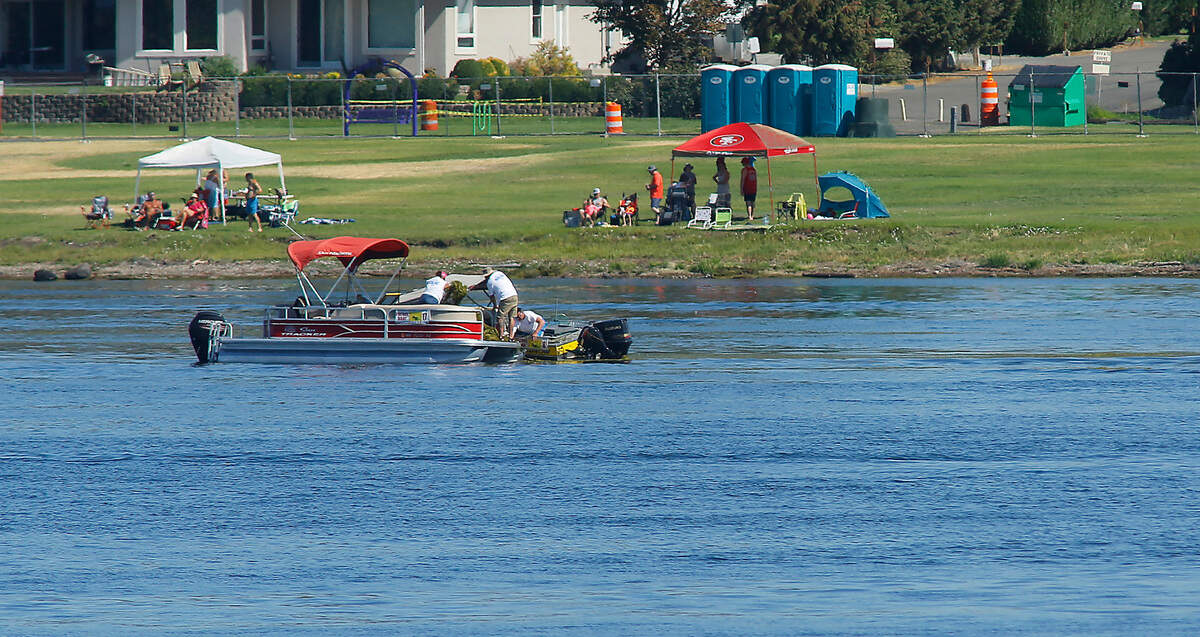
The plants create a safety hazard for the hydroplanes, which are water cooled.
The boats could potentially suck in the milfoil through the intake and clog the cooling for the engines.
“There was a bunch of grass that was intertwined with milfoil,” Munz said. “The boats would run right into it when they are going 160 or 170 mph and that is not a good thing.”
Removal of the milfoil had to come to a halt at 11 a.m. during the HAPO Over the River Airshow.
All boaters and watercraft needed to be off the water as part of safety precautions as historic aircraft like World War II bombers, as well as a U.S. Air Force F-35, did fly overs.
While eight unlimited teams were on standby waiting for their shot at getting back to the races, Munz told the Herald that they had hoped to get back track by early Friday afternoon.
However, the mass was just too thick.
The Herald was unable to confirm what the racing schedule will be for the rest of the weekend.
David McDermott, a natural resources manager with the Army Corps. of Engineers, described milfoil as an invasive pest.
Dermott told the Herald all it takes is heat, good light and still water for it to grow and multiply — all things that have been plentiful this summer.
“It gets into slow moving water, and of course attaches to the bottom,” said. “It gets healthier and grows more and more.”
He described multiple ways to remove it — mechanically, chemically and manually. But the foliage that grows about two feet down is difficult to manage and breaks apart.
“It can get chopped up and temporarily get boat through but it eventually comes back,” he said. “When you swim through it, it will stick all over you.”
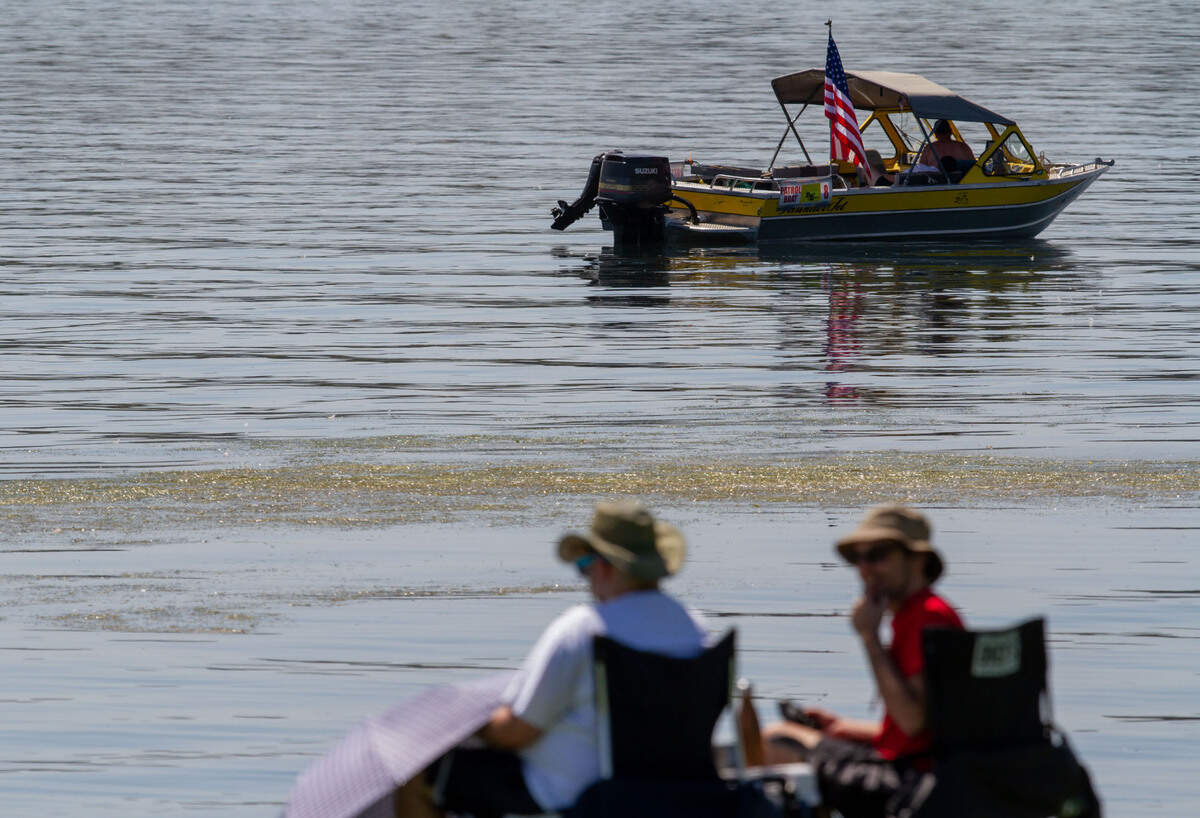
Last summer was the first time Water Follies had not been held in the Tri-Cities since 1965. The event draws about 65,000 spectators.
In early May, the Tri-City Water Follies Association announced that both the air show and the Columbia Cup race were canceled because of Washington’s restrictions over the ongoing COVID-19 pandemic.
However, a few weeks later organizers went back into planning mode after Gov. Jay Inslee announced that the state would be fully reopened by June 30.
The event now is back to its usual operations without a restriction on spectators.
The event generates about $3 million annually in economic impact for Tri-Cities area businesses.
This story was originally published July 23, 2021 at 10:50 AM.