
Is your child’s brain worth $100? This Tri-City coach thinks so
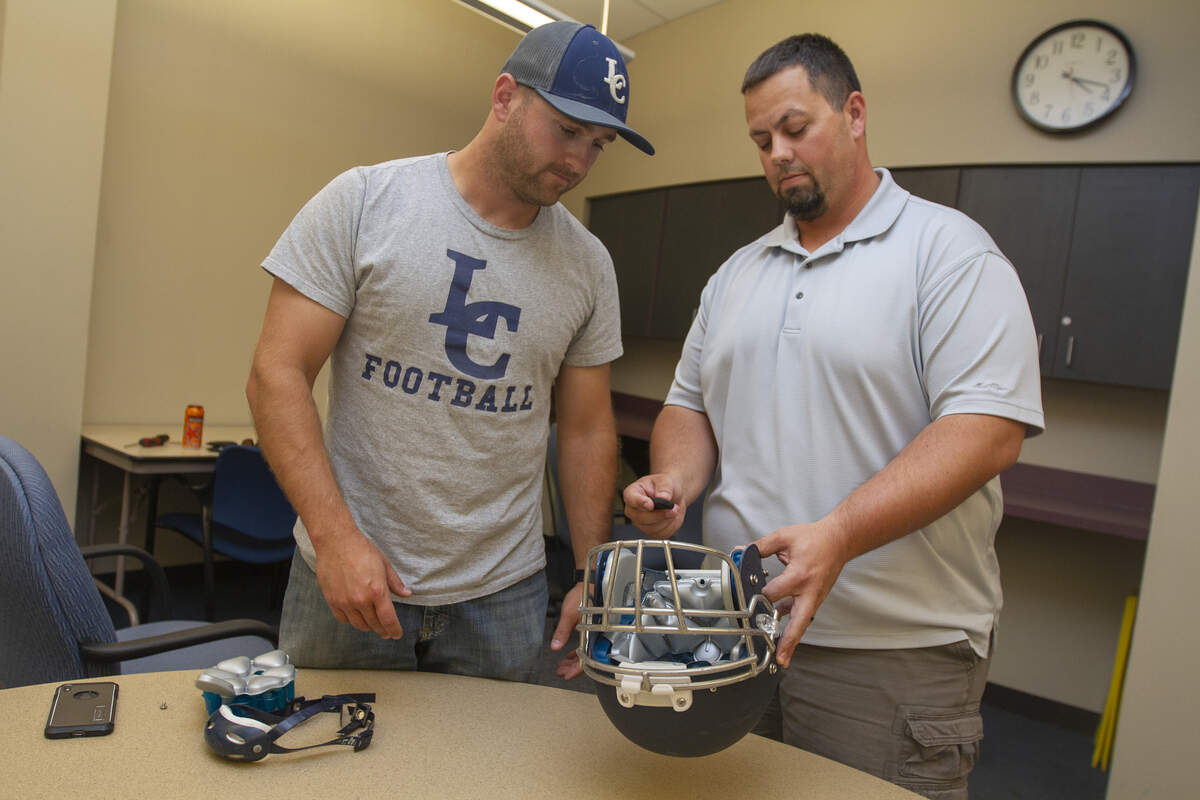
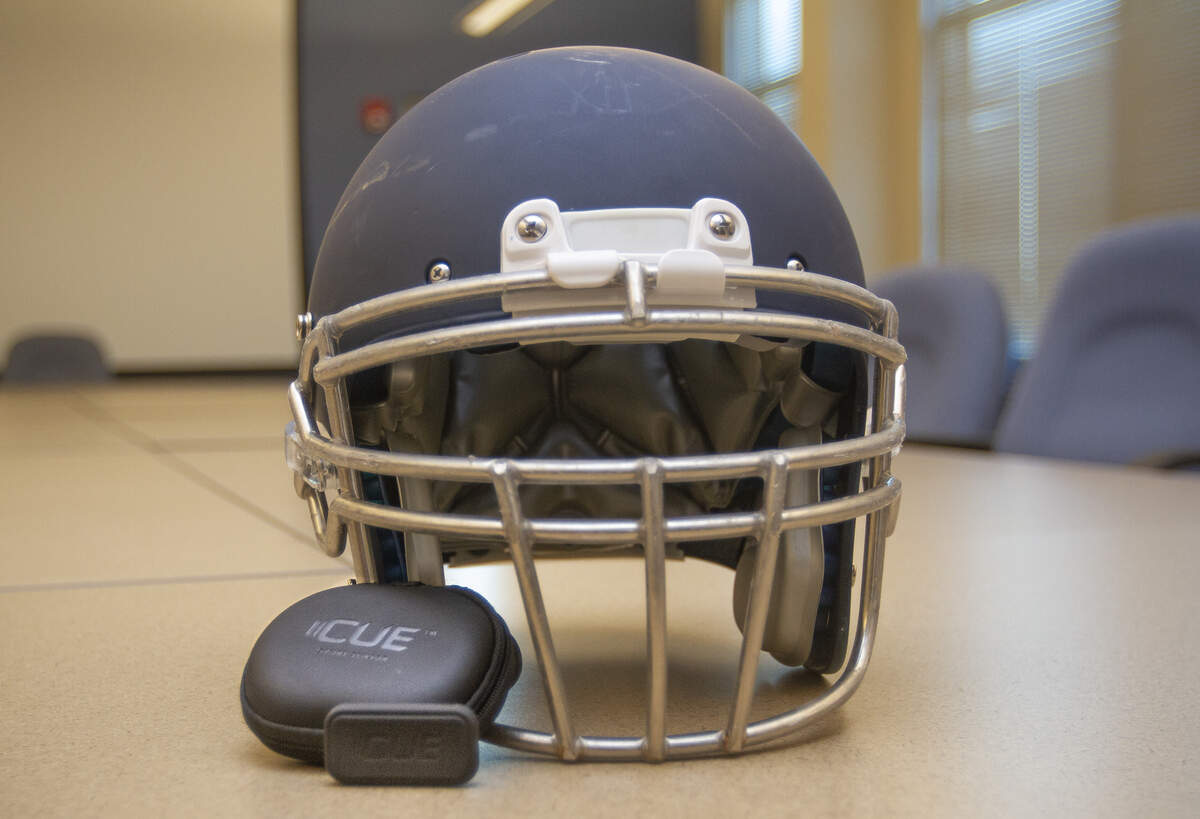
The Cue Sport Sensor is a tiny object in Jeff Boyus’ large hand.
The president of the Kennewick Grid Kids Association is counting on the small device to help make it safer for the youngest of football players.
He also hopes it offers a sense of comfort to parents who worry about the dangers of the game.
Fewer and fewer kids are turning out to play.
“According to our helmet rep, youth football numbers are down 25 to 30 percent in the lowest age group (7-9 years old),” Boyus said.
“Our numbers are down 17 percent overall, but at 50 percent for 7 and 8 year olds. That has a cascading effect.”
That pushed Boyus to start researching how he could make games safer for the young players. Then he got a call from Athlete Intelligence of Kirkland.
“When they reached out to me, they said they had this sensor,” he said. “It seemed to be a good solution for us. We were looking for that next thing.”
Boyus had no trouble selling the idea to his board, but there was one minor issue — the price.
“They were gung-ho until they found out what it could cost,” he said.
Despite the discounted $72 price tag per sensor, the youth football organization bought 340 units for its program.
With nearly 500 kids enrolled, it won’t cover them all, but they plan to start with the bigger kids and work their way down.
“Concussion prevention starts with teaching,” Boyus said. “These products will help our coaches know when a kid has a problem. It is a safety measure and a teaching tool.”
How it works
Athlete Intelligence says the Cue sensor could be one of the most important tools for sports programs at every level to track the impact of hits the head, whether it be in football, soccer or lacrosse.
The company, which also has the Vector MouthGuard that tracks the number of hits and the severity, developed the Cue sensor in response to concerns over brain injuries in players of all ages.
“The mouth piece is great, but it costs $289,” said James Atterberry, executive consultant/business development for Athlete Intelligence. “The mouth piece is accurate up to 99 percent in tracking hits. The Cue is a couple percentage points lower, but they can be used for several sports, whereas the mouth piece is intended for one athlete.”
The Cue is no bigger than a Nutter Butter cookie, and fits under or to the side of the padding in the top of the football helmet. It is held in place by Velcro. For soccer, it can be attached to a headband.
The sensor can be programed for different sports, and the information for an athlete can be saved for the following season.
Whenever a player gets hit, dishes out a hit, or takes a soccer ball off the head, the Cue tracks and maps the blows in real time.
It measures the G-force of the impact, along with hit location, the severity, speed and body angle. It can also detect rotational force of the head during impact, says the company.
“Coaches will be able to monitor each player with an app on their phone,” Boyus said. “The sensors can be set so that if a player takes a hit harder than his limit, the coach will receive a notification that player needs to come off the field and be examined.”
The senors will be used in practice and games.
Coaches can chart each player’s movements, and Boyus also will be able to track each team. He will know if coaches are not following protocol.
“If one team has a large number of players with high readings, then we need to address the way we coach them,” he said. “This is an unknown science. We are collecting data and being alerted to issues. Concussion prevention starts with teaching.”
Each player is issued a device, but once the season is over, the data can be stored, then stripped away so the device can be used for a different player in another sport, cutting costs for schools.
The price tag
Boyus admits he got a deal on his devices because he ordered so many, but it could have been even better (about $40 per unit) if a another local youth football league had joined in the deal.
The Kennewick program shelled out about $26,000 for their devices, but they got help from local companies Apollo and B & B Mechanical. They signed a three-year deal, which is the preferred program and helps keep the costs down.
High school teams that have 80 players would spend about $6,400 a year, but if they co-opted with other teams, they could bring the price down considerably with a larger order.
Users are essentially paying for the software that processes the information, and that can be renewed each year. Each sensor is rechargeable and comes with a warranty.
Curtis High School in University Place is adding the sensors this year, and the Bethel School District, which has four high schools, bought 350 sensors to be used for football, soccer and girls lacrosse.
At the college level, University of Washington used the sensors during spring drills and will use them for the upcoming season.
Other college football programs using them include Texas Christian University, Temple, Rutgers, Baylor and Duke, which also has them for its lacrosse teams.
The Cue Sport Sensor hit the market this spring for individual sales, and will set you back $99 a year if you want to buy your own. If you fail to renew your device, it will not work.
Boyus knows his program will be spending more money next year to keep the sensors, but he said it’s worth it.
“I firmly believe there is a lot more danger to our youth sitting at home playing video games than playing sports,” Boyus said. “They need to be athletic. They need to be moving. It doesn’t have to be football.”
Eastern Washington pioneer
Kennewick Grid Kids is the first youth football program in Eastern Washington to use the sensors.
There are no high schools on board, yet, but Liberty Christian football coach Craig Lukins got a first-hand look at the Cue on Friday.
“We are trailblazers,” Boyus said. “I hope to see the other youth leagues follow. We can’t bury our head in the sand anymore. How can you look a parent in the eye and tell them their kid isn’t worth $80?”
Lukins, whose program has about 30 players, was intrigued by the device.
“I need to do a little more research as to how it works,” Lukins said. “But it is something we are going to be looking into. Our parents are smart, and our kids are smart. It’s a point of discussion. I’m all for it.”
Atterberry said he contacted a few of the athletic directors in the Mid-Columbia, and was told by all that there was no money in the budget.
Boyus doesn’t buy the excuse.
“They need less units than I do, and they have options I don’t,” Boyus said. “School’s insurance agencies are offering a stipend for each unit. There is an expense, but it’s not as expensive as the jerseys they wear on Friday night.”
This story was originally published August 4, 2018 at 6:24 PM.