
This Tri-Cities grad is riding out of college as an equestrian champion
Ashley Davidson says she can’t imagine not having a horse in her life.
Now, understand, she doesn’t have one right now. But the 2016 Columbia-Burbank High School graduate figures she’ll eventually remedy that, and soon.
Davidson, 22, just finished her senior season with the Texas A&M equestrian team, where she spent the majority of her average week — outside of classes — around plenty of horses.
“It’s just the horses. That’s what I love about this sport,” said Davidson in a phone interview while down in Texas. “I’m a horse person. I sneaked out to the barn the other day just to pet a few of them. I was so happy the rest of the day.”
Like everyone else in sports, Davidson’s season — and a chance to go to nationals one last time — ended when the coronavirus locked everything down.
But that didn’t stop her from earning more accolades.
Last month, Davidson was named an honorable mention All-American by the National Collegiate Equestrian Association (NCEA) Ariat selection committee.
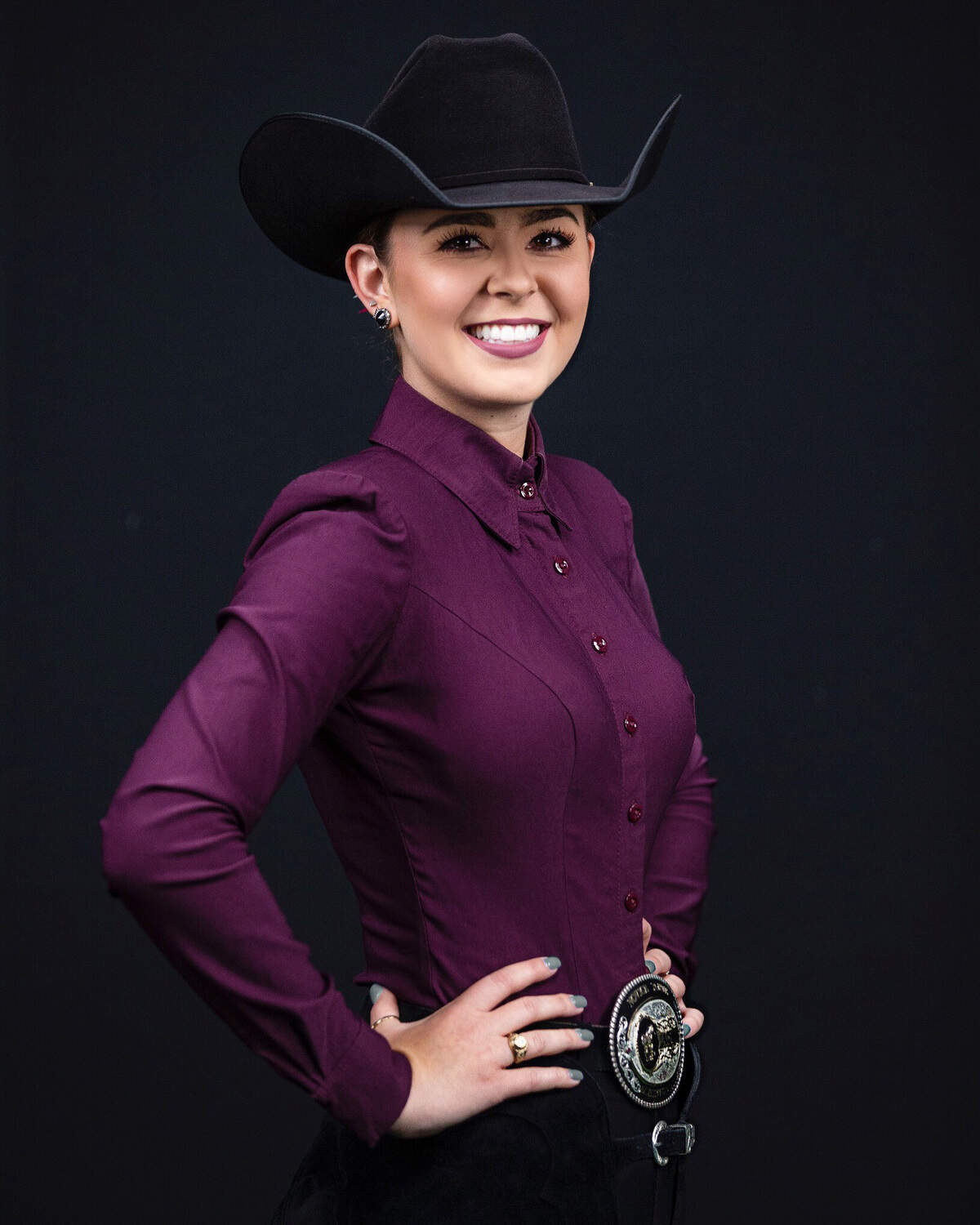
It was her third consecutive season being name honorable mention All-American.
That’s not bad for a woman who, as a young girl, had no idea someone could get part of their school paid for riding horses.
How she got to Texas A&M
“Growing up, I did it all when it came to horses,” Davidson said. “Barrel racing, you name it. But horsemanship is just so prestigious to me. It’s who looks the most beautiful on that horse. It has its challenges.”
Her mother, Sheila Davidson, made sure she had good equipment and a good horse to ride, no matter what she was competing in.
Ashley was about 12 years old attending a year-end banquet, when she heard an equestrian rider from Monroe speak named Parris Rice.
Rice said she had earned a scholarship to ride for Baylor University.
“They were actually giving her a scholarship,” Davidson said. “She was explaining the sport there, and my mom was giving me this look, like ‘You can do this.’ ”
Mom stepped it up, making sure Davidson had better horses.
It was time to get serious with lessons.
There was a lot of travel involved.
One of her trainers lived on the west side of the state in Arlington. Ashley would ride in competitions around the Northwest — in places like Monroe, Moses Lake, Walla Walla and Montana.
“I sent (universities) my resume that kept track of the awards I had won, sent them videos of me in action,” Davidson said.
It would be Texas A&M that came calling, offering her a scholarship.
College equestrian sports
Equestrian is considered an emerging sport in the NCAA.
According to the NCAA, “an emerging sport is a women’s sport recognized by the NCAA that is intended to help schools provide more athletics opportunities for women and more sport-sponsorship options for the institutions, and also help that sport achieve NCAA championship status.”
There are 18 Division I schools that have equestrian (including Texas A&M) and four Division 2 schools.
“Most girls on our team are on scholarship, in the 10 to 35 percent range,” said Davidson. “But we get breakfast and dinner five days a week, and free health care. I’m missing my chiropractor already.”
Now that her collegiate career is over, Davidson doesn’t have access to him.
“I always get so sore from flying in an airplane,” she said.
The sport has kept her busy for four seasons with the Aggies.
“Each week consists of workouts, practices and team meetings,” Davidson said. “We work out three days a week. I practiced a minimum of four days a week — five days on meet weeks. And then we also have stalls to clean and basic horse care.
“Travel added even more time to everything,” she continued. “I spent on average 30 to 40 hours a week just doing team stuff outside of school work and class.”
The competitions
The National Collegiate Equestrian Association (NCEA) organizes the equestrian competition.
There are four events in a NCEA equestrian competition where a school goes up against another school — in this case, for example, say Texas A&M against Georgia.
Those four events are Jumping Seat Fences, Jumping Seat Flat, Western Horsemanship and Western Reining.
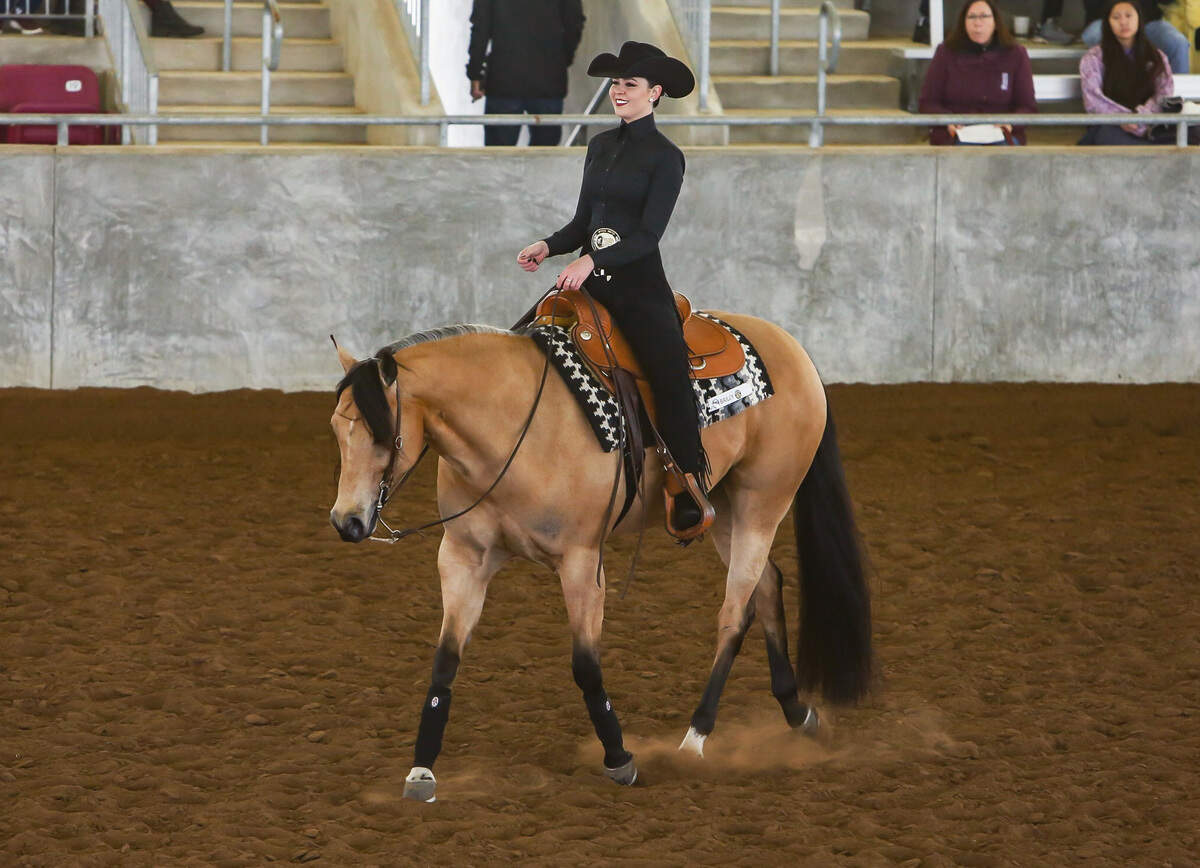
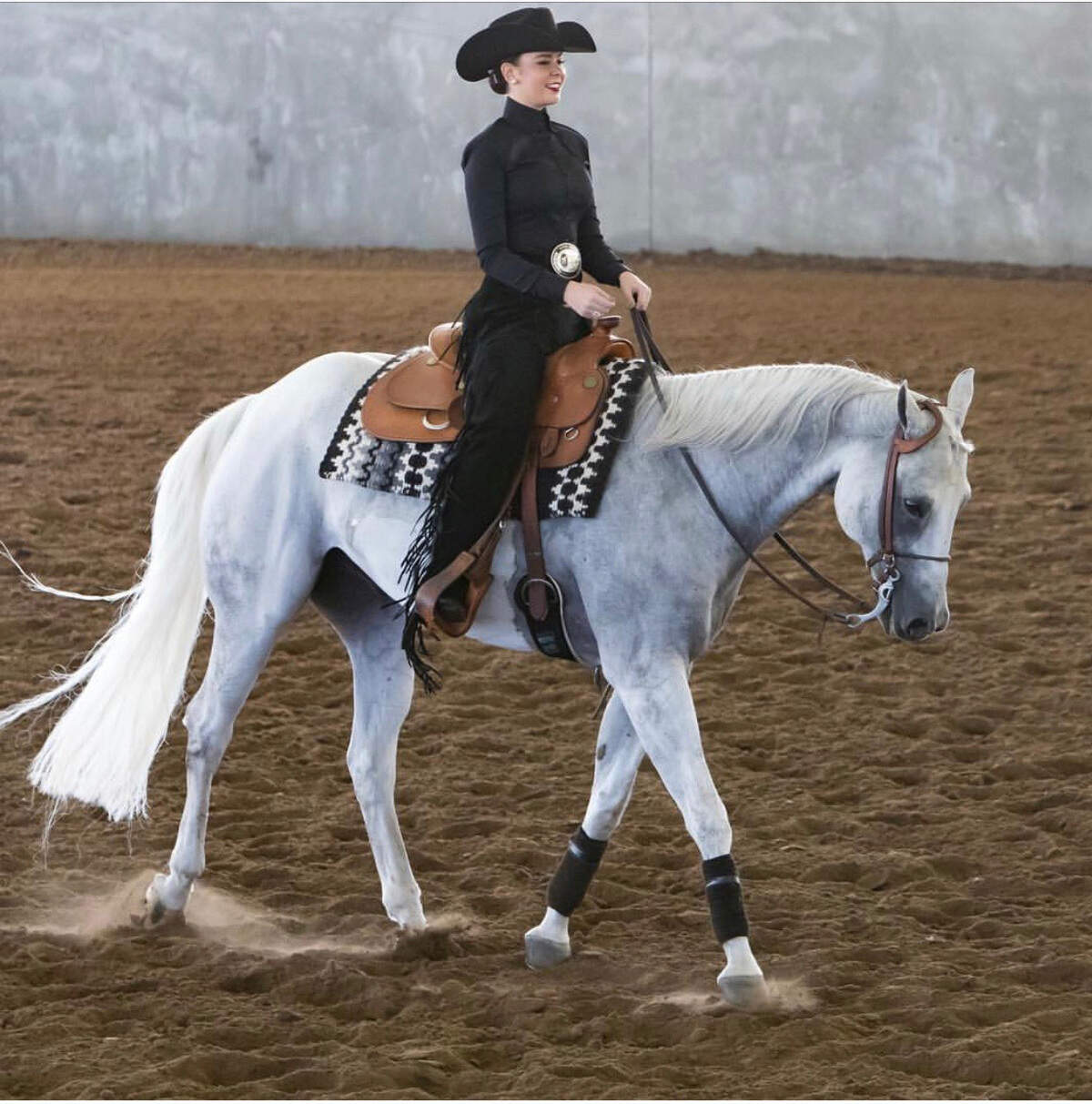
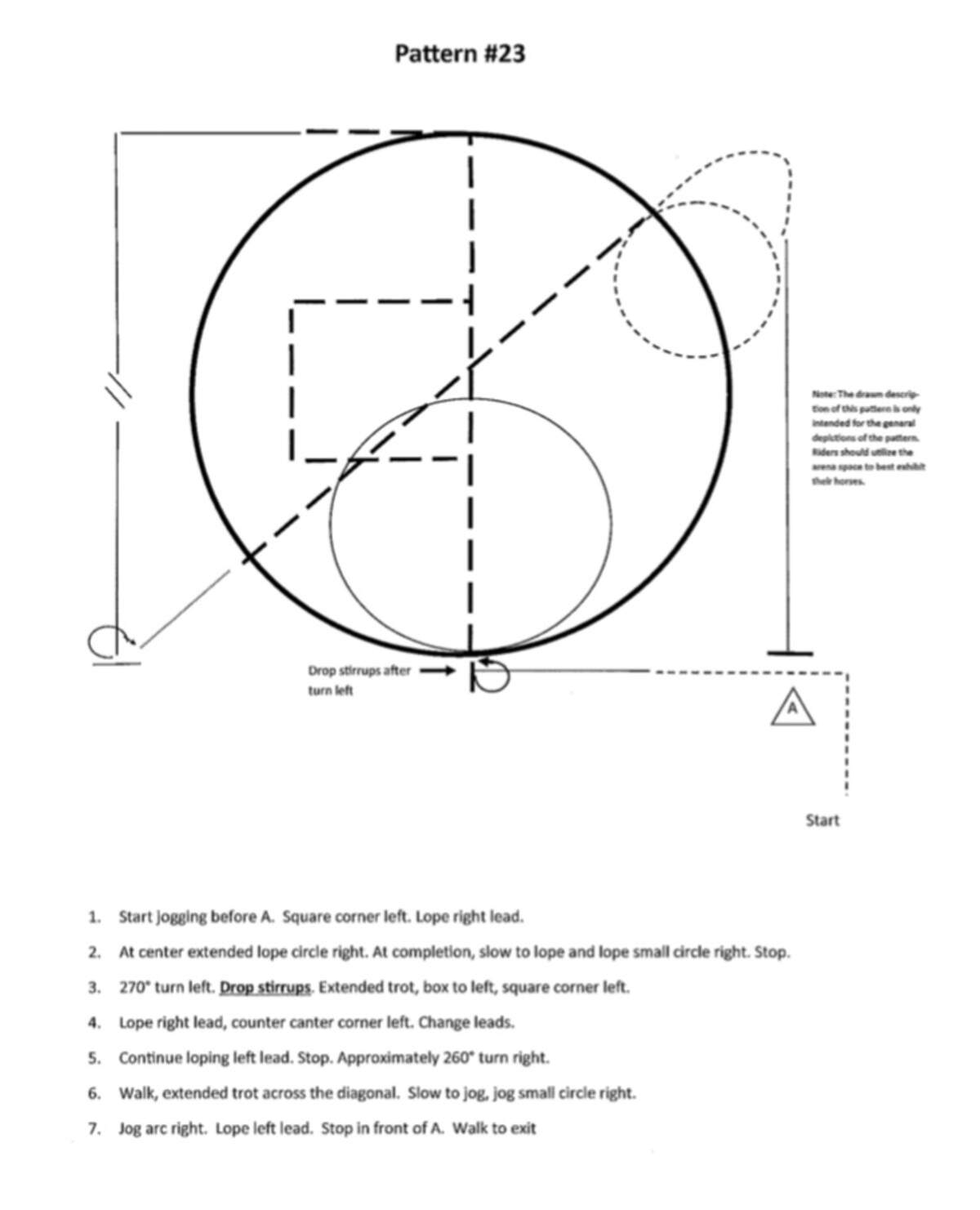
Davidson competed in Western Horsemanship, which is designed to evaluate a rider’s ability to execute a prescribed set of maneuvers with precision and smoothness, while maintaining a balanced, functional and fundamentally correct body position.
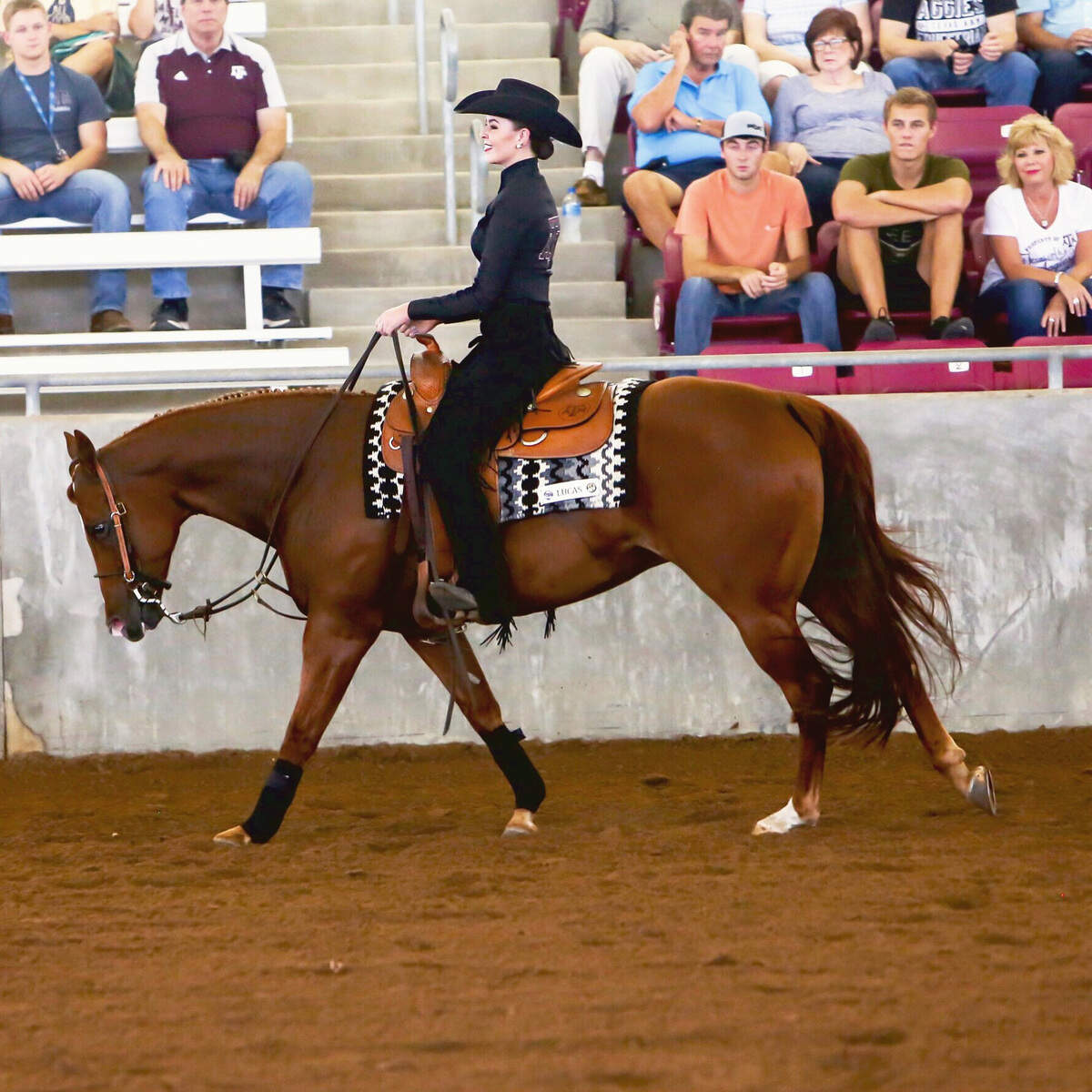
An ideal horsemanship pattern consists of seven to nine maneuvers, and is extremely precise with the rider and horse working in unison. Judges score the ride, starting with a base score of 70 and going up 3 points for good maneuvers, and dropping 3 points for mistakes.
Davidson’s top score this year was 78 points.
“It’s all about connection and control,” she said.
Now, here’s the tricky part: Davidson rarely ever rides the same horse.
Texas A&M has a stable of 72 horses for the equestrians to use.
“The horses are either donated or leased by the school,” she said. “Each day is a practice ride on a different horse.”
Competitions usually are a week apart.
So, let’s say Georgia is coming to visit the Aggies. The visiting Bulldogs don’t bring their horses — no visiting teams ever do — and instead A&M, as the host team, will pick five of its horses for the Western Horsemanship part of the competition.
“Two weeks out from an event, the home team sends out the pattern,” Davidson said. “There is a drawn out picture of it, and also a description of what the rider must do.”
Riders’ names are then drawn out of a hat. Davidson, for instance, might get a horse named Lucas. But a competing Georgia rider will also get Lucas.
Both riders will be scored by the judge, and the rider with the better score earns their team a point in the competition.
For the visiting rider, it can get pretty tough trying to figure out the horse.
“You mold yourself to what that horse needs, and you have to figure things out in 4 minutes before your event starts,” Davidson said. “Patterns are 2 to 5 minutes long.”
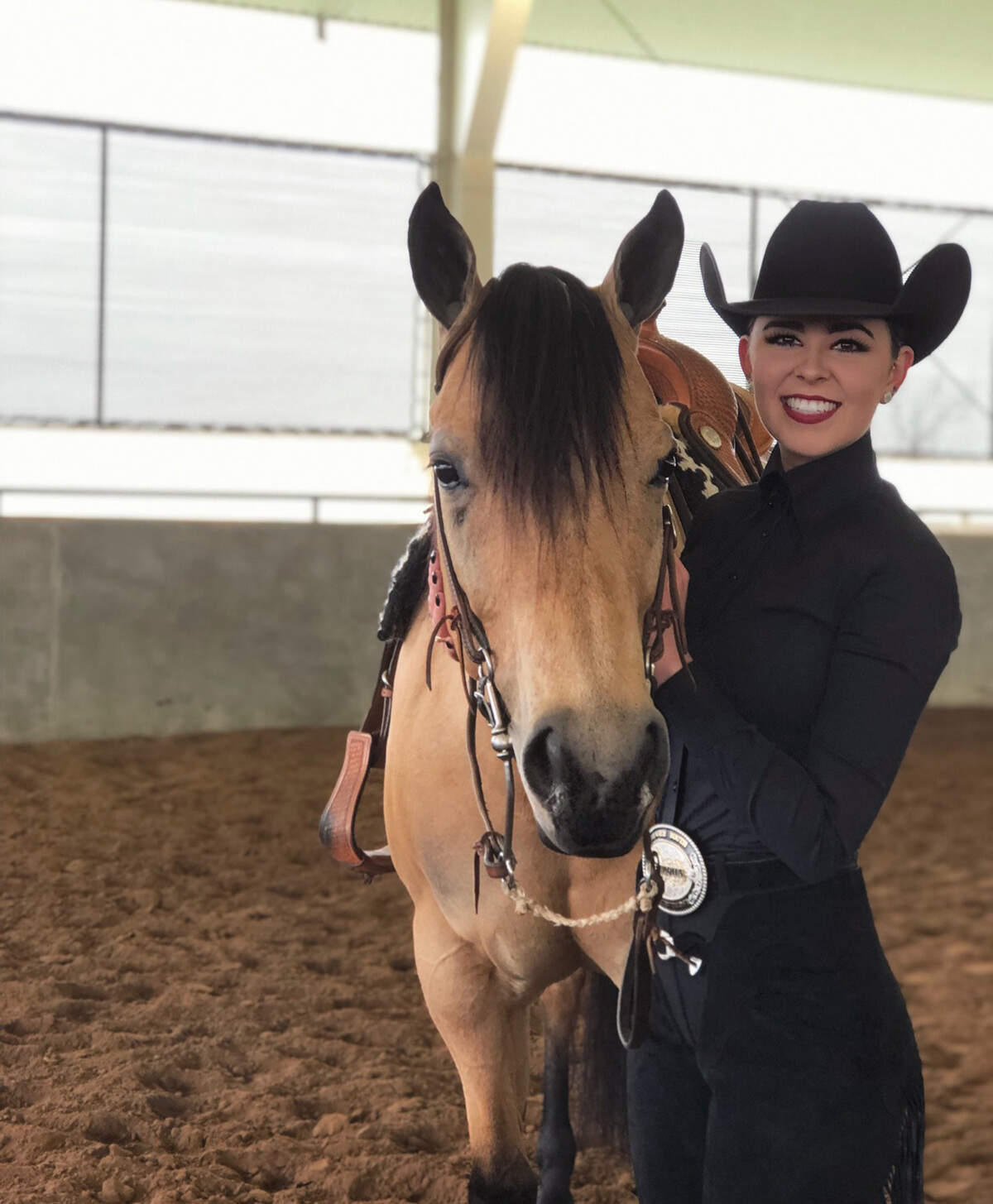
Now it doesn’t mean Davidson and her teammates are going in completely blind on a road trip.
“We watch video of horses, just like football players watch game film,” she said. “You plan on what you can do in 4 minutes. You study the sport. But once you cross that starting line, the horse may have different ideas.”
In the end, it comes down to how well the rider can relate and interact with the horse.
And Davidson is good at it.
Victories abound
She finished with a team-high eight victories this season for the Aggies, going 8-3-1 in competition.
In fact, she is a four-year letter winner who has competed in 43 meets for the program, compiling the fifth highest win percentage in program history, with .709 off of 29 wins.
Over her career, Davidson earned Most Outstanding Performer seven times.
“The judge picks it at each meet based on their opinion of the best ride and highest score,” Davidson said. “At the 2019 Nationals, I was selected by all five judges as the horsemanship MOP for the entire week.
About to graduate this spring with a degree in Animal Science, Davidson says she’s trying to find work.
“I’ve interviewed for a couple of different positions in the Dallas-Fort Worth area,” she said. “With what has been going on with the coronavirus, I’ve been doing a bunch of FaceTime interviews. One job is in IT staffing, the other is for an insurance company.”
But she has a bigger goal.
“My dream job would be in large animal pharmaceutical sales, but those jobs are hard to get,” Davidson said. “Right now, I just need to get a job.”
And she’s not done competing. She plans on doing this activity the rest of her life.
“Currently I don’t have a horse of my own,” she admits. “But I’ll always have to have a horse. I’m just so happy to be with a horse competing.”.
This story was originally published April 22, 2020 at 12:34 PM.