
How Don Monson built Pasco, Idaho, Michigan State basketball legacies
AI-generated summary reviewed by our newsroom.
- Don Monson rose from Pasco High to major college programs, compiling notable records.
- He built Pasco programs, reached state runner-up finishes and regional consistencies.
- Monson mentored players and coaches, recruited talent and shaped community culture.
At one point in his working life, Don Monson tried to go without coaching.
It was one year at Cheney High School, and it didn’t take.
“He was a vice principal. He hated it (not coaching),” said his son, Dan Monson. “His first year at Cheney he was an assistant coach in football and basketball.”
In the spring of 1967, Scott Foxley — Pasco’s long-time boys basketball coach who had also starred there as an athlete — took a job at Spokane Falls Community College, where he would end his hall of fame coaching career decades later.
Don Monson, wanting to get back into coaching, applied for and got that Pasco opening.
Don Monson would go on to establish a strong program at Pasco High School, Michigan State University, the University of Idaho, and the University of Oregon.
He influenced a lot of people’s lives, including his basketball coaching son, Dan, until he died in Spokane on Oct. 1 at the age of 92.
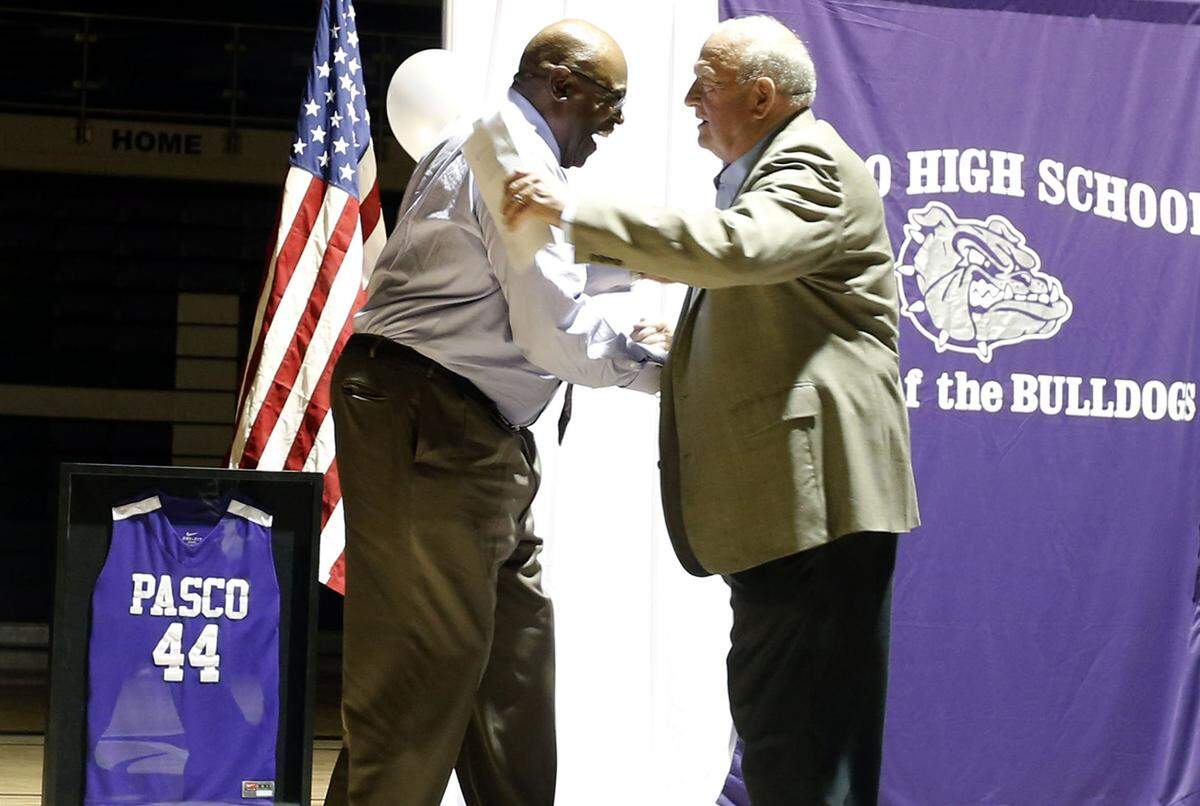
More than a coach
Don Monson worked at Cheney and Pasco high schools for 18 seasons, compiling a 266-134 record.
He was at Pasco from 1967 to 1976, putting together some very talented Bulldogs teams that played perennial Big 8 (later Big 9) champion Richland consistently shot for shot.
When Pasco qualified for regionals in 1968, it was the first time in almost 20 years that a Pasco High team had made it that far in the postseason — the last being in 1949.
His teams placed second at the state tournament, both in 1970 and 1971.
Bulldogs teams coached by Monson qualified, at minimum, for regionals every season he was at Pasco.
But Don Monson was more than just a coach. He was a counselor at the high school, and Dan remembers his dad coming home from work one day with a chipped front tooth.
He had tried to break up a fight between two girls and on accident he got hit in the face by one of them.
The 1960s in Pasco could be a tense environment. Young people were being drafted into the armed services during the Vietnam War.
There were racial tensions.
Monson was what the school and city needed.
“Don changed the culture of Pasco,” said Mike Guajardo, a Pasco High grad who went on to become the Bulldogs’ boys basketball coach as well as a teacher and later an administrator. “There was tension in the 1960s. He changed the culture on the other side of the tracks. The parents knew he had their back.”
Guajardo said Monson had no qualms about going into a rougher neighborhood to talk to one of his players.
“He made all kids be accountable,” said Guajardo. “He’d come knocking at your door to find out why you weren’t passing your class.”
But he’d also come check on you if you had problems.
On some days, Dan (who was in elementary school at the time) would go with his father to a player’s house in the poorer side of town to visit a sick Bulldogs player.
“We’d bring orange juice and snacks to the player,” said Dan. “It was eye opening for me. I was this sheltered white privileged kid, and I got to see how some of these kids were living.”
Drive to excel
Dan said that his father was, “in a way, kind of like the White Shadow” — a reference to a popular television series from 1978 to 1981, starring actor Ken Howard.
And like Howard, Don Monson could drive his players to excel.
“I was a junior at Pasco High when he came here,” said Guajardo. “I had no idea who he was. I really didn’t get to meet him until we started practicing. I was just hoping to make the team.
“The first thing I remember about him was that he was no-nonsense coach. He told us to get here on time and we were gonna work hard.”
What Don did at Pasco was impressive.
But he was about to get bigger.
In 1976, Monson made what is still considered an incredible career jump — going from being a head coach at the high school level to becoming the top assistant at Michigan State University.
There is no way nowadays that a high school could make that jump from high school to a major university — “Unless you’ve got a couple of good players coming along with you.” Dan Monson said.
It helped that Don’s long-time friend, Judd Heathcote, was becoming the Spartans’ new head coach.
When Don was at Cheney, Heathcote was the head coach at rival West Valley of Spokane.
Heathcote had coached five seasons at the University of Montana before getting the Michigan State job.
“Judd Heathcote believed in him,” said Dan. “Judd was one of those guys who didn’t care about images. He wasn’t politically correct.”
Don Monson would stay in East Lansing for two seasons, and he became a key recruiter that helped the Spartans sign Magic Johnson. As a sophomore, Johnson led Michigan State to the NCAA championship in 1979, beating Indiana State and Larry Bird.
Dan tells a story about his father thinking about leaving after the first season at Michigan State.
Don had an offer from Dwight Pool — at the time the athletic director and head football coach at Mead High School in Spokane, but also a former football coach at Columbia Basin College — to come to Mead to be the head basketball coach.
Don wanted to coach Dan, who was a junior in high school.
Don told Heathcote that he was going to leave for Mead.
“Judd said ‘No you’re not,’” said Dan. “I’m going to make you the highest paid assistant coach in the Big Ten Conference. And he did. It was something like $15,000 to $20,000.”
Don accepted.
Then a month later, Idaho — Don’s alma mater — had a head coach opening, and the Vandals came calling.
“Heathcote told him ‘That’s the job you leave Michigan State for,’” said Dan.
Don Monson was at Idaho from 1978-1983, and he put together some of the greatest Vandal teams in the school’s history. That included the 1981-82 team that finished 27-3 and making the NCAA Sweet 16.
The American Basketball Coaches Association made him the National Coach of the Year for Division I.
Don knew how to recruit, and he brought in Pasco star Kelvin Smith and Richland standout Brian Kellerman to play for him.
“I was with Brian Kellerman after the Idaho tribute (last month),” said Dan. “Kellerman told me he took some grief from some Richland people when he elected to go to Idaho to play for Monson (due to his Pasco connections).”
At Idaho, Don was inducted into the school’s athletic hall of fame, the basketball offices are named for him, and the Vandals honored him earlier this month at their game against Eastern Washington University (coached by Dan).
Don Monson finished with a 100-41 record at Idaho before Oregon offered him the head coaching position.
He spent nine seasons there, from 1983 to 1992.
His final college coaching record was 216-186.
More than wins and losses, though, Don Monson inspired others to excel.
Influencing others
Guajardo was one of those inspired.
“I was on sabbatical,” said Guajardo. “He’s the one who told me at hoops camp one summer, ‘I’ve got a grad position open next season. It’s yours if you want it.’”
Guajardo said Don was always a huge influence on him.
Dan, of course, feels the same way.
“No question I wanted to become a coach because of him,” said Dan. “I idolized my dad. I wanted to be him. Funny thing was, he was adamant for me to not be like him.”
There were too many ups and downs in coaching, he said. It’s tough on a family.
Dan was at the end of his sophomore year at the University of Idaho, in the business school. He hated it there.
“I didn’t want to do people’s taxes for the rest of my life,” he said. “I went home for dinner one night, and I told my dad I wanted to change my major. Dad never looked at me and kept eating.” What do you want to do?, asked the elder Monson.
“Education. I want to be a coach,” answered Dan.
Don countered: Do you want to be a coach because of me? Or do you want to do it for yourself?
“I can’t think of anything else I’d rather do,” said Dan. “It’s all I want to be. I wake up in the morning thinking about it.
“Dad got up from the table, walked over to me. And he hugged me.”
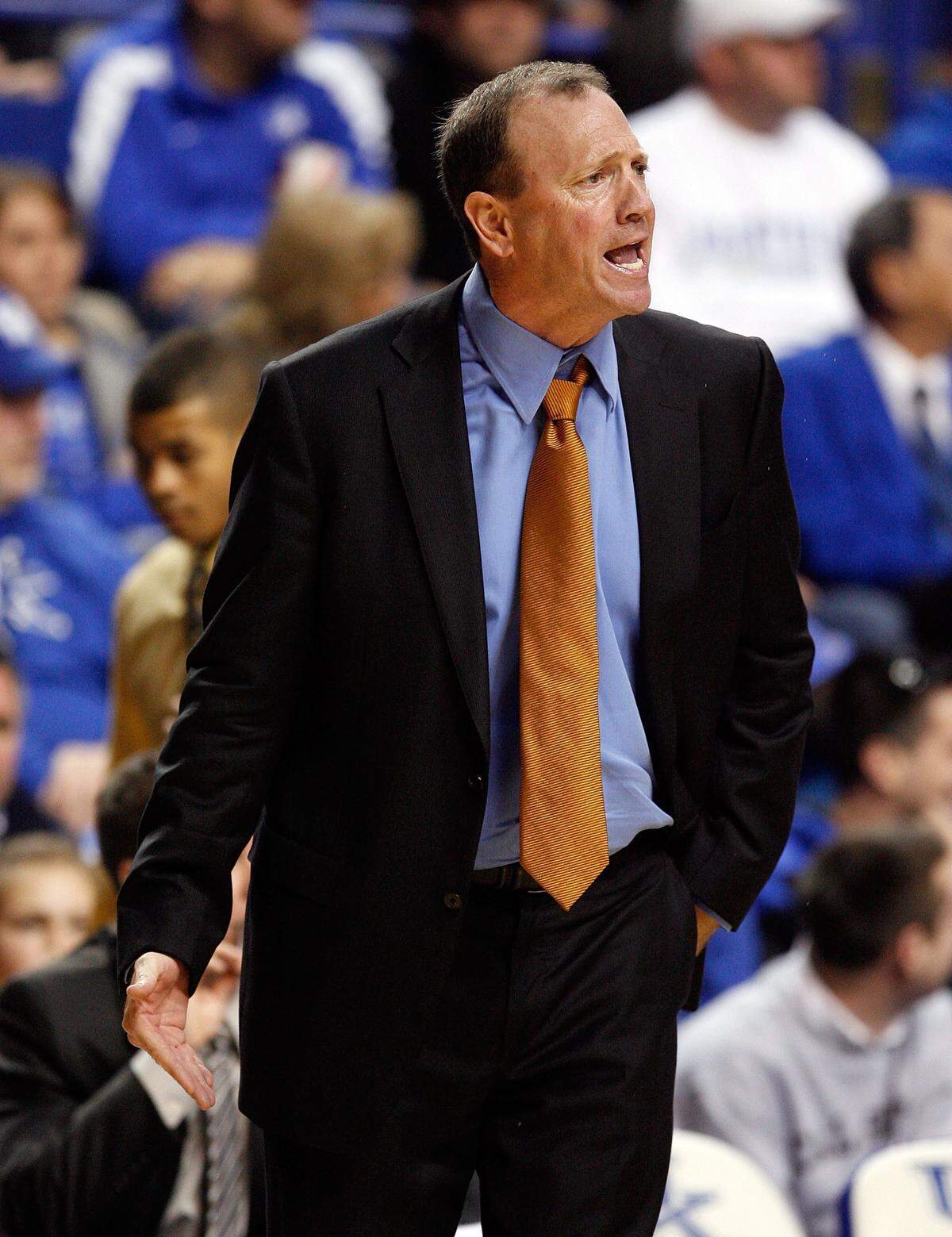
Dan Monson has been the head coach at Gonzaga (taking the Bulldogs to the NCAA tournament), Minnesota, Long Beach State, and currently at Eastern Washington University.
His father probably would have just as been as happy being a high school coach the rest of his life.
But instead, he moved up the coaching ladder, touching and inspiring many more lives.
-Jeff Morrow is former sports editor for the Tri-City Herald.