
Rep. Newhouse: Federal government remains committed to Hanford cleanup
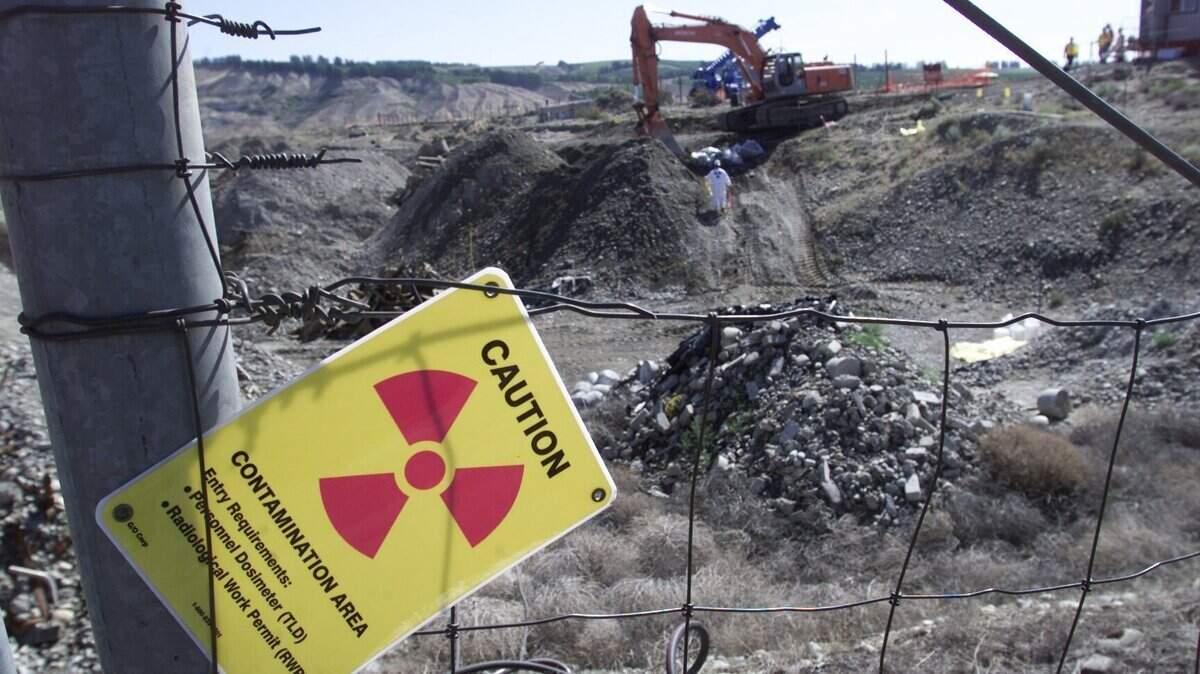
During World War II, the Hanford Site played a pivotal role in propelling the United States to win the nuclear arms race, which put an end to combat in the Pacific Theater. Decades later, as a result of that work, the federal government is still working on the largest environmental cleanup site on the planet, holding up its end of the Tri-Party Agreement to remediate the land.
One of my top priorities in Congress has been ensuring that Hanford has the necessary resources available to complete cleanup progress while ensuring taxpayer dollars are spent in an efficient manner. I have toured Hanford many times, most recently with Secretary of Energy Chris Wright where he reiterated the federal government’s support for timely cleanup, utilizing both the vitrification facility and supplemental treatments to accomplish that goal.
Recently, the House Appropriations Committee advanced its Fiscal Year 2027 Energy and Water legislation. Notably, the legislation returns Hanford’s funding to Fiscal Year 2023 levels, which at the time was record spending for the cleanup effort.
Over the last 12 fiscal years, Hanford’s budget has increased by an astounding, but necessary, 46 percent. During this period, it has remained the largest program under the purview of the Department of Energy’s (DOE) Office of Environmental Management. The work done at Hanford is revolutionary—turning low-activity radioactive waste into glass through a multi-step process on a scale that has never been done before.
However, at the same time, Congress must utilize its Article I authority to get our fiscal house in order, and that requires difficult decisions. While the Energy and Water appropriations measure slightly reduces funding to a previous fiscal year level, it prioritizes the continued retrieval and immobilization of tank waste and supports cleanup milestones to prepare for permanent treatment and tank closure.
The goal for Hanford should be to clean up as efficiently as possible and prevent nuclear contamination of the Columbia River. That requires a dual-capability approach of primarily vitrification and supplemental grouting—immobilizing waste in cement.
Prior to the Committee mark up, I met with the Assistant Secretary for the Office of Environmental Management Tim Walsh to discuss proposed spending levels and how they would impact Hanford’s operations. The assurances I received were that DOE is committed to meeting all timelines outlined in the Tri-Party Agreement and that this legislation would not result in missed timelines. The lion’s share of the budget changes are reductions in deposits to accounts not currently being used until needed engineering is completed.
The Tri-Party Agreement, which was signed nearly four decades ago, establishes timelines for cleanup, and authorizes the use of supplemental grouting treatment to process waste faster. Unfortunately, the Department of Ecology has yet to grant a permit to DOE for an additional grouting facility to work in a complimentary way with vitrification, which would expedite the cleanup process. Their opposition to the Energy and Water legislation is apparently due to slightly reduced funding—which they touted at one time as a “historic” success—is puzzling given their reluctance in approving additional permits.
The fact remains that this legislation spends taxpayer dollars in an efficient manner on immediate cleanup activities to continue the momentum of the vitrification plant, which just hit an important milestone of 100,000 gallons of waste solidified into glass. But vitrification is not the only means to this end, and all options should be pursued to clean up Hanford as quickly and safely as possible.
As the federal government continues its financial commitment to support the Hanford Site, I am confident we can do so in a fiscally responsible manner. We should not judge federal programs by how much they spend, but rather on how efficiently those dollars are spent. As I finish my final term in the House, I remain committed to providing DOE with the resources it needs to fulfill the federal government’s commitment to Hanford and the state of Washington.