
How are choices made when wildfires threaten homes in the Tri-Cities area?
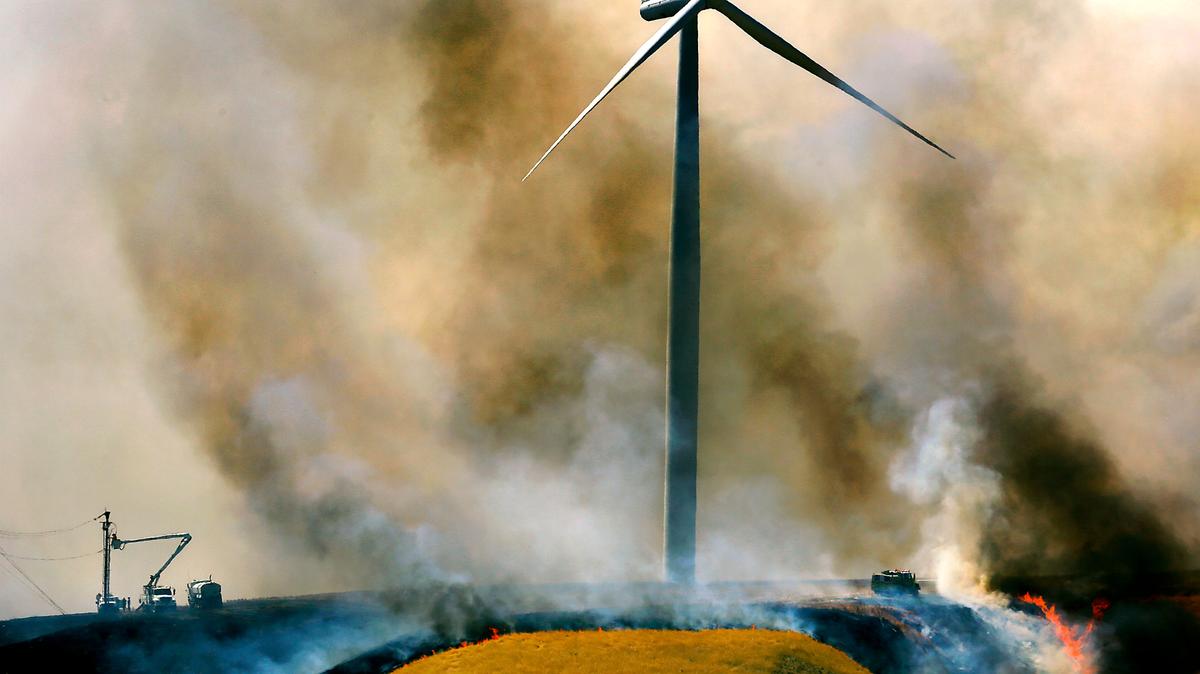
Wildfire season once felt like a distant threat—something that happened in remote forests, tragic but far away. That illusion is gone.
Across the Pacific Northwest, wildfire has become a defining force, reshaping landscapes, straining public resources, degrading air quality, and challenging long-held assumptions about how we live with fire.
And like electricity and water—two essential systems explored in recent Badger Forums—wildfire is now a resource we must understand, manage, and, at times, endure. This forum will again be hybrid, with audiences joining either in person or online.
For many in the Columbia Basin, wildfire is a problem that seems to erupt out of nowhere: a lightning strike, a passing train, a spark from farm equipment. Just this past week, Highway 14 was closed between Plymouth and Paterson for more than an hour while crews fought several grass fires ignited by chains dragging under a semi truck. A wind-driven grass fire can outrun a fire engine’s ability to reach a defensible position to fight or flank it.
But the choices that determine how a fire is managed begin long before the first spark.
Land management policies, forest health, zoning decisions, property owner efforts to reduce fuels, and climate trends all shape what happens once a fire starts.
Understanding these upstream factors is essential if communities hope to reduce risk rather than simply react to disaster.
When flames erupt and conditions shift by the hour, who actually decides what happens next? Who determines whether a fire is allowed to burn naturally, aggressively suppressed, or redirected to protect communities, animals, and infrastructure?
These decisions are never simple. They require balancing ecology, public safety, economics, and long-term land stewardship—often under intense pressure, with incomplete information, and always with consequences.
Our May 13 Badger Forum brings together a panel of fire managers, scientists, and policy leaders to walk us through the complex web of authority and responsibility that governs wildfire response in our region:
• David Peterson, UW professor and Emeritus Senior Scientist with the U.S. Forest Service
• Mike Harris, Franklin County Fire Chief and nationally certified incident commander
• Charlie Landsman, Community Resilience Coordinator, Washington State Department of Natural Resources
• Moderator Don Baer, Badger Club president and Firewise representative in his cabin community
Our panel will explore the factors that shape strategy: weather patterns, fuels, terrain, available crews and aircraft, differing land management policies, and the evolving science of fire behavior.
They’ll also confront the uncomfortable truth that “putting out the fire” is not always the best—or safest—option. As wildfire becomes a more frequent and disruptive presence in our region, understanding the decision-making behind it is no longer optional. It is part of being an informed, resilient community.
Wildfire will continue to shape the Pacific Northwest. The question is whether we, as a community, will shape our response with knowledge and intention. This Badger Forum is an opportunity to do exactly that—without the filters of rumor, politics, or social media oversimplification.
And what can communities and individual homeowners do now, with fire season nearly upon us?
This hybrid Badger Forum begins at noon on Wednesday, May 13. The in-person audience will gather in The Studio on Symons Street, 704 Symons, Richland. The forum is free. Whether you join in person or online, registration is required at columbiabasinbadgers.com. The conversation promises to be both timely and essential.
Kirk Williamson is a founding member and former president of the Columbia Basin Badger Club. He serves on the club’s program committee.