
SAVE Act won’t make elections better, it will suppress votes | Opinion
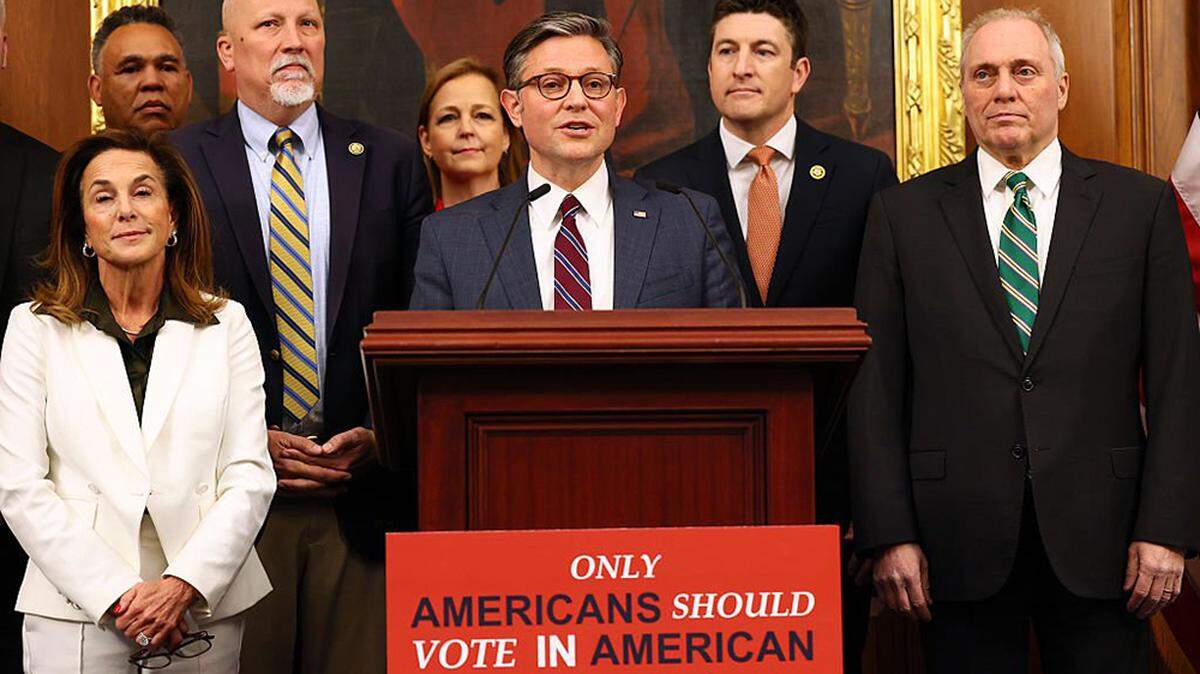
Debates over election integrity invariably bloom like Christmas Roses after ballots have been counted and results are published. The real and feigned indignation has historically focused on voters: they’re non-citizens, they’re voting multiple times, they’re “invading” from other districts, they’re “aliens.” More recently, claims of malfeasance have focused on technology, including claims that China used thermostats to hack into voting machines, or that voting machines were pre-programmed to flip votes. In a well-publicized 2020 case, Fox News paid Dominion Voting Systems nearly $800 million to avert a trial for promoting false claims of fraud.
With 2026 Midterms fast approaching, and knowing that historically the sitting president’s party loses congressional seats, the president’s party has decided to tackle election integrity by making it harder for American citizens to vote. In fact, reading the latest version of the Safeguard American Voter Eligibility (SAVE) Act (H.R. 22), one can conclude the bill, if passed, would make it impossible for literally millions of eligible voters to even cast a ballot.
Today, voter eligibility is verified primarily at the registration stage, using multiple data sources and ongoing list maintenance. At the point of voting, poll books prevent double voting, provisional ballots resolve discrepancies without disenfranchising voters, and chain-of-custody procedures protect ballots. After elections, audits, recounts, and court challenges provide additional layers of verification. Integrity is not assumed—it is assured. Under the Tenth Amendment to the US Constitution, states are responsible for this sacred duty, not the federal government.
Election integrity also depends on whether eligible voters feel it safe to vote, and whether they can trust the outcome. In the current political environment, some Americans—particularly people of color and members of immigrant or mixed-status families—reasonably fear harassment or intimidation at in-person polling places. This fear may arise from aggressive “poll watching,” from armed or uniformed individuals near voting sites, or even from the perceived presence of immigration enforcement agencies in public spaces. Whether or not intimidation is formally sanctioned, its deterrent effect is real.
When eligible voters avoid the polls because they fear confrontation, the election outcome is distorted—not by ballot fraud, but by suppressed participation. That is a failure of integrity just as surely as a counting error.
These deterrent effects are not evenly distributed. Communities that have historically experienced surveillance, discrimination, or unequal treatment are more likely to perceive risk in highly charged public settings. Any election system that ignores this reality misunderstands how integrity functions in practice.
This is where secure mail-in voting plays an essential role. In states that offer it, eligible voters can participate privately, safely, and without confrontation—while still being subject to verification, auditing, and accountability. Ballots are tracked, signatures are checked, and results are reviewed through established post-election processes. Mail-in voting does not weaken election integrity; it strengthens it by insulating the act of voting from coercion and intimidation.
By emphasizing rigid documentary proof requirements, the SAVE Act ignores that in real life, names change (a common issue for married women), records do not always match perfectly, especially for children born overseas, like mine, and required documents can be difficult, costly, and/or time-consuming to obtain. The result is not better integrity but, if “the right of citizens to vote shall not be denied or abridged,” then it is in fact, a detriment to the very integrity it seeks to enhance.
Preserving and improving the election system we already have, and ensuring a peaceful transfer of power, are the surest way to uphold election integrity and public trust. The SAVE Act doesn’t do the former, and it certainly doesn’t do the latter.
Urge your congressional representatives and senators to sink the SAVE Act and keep the Republic afloat.
Richard Badalamente is a board member of the Benton-Franklin Chapter of the League of Women Voters. He resides in Kennewick, WA.