
Homelessness: More need, fewer resources. How do we respond?
AI-generated summary reviewed by our newsroom.
- Benton and Franklin Counties face rising homelessness; nonprofit resources lag.
- Shelters, food programs, and recovery services operate but fail to meet total demand.
- Community forum on Oct 22 offers briefings and Table Talk; registration available online.
Across Benton and Franklin counties, the need is growing — but the resources aren’t.
Government agencies and nonprofit organizations work tirelessly to provide shelter, food, addiction recovery, and mental health support. Yet even their combined efforts fall short of meeting the full scope of the crisis.
There are only so many resources, and many of those have built-in barriers that make it impossible to shelter every person.
A woman with children, for example, can find shelter, but what happens if one of those children is a teen boy? Split them up? Send the boy to a men’s shelter? See the problem?
In his Hierarchy of Human Needs, Abraham Maslow gives us a roadmap for moving people out of homelessness:
Physiological needs
- Food, water, warmth, rest
- Basic bodily functions and survival essentials
Are those needs being met? Maslow says that only after those are met, can people begin to think about what might be next for their lives.
The new Columbia Valley Center for Recovery in Kennewick will no doubt help, but it won’t be able to meet the needs of all who live on the street.
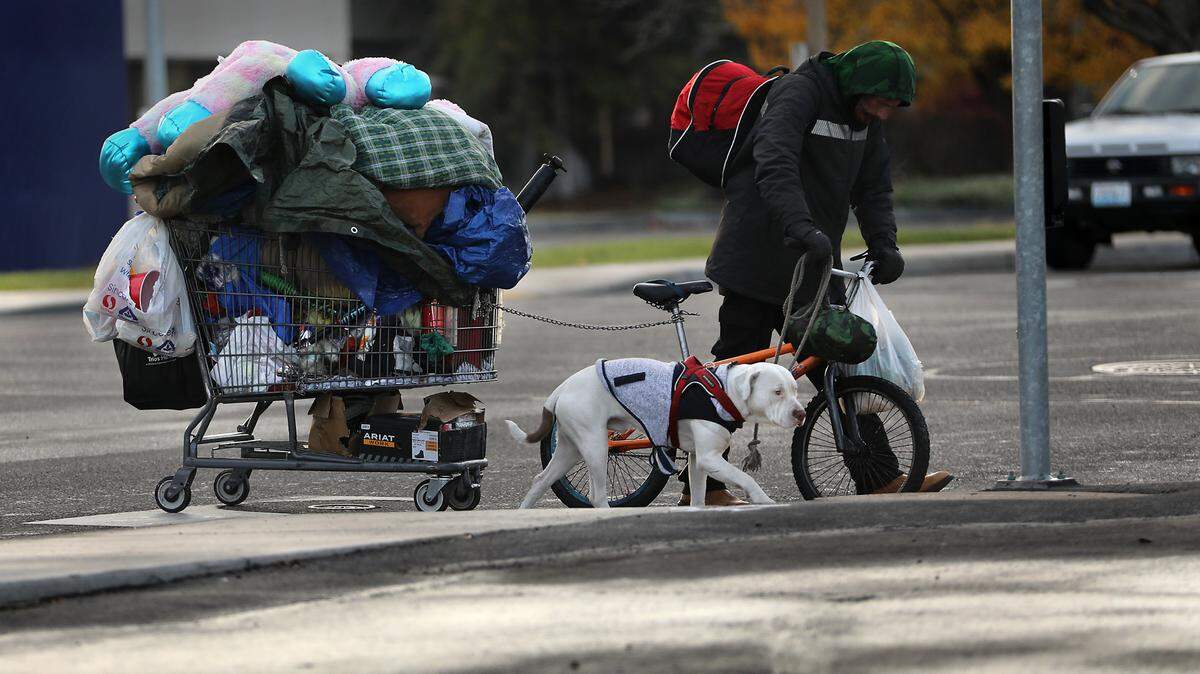
So, what happens when the system can’t reach everyone? What do we do when the need shows up not in a spreadsheet, but on the corner — holding a cardboard sign?
We respond as citizens. As neighbors. As humans.
- Start with dignity. A nod, a hello, or eye contact can affirm someone’s humanity in a world that often looks away.
- Carry kindness. Keep a few essentials in your car — bottled water, socks, granola bars, hygiene kits. A small gesture can mean a lot.
- Support local efforts. Volunteer with shelters, donate to food banks, or advocate for affordable housing. Your time and voice matter.
- Educate yourself. Homelessness is complex rooted in economic hardship, mental health, addiction, and systemic gaps. Understanding the causes helps us respond with compassion, not judgment.
- Ask better questions. Instead of “Why don’t they just get help?” ask “What barriers are in their way — and how can we help remove those barriers?”
We may not solve homelessness. But we can choose to respond — not with indifference, but with intention.
At noon this coming Wednesday, Oct. 22, the Columbia Basin Badger Club will present a conversation with two speakers who work directly – face to face with people who are living “in the wild,” as some put it.
Meet our speakers
The Rev. Jane Schmoetzer is a former engineer turned Episcopal priest. She currently serves as Rector (senior pastor) of All Saints’ Episcopal Church in Richland.
In December 2022, in response to bitterly cold weather over the Christmas holidays, All Saints spontaneously turned their parish hall into an emergency overnight shelter.
Since then, she and her congregation have opened the doors each winter, learning more each time about what “loving your neighbors as yourselves” really takes — and gives.
Tobaski Snipes is a decorated retired Army helicopter pilot and surgical technician who continues his life of service as Chair of the Continuum of Care, promoting a community-wide commitment to ending homelessness.
As the founder of Snipes H3, a nonprofit dedicated to empowering vulnerable populations, he draws on his military leadership and compassion to create pathways of hope and stability for 18- to 24-year-olds at risk of housing insecurity or needing mentorship.
I hope you’ll take time to learn from our speakers at noon, and then join Table Talk, our open-mic conversation with others who have watched the Oct. 22 forum. To register, please visit www.columbiabasinbadgers.com.
There is no charge for members. Others pay $10.
-Kirk Williamson is a founding member and past president of the Badger Club.