
Cutting red tape can help Tri-Cities meet increasing energy demand | Opinion
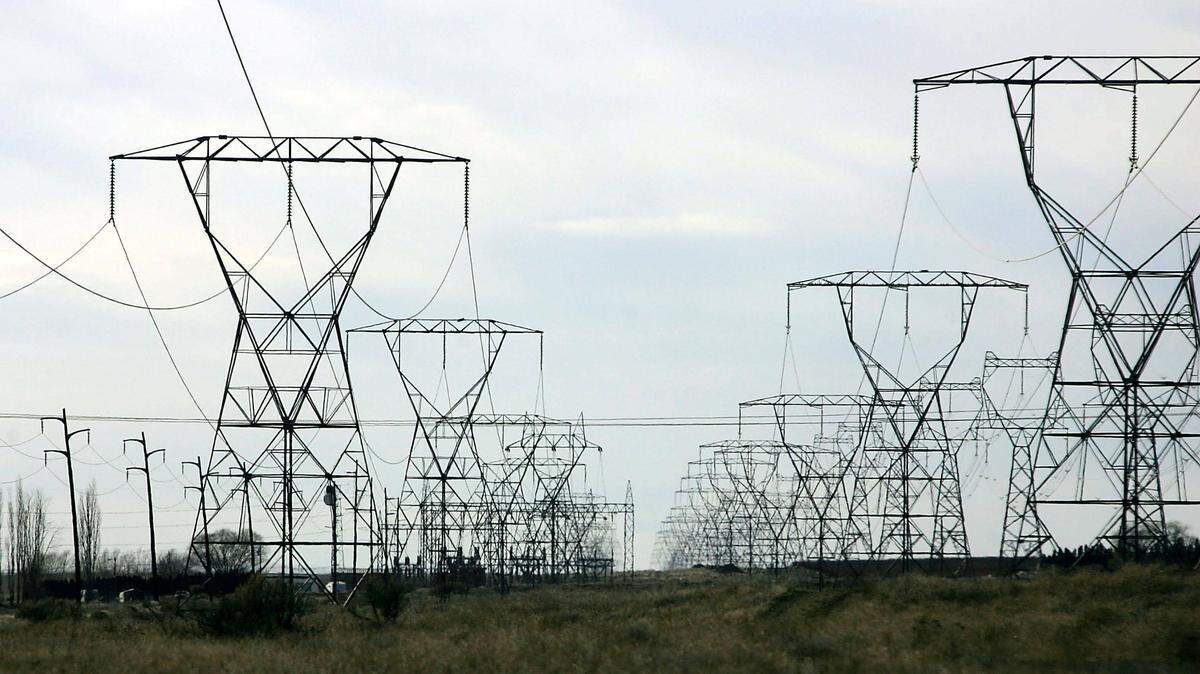
AI-generated summary reviewed by our newsroom.
- Electricity demand is set to double by 2050, driven by electrification and AI.
- Permitting reform and deregulation could accelerate clean energy deployment.
- Nuclear and geothermal offer reliable energy; federal support expands incentives.
Demand for electricity is expected to double in the next 25 years in the Tri-Cities, in Washington state, and in the U.S. But meeting that demand is going to be challenging.
The increase in demand is driven by the electrification of transportation, heating, and industry, by the expansion of data centers and AI, and by growth in population and economic production.
Conservation (improving fuel economy in vehicles, enhancing efficiency in lighting, industry, and heating systems) has historically played a crucial role in meeting the growth in energy demand, ensuring that energy supply meets demand without increasing production.
In the U.S., the amount of energy needed to produce wealth declined by 41% between 2000 and 2023, and by a factor of three in the last seventy years. This has enabled the U.S. economy to grow by a factor of 2.7 from 2000 to 2023, with minimal growth in total energy consumption.
Given the steady reduction in the energy intensity of the U.S. economy over the last seventy years, the U.S Energy Information Administration expects total U.S. energy use to continue to decline or change little through 2050.
But the electricity demand is expected to double as transportation, heating, and industry are electrified, and data centers and AI systems expand. Meeting the increasing electricity demand is a huge challenge, particularly if greenhouse gas emissions from electricity production are to be reduced to address climate change.
Hydroelectric power is the most cost-effective form of reliable electricity, with production that can be adjusted to some extent as demand and production from other methods change. But it cannot be expanded much more in the Pacific Northwest.
Wind and solar energy can be the most cost-effective ways to produce electricity when the wind is blowing and the sun is shining, but storing energy for availability during calm and dark conditions is more expensive ($0.2-0.4 per kWH for storage by batteries vs $0.1 per kWH for production), and solar and wind have little “inertia” to smooth out short-term fluctuations in production.
Grid Enhancing Technologies can smooth those fluctuations, but the storage requirements for bridging a week or more of calm, dark, and cold conditions are prohibitively expensive if wind and solar are relied on for all power production. Wind and solar power produce 38% of California’s electricity, but at a cost significantly higher than that of electricity produced in Washington State.
A wide variety of energy storage methods (mechanical, thermal, chemical, and electrochemical) are either available or in development; they vary in cost, round- trip energy efficiency, and reliability. The most common methods are pumped hydro and battery. Wind and solar pair well with hydroelectric production, which can be adjusted as wind and solar output vary, but only if the variability in wind and solar production is less than the adjustability available from hydroelectric.
Washington state is not a good place for wind power. Winds are consistently strong in the Columbia River Gorge, but wind turbines are not allowed in the National Scenic Area. The Hanford site is known for its “terminator winds”, but that is more because of the dust than the wind.
Natural gas-powered turbines produced 18% of Washington State electricity in 2024. They can provide cheap electricity on demand, but according to Benton PUD general manager Rick Dunn, Washington’s Clean Energy Transformation Act (CETA) will start penalizing that electricity at $84 per Megawatt-hour (the Benton PUD price for wholesale electricity is $40 per MWh) beginning in 2030.
Regardless of CETA, gas turbines are presently in short supply, with a backlog of six years. So, while natural gas is playing a role, its role will primarily grow over the next six years by utilizing existing gas turbines more frequently, and then it will come at a higher cost.
Advanced geothermal energy has great potential throughout the western U.S. By drilling two wells miles below the surface and connecting them with a horizontal conduit, it can produce reliable electricity with minimal surface footprint.
Using drilling skills developed and refined in the oil and gas fracking industry, enhanced geothermal startup Fervo drilled two wells 7700 feet deep and a 3250 feet horizontal connector in Nevada that is producing 3.5 megawatts of electricity, and more recently drilled a three mile deep advanced geothermal system in Utah in just 16 days. The U.S. Department of Energy estimated that advanced geothermal energy can meet 16% of U.S electricity needs. That will help, but more is needed.
That leaves nuclear. Fusion has not yet achieved practical deployment, while fission has a long record of production and innovation. Nuclear fission currently produces 19% of U.S. electricity with an excellent record of safety and reliability. A key issue is cost. Advanced designs feature passive safety mechanisms, improved fuels, reduced waste, extended fuel cycles, and enhanced coolants (molten salt, liquid metal).
The new designs are being developed in small, modular configurations, which reduces the time to completion, allowing for faster refinements and reductions in construction costs, as well as the potential for mass production and quicker deployment that follows the expansion of electricity demand, rather than relying on ten-year projections.
Eventually, when efficient designs are established, larger units that offer economies of scale can be introduced. China and Russia have already successfully built and deployed some of these with the safety features we put into those designs, at half the cost and half the time expected in the U.S.
As in all new technologies, the first new nuclear units in America will be the most expensive. Amazon has ordered four initial units to be built and operated nearby by Energy Northwest; the knowledge that Energy Northwest gains from building those units can be used to reduce the cost and construction time for subsequent orders.
Nuclear waste is harmless if properly isolated and stored, as has been demonstrated at the Waste Isolation Pilot Project (WIPP) in New Mexico for 26 years, where it has been safely stored for weapons waste. The WIPP site was designed and built to accept all types of nuclear waste.
All nuclear waste together wouldn’t fill a high school soccer field. Dry cask storage, as practiced now for spent fuel from commercial reactors, is suitable for over 160 years; the resulting waste is easily transferred to new casks if needed. The real hot components of the waste decay in 300 years, after which the waste is about as hot as the ore the uranium came from. You could hold it in your hand. Isolating it for this shorter time is easy. Then that waste can be stored in a place like WIPP, where it takes water a billion years to move an inch.
If you want to know more about nuclear energy, attend a free screening of “Nuclear Now” at 5:30 in the Richland Public LIbrary on Tuesday October 28.
What, specifically, can and should be done by the government?
First, the permitting process for all forms of electricity should be expedited, shortening the statute of limitations for submitting lawsuits, which is currently six years. While the five-month window in the 2024 permitting reform bill was too short to be acceptable to enough Members of Congress to pass the bill, Congress should seek a compromise that it can pass.
Second, there is ample room for executive deregulation that ensures the safe development of electricity infrastructure while expediting the deployment of nuclear power, transmission lines, and wind farms. President Trump’s nuclear energy executive order will expedite nuclear license evaluations and likely shift the culture of the Nuclear Regulatory Commission from extreme risk aversion to a more balanced perspective that considers both benefits and risks.
Third, while the One Big Beautiful Bill Act passed by Congress phases out subsidies for wind and solar energy, it preserves investment and production tax credits for nuclear energy, geothermal energy, battery storage, and hydropower through 2034.
Fourth, in Washington State, some of the Climate Commitment Act revenue should be allocated to nuclear power, as it has a significantly lower carbon footprint.
Taken together, these actions can provide an abundant supply of electricity to meet the increasing needs of the Tri-Cities, Washington State, and the U.S.
Jim Conca is a longtime resident and scientist in the Tri-Cities and a science contributor to Forbes. Sen. Matt Boehnke represents the 8th Legislative District. And retired climate scientist Steve Ghan leads the Tri-Cities Washington Chapter of Citizens Climate Lobby.