
Is Tri-Cities doing enough to address growing traffic congestion? | Badger Club forum
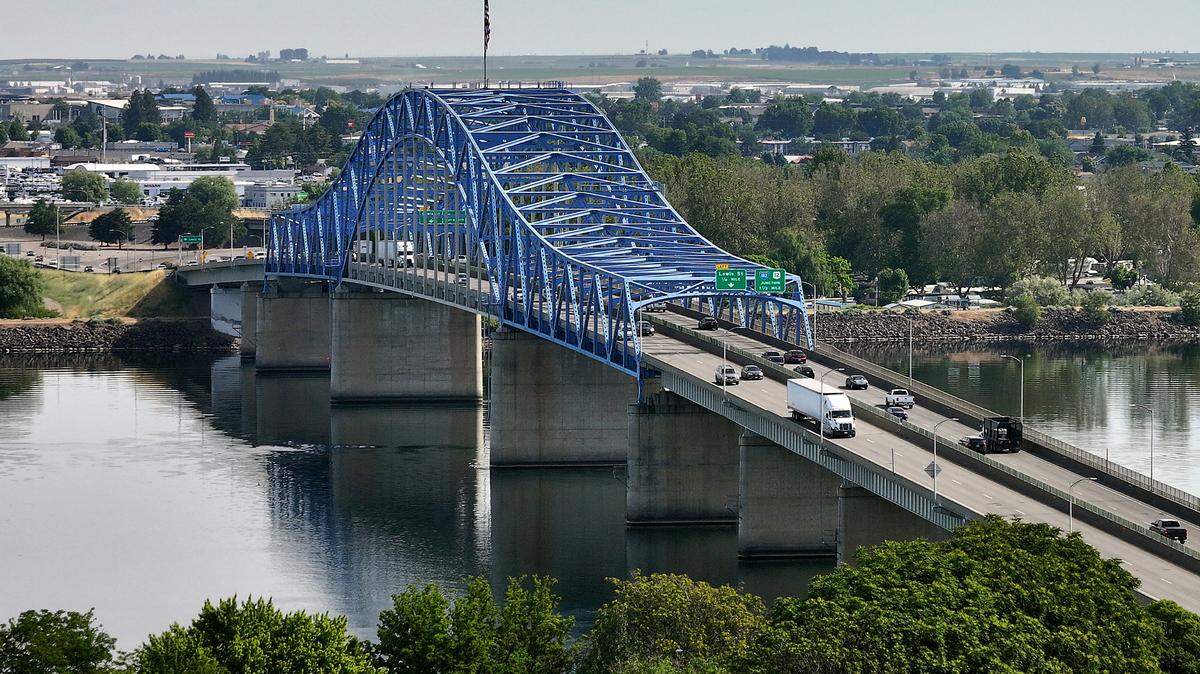
We had our version of traffic jams last year as Highway 395 was choked to one lane while the 70-year-old blue bridge was repainted and Interstate 182 was congested from construction of the revised Road 100 interchange.
Many Tri-Citians certainly wondered: Is there any coordination and planning for such road disruptions?
On Thursday, July 17, the Columbia Basin Badger Club’s online Zoom forum will dig into this question.
Over the past 50 years, our three small towns along the Columbia River have developed into five adjoining cities in three counties. The population has grown from 100,000 to more than 330,000 and rapid growth is expected to continue.
According to projections by Benton-Franklin Trends, our population is anticipated to increase by 35,000 over the next five years — equivalent to adding another city half the size of Richland.
Companies such as Amazon, AutoZone, Resers, FedEx and Darigold are capitalizing on our developable land with highway, rail and barge connectivity to expand operations. While these developments are welcome, it is crucial to evaluate whether our infrastructure effectively supports the movement of their employees and our residents.
Connecting our communities with bridges across the Columbia, Yakima and Snake rivers required major investments and years of planning and design.
Extending local roadways leads to more development as cities continue to spread across the landscape. And transportation planners have noted that existing local land use management plans do not adequately address transportation needs of this growing area.
If historical patterns are any indication, people will continue to rely on personal vehicles, with traffic congestion becoming more frequent.
Do our transportation agencies have far-sighted plans that will address this growth?
Our guest speakers are well-versed in transportation planning. They are:
- Erin Braich is the Metropolitan Planning Organization deputy director for the Benton-Franklin Council of Governments. He grew up in the Tri-Cities and attended Eastern Washington University, where he graduated with a bachelor’s in Urban and Regional Planning. After undergrad, he moved to Honolulu, Hawaii, where he obtained a master’s in Urban and Regional Planning and Certificate in Disaster Management and Humanitarian Assistance, focusing on land use planning.
- Thomas Drozt is the chief executive officer of Benton-Franklin Transit, with more than 30 years of experience dedicated to improving public transportation. He began as a bus driver and has since held key leadership roles across Arizona, Los Angeles, and Atlanta, where he was deputy chief at the Metropolitan Atlanta Rapid Transit Authority. At BFT, he is focused on enhancing service, fostering strong community partnerships, and shaping the future of transit in the Tri-Cities.
You can register for this event, which will include a Q&A session, at columbiabasinbadgers.com to receive a confirmation and links to join the hour-long Zoom forum and a half-hour “Table Talk” open-mic session afterward.
Cost is $10 for nonmembers, while club members can join for free.