
Congress must act now to address energy infrastructure bottlenecks | Opinion
Our current Congress still has more work to do, so you can help get some important climate legislation across the finish line.
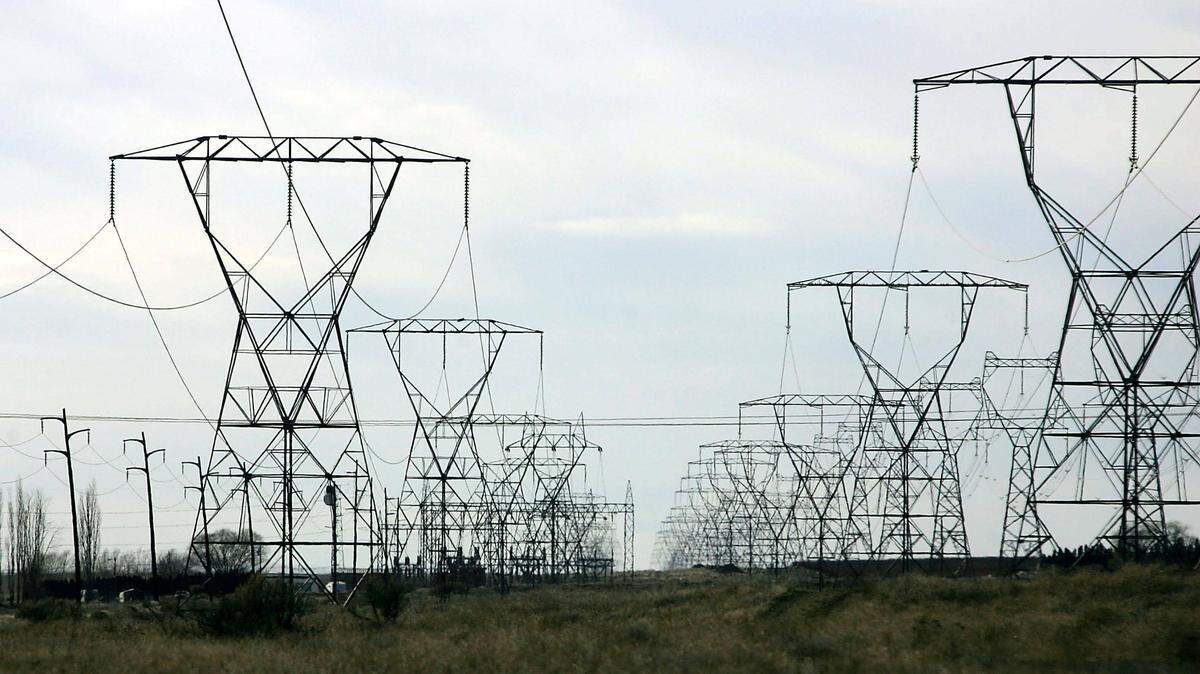
The legislation is called the Energy Permitting Reform Act (EPRA). It’s important for climate because it addresses a major bottleneck to the distribution of electricity from where it’s produced to where it’s needed: the approval of new transmission lines.
By connecting different regions and sources of electricity production, transmission lines also make the grid system more resilient, preventing blackouts during periods of high demand.
The permitting process for energy infrastructure must satisfy the requirements of the National Environmental Protect Act (NEPA), a law passed in 1969 to protect the environment from reckless development.
NEPA has been remarkably effective in doing that, but it has also been abused by those opposed to projects with little environmental impact but are ultimately abandoned if the review process takes too long.
As a consequence of such abuse, approval of transmission lines can take more than ten years, delaying or effectively blocking the addition of badly needed power sources to the grid and improvements to the reliability of the entire grid.
Of the 1480 gigawatts of U.S. solar and wind power projects proposed between 2000 and 2017, only 21% (14% of potential capacity) had been completed and connected to the grid by 2022.
That makes it difficult to meet the increasing power demands of data centers, artificial intelligence, cryptocurrency and electrification of transportation and heating systems for households, businesses, organizations and government.
The EPRA would reduce the window for filing lawsuits against approved projects from six years to 150 days, sets a time limit for an agency response to a court decision, and requires courts to prioritize energy and mineral cases. The environment is still protected; EPRA would simply limit the extent to which NEPA can be used to delay energy projects that have no substantial environmental impacts.
In addition, the EPRA would require transmission operators to include inter-regional transmission in their planning, and would give the Federal Energy Regulatory Commission the authority to permit interstate electrical transmission lines and to charge the costs of new transmission lines in proportion to their benefits.
These changes will lead to more electrical transmission lines getting built sooner — vital to connecting energy projects to where power is needed.
The EPRA has been introduced in the U.S. Senate, and in August it passed the Senate Energy and Natural Resources Committee with bipartisan support by a vote of 15 to 4.
But neither the full Senate nor the House has voted on the bill.
Why such bipartisan support? Because EPRA’s acceleration of the NEPA approval process benefits both powerlines and pipelines. Democrats get what they want (faster installation of solar farms, wind farms, geothermal plants and power lines), and Republicans get what they want (faster approval of pipelines and gas terminals).
Some Democrats have opposed EPRA because they fear it will increase the production of oil and gas. But the U.S. is already energy independent, and the vast majority of energy infrastructure awaiting approval is for carbon free electricity production and distribution.
If that electricity is used to displace internal combustion vehicles and gas furnaces, demand for oil and gas will decline, regardless of the availability of new pipelines and terminals. Consequently, EPRA is estimated to reduce total U.S. carbon emissions between 2030 and 2050 by about 10%. That’s a lot for bill with little cost to taxpayers or consumers.
Why not just wait until the next Congress? While it could pass EPRA, it is expected to focus on passing partisan legislation through budget reconciliation, which can only pass legislation that involves the budget. EPRA simply changes NEPA rules. And if Congress did pass EPRA through bipartisan procedures, President Trump would veto it, as he opposes wind turbines.
Can the current lame duck Congress pass EPRA? The success in the Senate Energy and Natural Resources Committee is encouraging.
Senator Cantwell serves on the committee and voted for EPRA after failing to add amendments that would prohibit oil and gas leasing on the outer continental shelf. Our Representative Dan Newhouse often says he embraces an all-of-the-above energy strategy; EPRA would be an opportunity to prove it.
To ensure passage of EPRA, I urge you to write to our Members of Congress now, using the templates at bit.ly/energyreformact.