
Washington’s agricultural bounty is built on a climate that is worth saving | Opinion
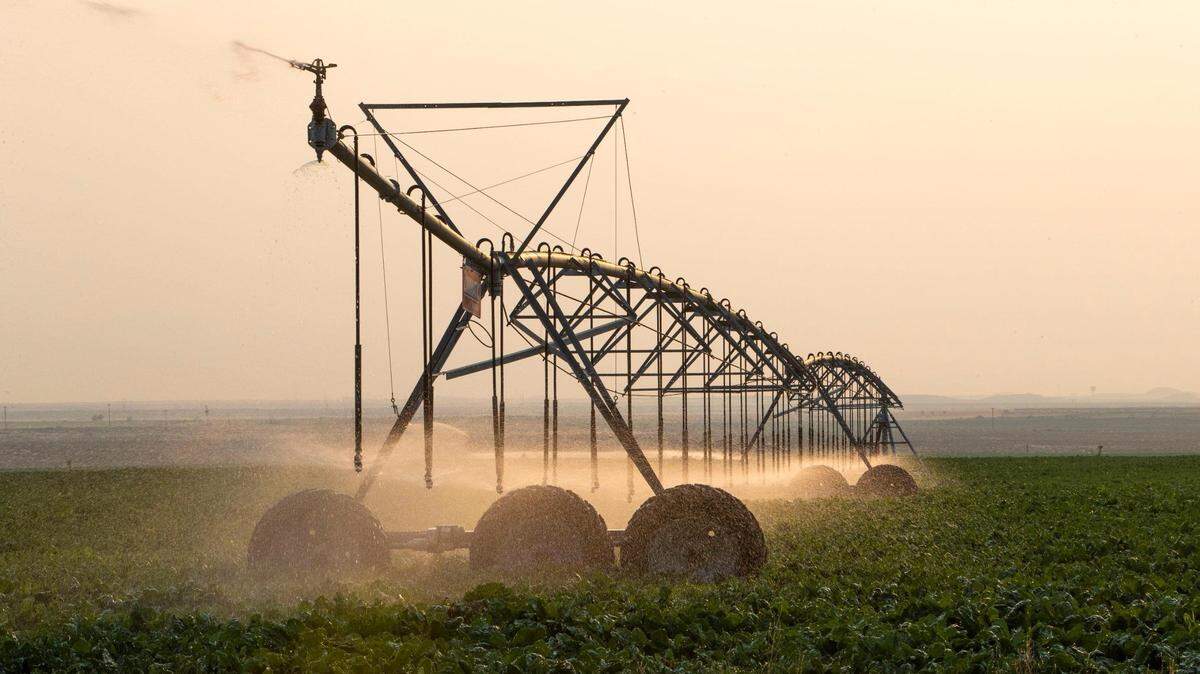
We here in Eastern Washington are blessed with an agricultural bounty arising from an unusual combination of plentiful sunshine and abundant water.
The ability to irrigate crops and trees in the presence of reliable sunshine has enabled our 164,000 agricultural producers to generate $20 billion in annual income. Washington is the number-one producer of apples, blueberries, hops, pears, spearmint oil and sweet cherries in the U.S. and the number-two producer of grapes, wine, apricots, asparagus, potatoes and raspberries.
Our economy and infrastructure are adapted to the climate of the past 150 years. We built our irrigation system based on the assumption that the climate of the recent past would be representative of the climate of the future.
But as the world warms in response to greenhouse gas emissions, you don’t have to be a climate scientist to anticipate a decrease in the snowpack that we have relied on as a natural reservoir of water for irrigation.
My own climate research found a 70% reduction in mountain snowpack in the western U.S. by 2100 for a carbon emissions scenario not unlike the path we are on.
Since 70% of river flow in the western U.S. is from snowmelt, a 70% reduction in snowpack means a 50% reduction in irrigation water, unless that natural reservoir is replaced.
Depleted snow is not the only water concern in a warmer world. Even if total precipitation doesn’t change, if more of it falls as rain rather than snow, we can expect more frequent and intense flooding during winter, when most precipitation falls in Washington State.
The Yakima Basin Integrated Plan was developed to address these risks. The Kachess Reservoir will be managed more efficiently, the level of the Cle Elum Reservoir will be raised, excess water will be pumped underground, and conservation measures will be implemented.
Raising the level and area of the Bumping Lake Reservoir and adding new reservoirs have also been proposed. But such resilience comes at a cost, estimated at about $4 billion over 30 years. That funding will come from a combination of federal tax revenue, state tax revenue and higher irrigation fees.
In addition to the financial burden, land and cabins at Bumping Lake and other reservoirs will be lost. And that is only for the Yakima watershed.
Fortunately, we have economical solutions available to replace the fossil fuels that are responsible for 75% of global greenhouse gas emissions: carbon-free energy, heating and transportation.
And we have legislation such as the Inflation Reduction Act and the Energy Innovation and Carbon Dividend Act to incentivize their use. Let’s work together to use them to address the root cause of the increasing flooding and loss of snowpack: greenhouse gas emissions.
In the monthly Op-Eds I’ll be writing for the Tri-City Herald, I’ll focus attention on those solutions and emphasize what you can do to implement them.
This story was originally published November 5, 2023 at 5:00 AM.