
Richland’s data center plan ignores impact to the community | Opinion
TCs data center plan not consistent
The Tri-Cities has a strong, diversified economy supported by federal research, healthcare, agriculture, energy production and sustained residential growth. Unlike communities that pursue large industrial projects out of economic necessity, this region does not require data centers to remain viable.
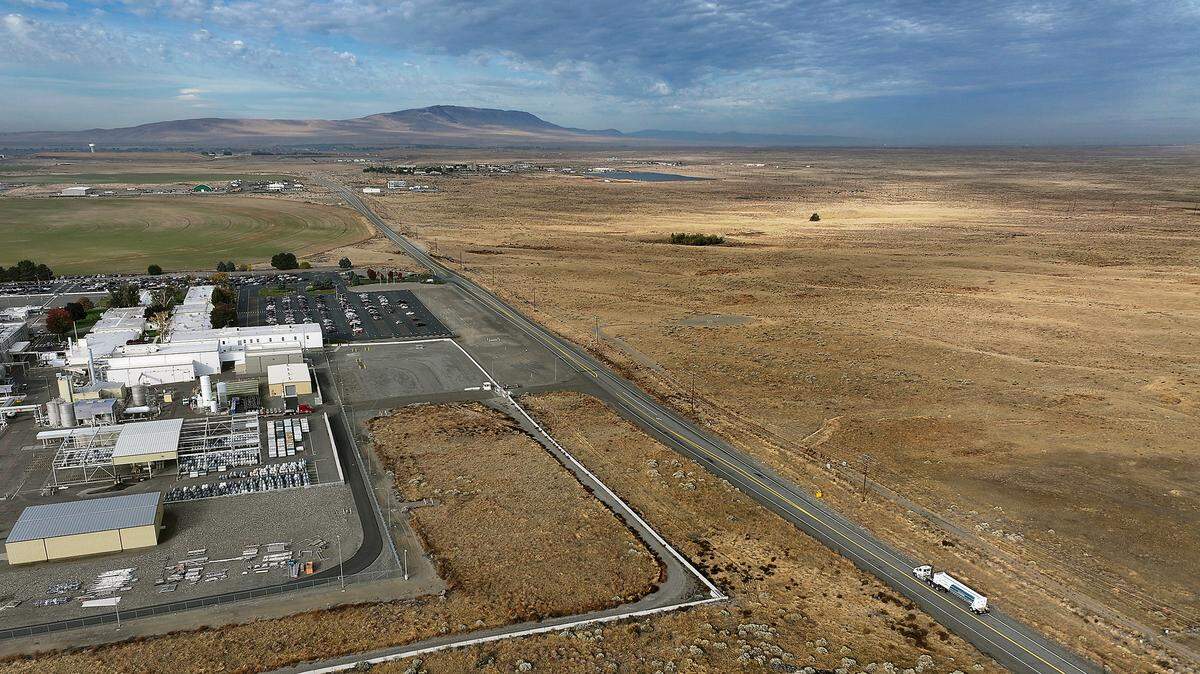
First, scale matters. A data center campus spanning hundreds of acres corresponds to extreme electrical loads and permanent infrastructure commitments. These facilities are capital-intensive and employ relatively few workers once operational, with long-term impacts concentrated in land use, power demand, water consumption and backup generation.
Second, location matters. Major industrial facilities in the region have been sited with isolation and wind patterns in mind. The Hanford Site was located with extensive buffer zones and prevailing winds that generally carry emissions away from population centers. Proposed sites along the Yakima River corridor are far closer to existing neighborhoods and areas designated for future residential development, with prevailing winds frequently moving toward urban areas.
Third, water constraints matter. The Yakima Basin experiences recurring summer drought conditions and documented groundwater nitrate contamination, largely from agricultural sources. Similar conditions in Boardman, Ore., show how groundwater impacts are exacerbated.
Siting large data center campuses in or near the Tri-Cities is inconsistent with long-term regional planning.
Nathan Lowe, Richland
Damning letters disappear: poof!
Poof! Damning Trump Pic Disappears From Epstein Dump. More: At Least 16 Files Vanish.” (Huff Post, 12/20). Apparently no transparency here. But what could we have expected? When I heard and read the Epstein files were to be publicly available, I laughed and laughed. Never. The con and his cronies win again.
Bink Owen, Walla Walla
Turning Point tent ‘double standard’
Turning Point USA held its annual convention Dec. 18–21 in Phoenix. One of the attractions? A replica of the tent where Charlie Kirk was tragically assassinated in September.
Attendees posed for selfies under it—just months after many of them tried to get people fired for online comments about Kirk’s death.
I have a question for (Kennewick) Councilmember Brad Beauchamp and Moms for Liberty, who led the charge to oust a KSD special education teacher over her comment: Will you now demand consequences for TPUSA attendees who turned Kirk’s death into a photo op? No? Why the double standard?
This hypocrisy shows how absurd political extremists have become — whether on the woke left or the woke Christian nationalist right. These groups, obsessed with silencing dissent and ruining careers, lack critical thinking and self-awareness.
It’s time for a new platform: “Make Critical Thinking Great Again.” Let’s replace today’s extremists with reasonable, intelligent leaders from both sides who can guide our cities, states and country back to sanity.
Kyle Blodgett, Kennewick
Covered pool key to new plan’s aims
The recent Herald Editorial Board opinion (12/14/25) questioning the value of an indoor pool overlooks both measurable benefits and the broader purpose of public investments. Coaches apparently shared a low estimate of $20,000 in local spending but maybe missed a zero as a weekend event with 400 swimmers could bring $200,000 or more in direct economic impact to the Kennewick area through hotel stays, restaurants, fuel, shopping and local entertainment.
Real money goes to local businesses, even if the city does not “earn” it on a balance sheet.
More importantly, we do not build and maintain community investments such softball fields, soccer complexes, playgrounds, or parks expecting them to generate revenue. We build them to improve quality of life, promote health and safety, support youth development, and make Kennewick a place where families want to live. An indoor competitive pool does the same—recreation, competitions, swim safety, rehabilitation, and year-round access for residents. Framing this decision as incumbent upon debt costs is fair to an extent, but the existing city pool is over 70 years old.
There have been sufficient decades to have gotten an indoor/outdoor competitive facility built for a city approaching 90,000 residents and a metro nearing 325,000 residents.
Tom Riel, Kennewick