
Richland must protect itself in Atlas Agro’s data center proposal | Editorial
AI-generated summary reviewed by our newsroom.
- Richland should demand firm commitments and phased approvals before land sale.
- Atlas Agro proposes $500M development and 100 jobs; Richland must secure guarantees.
- Power and prior tax breaks pose risk; city should require clear energy and timeline plans.
Atlas Agro has a grand vision for the Tri-Cities. If the Swiss company can turn that into reality, it will become a huge economic boon to Richland and the entire region.
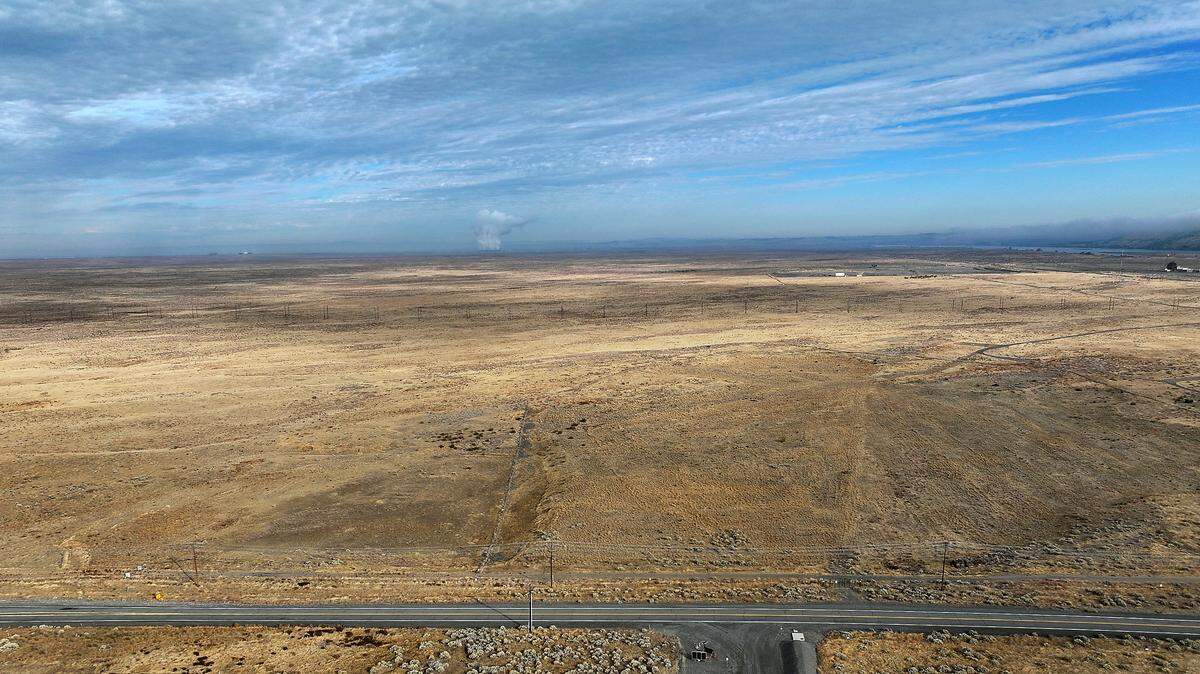
That’s a big if at this point. The city of Richland should proceed cautiously as it considers giving Atlas Agro an option to buy 275 acres in the Northwest Advanced Clean Energy Park.
Atlas Agro has offered nearly $24 million for the land so it can build a data center there. On paper, it sounds promising. Most communities would salivate at the idea of a big company spending $500 million to put up five buildings and create 100 jobs.
Construction costs and salaries would inject cash into the economy, and the increased value of the property after development would bolster property tax revenue after any multi-year tax breaks expire.
There are good reasons for skepticism that all would go as planned. Atlas Agro swooped into Richland with plans to build a carbon-free fertilizer plant on property adjacent to the land it now wants for a data center.
Last year, Richland City Council awarded it a 10-year tax break worth $20 million to help things along and solidify Richland’s goal of becoming a leading center of clean energy manufacturing in the Pacific Northwest.
Today, that project is beset with challenges.
The company recently requested a one-year extension to close on 150 acres near Pacific Northwest National Laboratory for the project. The Port of Benton commission gave it six months. That was the second time the agreement had been amended.
Meanwhile, the company has yet to identify a power source. Fertilizer production is energy-intensive. The plant will need 320 megawatts, and there is no obvious carbon-free source. A nuclear plant is in the works nearby, but Amazon has first dibs on power from it.
Atlas Agro also took a hit in October when the Trump administration canceled clean energy projects mostly in Democratic-leaning states like Washington. The Department of Energy revoked $7.5 billion, which included $157 million for the fertilizer plant.
While large projects like this commonly encounter bumps along the way, Atlas Agro is hitting a lot of them. That should give Richland leaders pause before doubling down on the company.
Under Atlas Agro’s proposal, the city would take on all of the risk. The company would pay only a nominal $250,000 in upfront earnest money to lock up the land for a year without any contractual obligation to make tangible progress on solving infrastructure challenges. For example, where will power and water for a data center come from?
This arrangement creates unacceptable opportunity costs for the city. Valuable land could be unavailable if a better offer comes along without any guarantee that Atlas Agro will ultimately close the deal, let alone build.
The worst-case scenario might be if Atlas Agro does buy the land but then doesn’t build, locking up the land for who knows how long.
In order to protect its interests and acknowledge the uncertainty, the council should instruct staff or the Economic Development Committee to negotiate a better deal. Atlas Agro should put more money down, money that it would forfeit if the project falls apart.
It also should commit to verifiable milestones related to power and water procurement, site plans and infrastructure installation. For example, the company might have to present a signed letter of intent from a power provider by month six and preliminary site plans by month nine.
No one expects a final plan before the company closes on the land, but it must prove that it is making some progress. City staff suggest that some requirements could be put in place for after a sale, but there need to be some before it, too.
Atlas Agro might prove the doubters wrong. Perhaps the company will secure the necessary power, financing and regulatory approvals for both its fertilizer plant and data center.
We hope it does. But hope is not enough. Contracts need backstops in case a project fails.
This story was originally published October 25, 2025 at 5:00 AM.