
Kennewick officials went too far promoting their school levy, but can you blame them? | Opinion
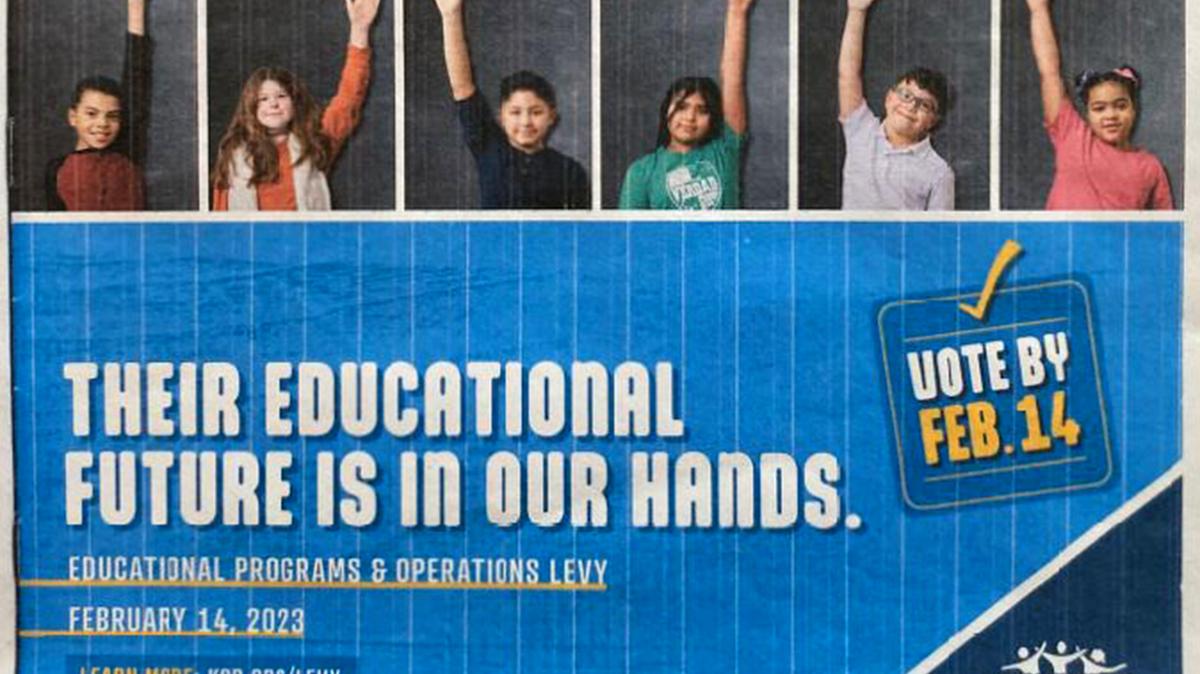
After a double-levy failure in 2022, the Kennewick School District was in crisis mode when it put another levy request to voters earlier this year.
And when you are desperate, it tends to show.
Not surprisingly, in its effort to show voters what was at stake if the levy failed yet again, KSD crossed the line between providing information and promotion, according to the state Public Disclosure Commission.
It’s a line that is being crossed by school districts, fire districts and other government entities on a fairly regular basis.
The line between information and promotion has gone fuzzy when it comes to school ballot measures and it definitely needs sharpened.
Gone are the days when only mailers and a volunteer phone tree got the message out. Now, there’s social media, email marketing, YouTube videos, robocalls and automated text messages.
While these tools may be how school districts routinely communicate with the public, caution is needed if taxpayer money is being used to provide information about a ballot measure.
Kim Bradford, deputy director for the PDC, told the Herald that districts need to be aware that “in no case will the PDC view a marketing or sales effort related to a campaign or election as normal and regular conduct.”
When John Trumbo, a Kennewick City Council member, made a formal complaint about how KSD managed its February levy campaign, he provided an opportunity for the state to make an example out of the school district.
The PDC found that KSD’s communications about the levy were more frequent than communications about other school issues, and that much of the language used implied support rather than providing objective information. Phrases such as “drastic cuts,” “significant impacts,” and “critical needs” were examples of emotionally driven language, the PDC said.
It fined the school district $600 for the violation — enough to send a message without making a critical dent in the school budget.
As it happens, just before that ruling, the PDC also fined the Highline School District $600 for its promotion of a bond measure.
What’s similar in both cases is that someone made a formal complaint.
Other school districts have pushed the boundaries of Washington state’s campaign laws, but if no one makes an issue of it then those school districts get away with it.
And that perpetuates the misguided idea that frequent and emotional messaging is acceptable.
It isn’t.
PDC officials have been watching this problem mushroom. This year, with the Highline and Kennewick cases before them, they decided it’s time to take a hard look at the election guidelines and discuss whether there is a need for clarification.
The PDC will meet in Spokane on Thursday, June 22, and this topic will be on its agenda. School officials from around the state, as well as John Trumbo, have signed up to speak.
School Superintendent Traci Pierce told the Herald that the district did not intend to break the law and that the administration works diligently each election cycle to follow the election guidelines and laws as outlined by the PDC.
“What we did was in good faith and with all intention and belief that we were meeting all the PDC guidelines,” Pierce said.
At the upcoming meeting, Bradford said the recent cases involving the Highline and Kennewick school districts will be brought up, and will provide an opportunity to discuss whether additional guidance is needed.
As that discussion moves forward, we would like to add these questions to the discussion.
▪ Don’t school districts have a responsibility to provide predictable consequences should a levy fail?
▪ And while we understand the reason for tight regulations for school ballot measures, what leash is there on opponents? None. Is that a fair fight?
▪ What middle road is there?
Drastic cuts were a given if Kennewick voters failed to step up and approve this year’s levy request. How on earth are school officials supposed to convey that without it seeming emotional? And making clear what the failure of a levy likely will mean?
Tax money should not be used to influence ballot measures, but at the same time there must be a way for school districts to convey the dire consequences should a school levy fail.
Kennewick’s situation, we hope, will help the PDC figure out this conundrum.
This story was originally published June 15, 2023 at 12:32 PM.