
Results from November election reveal alarming stats even Tiffany Smiley couldn’t overcome
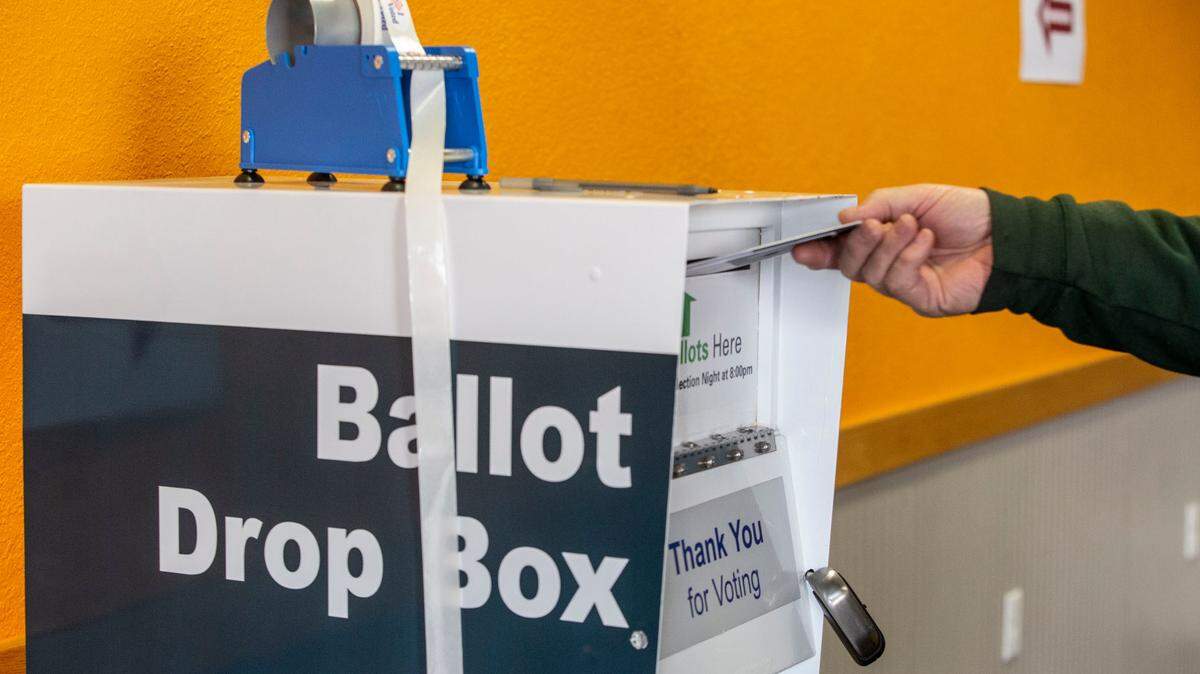
With hometown candidate Tiffany Smiley making a national splash in her effort to unseat Democrat Sen. Patty Murray, you’d think more Tri-Citians would have wanted to weigh in on the high-profile race.
As it turns out, voter turnout in the recent election in Franklin and Benton counties was pretty dismal — among the worst in the state.
In fact, when compared to the 2018 mid-term election, the statistics this year are shocking.
Washington state’s hot U.S. Senate race in 2018 was between Democrat Sen. Maria Cantwell and Republican Susan Hutchison. Back then, Franklin County ended up with voter turnout at 64.33%.
Last month, with Republican Smiley from Pasco on the ballot, turnout was down to 52.8% — a significant, double-digit drop.
In addition, Franklin County had the second-lowest voter turnout in the entire state. Only Yakima County was worse, with 49.78%.
In Benton County, voter turnout for the 2018 mid-terms was at 69%. This year it was 60.5%, and that figure is also terrible. Only five counties out of 39 were lower.
In addition to the Murray-Smiley race, there were several state and county seats also on the ballot. That so many Tri-Citians decided to sit this election out is disappointing — to say the least.
Voting is so easy now. Ballots arrive in the mail long before they are due. No postage is necessary and drop boxes are easy to find throughout the Tri-Cities. Citizens can even register to vote in person on Election Day if they need to.
So why aren’t more people participating?
Franklin County Auditor Matt Beaton, who has overseen elections since 2011, has some thoughts on the issue. “We’ve given people the ‘how’,” he said. “We need to give them the ‘why’.”
People need to have an incentive, Beaton said.
The focus has been on getting people registered to vote and making sure they get their ballots. But that doesn’t guarantee they will return them.
Beaton notes that 2018 was in the middle of former President Donald Trump’s term and interest in politics was perhaps heightened during that time.
Also, unlike this year, in 2018 there were several statewide initiatives on the ballot, including Initiative 1639, which imposed new restrictions on purchasing and owning firearms. Initiative 940 also was on that ballot — a measure that attempted to set parameters around when police could use deadly force.
Those kinds of controversial issues often get people stirred up, which in turn encourage them to vote.
But it is a shame more citizens don’t participate solely because it is their civic duty.
Beaton said he knows some people who don’t bother to fill out their ballots because they say they don’t know the issues or the candidates very well.
With technology today, not knowing who to vote for is a poor excuse.
Most candidates have websites that can easily be checked out. Organizations like the League of Women Voters record their question-and-answer sessions with the candidates and those are easy to find online.
The Tri-City Herald’s editorial board publishes its election recommendations along with the videos of our candidate interviews. And, of course, the Voters’ Pamphlet arrives in the mail along with the ballots.
It’s not hard to get election information you need if you take the time to look for it.
As it happens, the dip in voter turnout was widespread throughout Eastern Washington. Counties like Yakima, Grant, Spokane, Adams and Walla Walla also saw significant drops in participation.
It’s a shame so many people didn’t see the point in voting in this last election, or perhaps they just didn’t care. Somehow, like Beaton suggests, there has to be a way to help people realize their voice matters and their voice counts.
If the saying that public participation is the lifeblood of democracy is true, then just think what the opposite means.