
Ozone pollution is dangerous. Make some changes, Tri-Cities
The Tri-Cities’ beautiful blue sky can be deceiving. Our summer air might look clear, but on certain days we can have the worst ground-level ozone pollution in the state.
Last Tuesday was one of those days.
This is a problem that can hurt our health and even our economy, and as a community we can’t ignore it.
While there are a number of little things individuals can do to help counteract rising ozone levels in our area, a comprehensive, regional approach is what we really need.
Fortunately, the first steps in reducing our pollution levels already have been taken thanks to a group of community leaders.
A public meeting organized by the Benton-Franklin Council of Governments was held July 19, and at least 50 representatives from various government agencies and industries met to create a strategy to combat the Tri-Cities’ ozone problem.
Groups that were represented included the Benton Clean Air Agency, Ben Franklin Transit, the Department of Ecology, business leaders and representatives from Benton, Franklin and Walla Walla counties.
High levels of ground-level ozone are serious. It’s not the same as the naturally occurring ozone of the Earth’s atmosphere — the kind that protects us from harmful radiation.
Surface ozone is produced when pollutants from cars and fossil-fuel industries are emitted in the air and react to sunlight. Higher levels can be harmful to the elderly, people with lung diseases, healthy adults exercising outdoors, and children whose lungs are still developing.
While there is no single reason why the Tri-Cities is susceptible to high ozone readings, it appears our weather and geography are contributing factors.
A breeze can carry pollutants in the air until they dam up against the Horse Heaven Hills. Once trapped, these particles cook in the sunlight and turn into ozone.
While it is not unusual to find high levels of ground-level ozone downwind from big, congested cities, state and community officials were alarmed a few years ago when Tri-City ozone levels were nearly as high as those downwind of Seattle.
A study ensued and it showed the average pollution levels for 2015 through 2017 exceeded the federal regulatory limit for ozone.
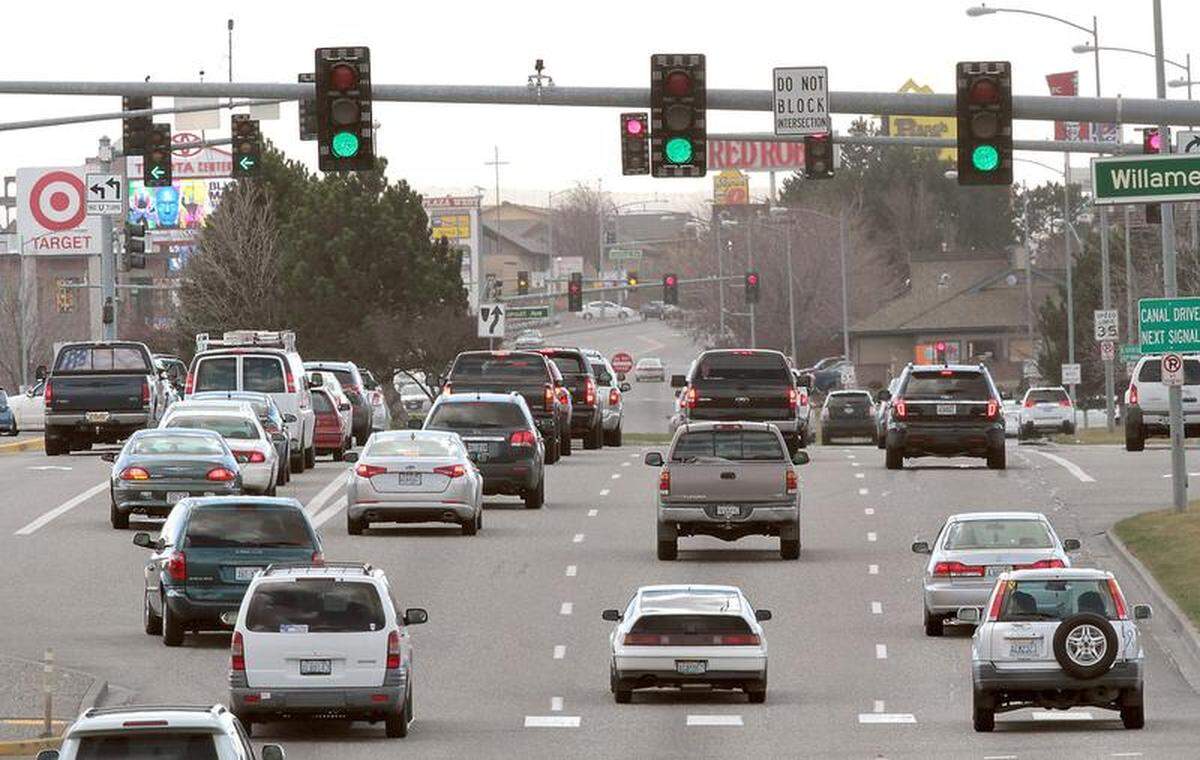
If left unchecked, it could trigger sanctions from the U.S. Environmental Protection Agency, which could lead to a harder time getting air quality permits for new or expanding companies.
The good news is we have some time to put changes in place that might reduce those high ozone levels. If the EPA follows the schedule it historically uses, it will reconsider in 2022 if the Tri-Cities is in compliance with ozone levels.
Part of any ozone reduction plan likely will have to include a change in individual behavior.
On days when ozone levels are high, people should skip mowing the lawn, making car trips they can put off, putting gas in the tank and delay outdoor painting projects.
The community group likely will continue efforts to educate the public on the issue. In addition, two working groups have been formed to develop different strategies —one will focus on transportation and the other on industry and growth.
Ground-level ozone isn’t like smoke or dust – we can’t see it. But it is a big concern just the same, and we are grateful a community-wide approach to address it already has begun.
This story was originally published July 26, 2018 at 7:46 PM.