
4th WA drought emergency. ‘No way to sugarcoat’ power, fish and fire risks
AI-generated summary reviewed by our newsroom.
- Statewide Washington drought emergency declared
- Hydropower, irrigation and fish will suffer as reservoirs hold far less water
- State offers $3 million in emergency grants and expedites water permits
The entire state of Washington was declared in a drought emergency Wednesday as state officials nervously eyed an unusually low snowpack and a likely hotter and drier than usual spring and summer ahead.
The state declares a drought emergency when water supply drops below 75% of normal, creating hardships for people, farms or the environment, said Casey Sixkiller, director of the state Department of Ecology during a visit to Yakima County.
This year every watershed in the state has met that threshold.
Nearly everyone in the state is likely to be touched by the impacts of the drought, particularly with a warmer and drier spring and summer than normal predicted by the National Weather Service, said Sixkiller and other state officials.
Less electricity could be produced with hydropower, skies may be smoky from wildfires, farmers may not have enough water for their crops and fish may die in water that is too warm.
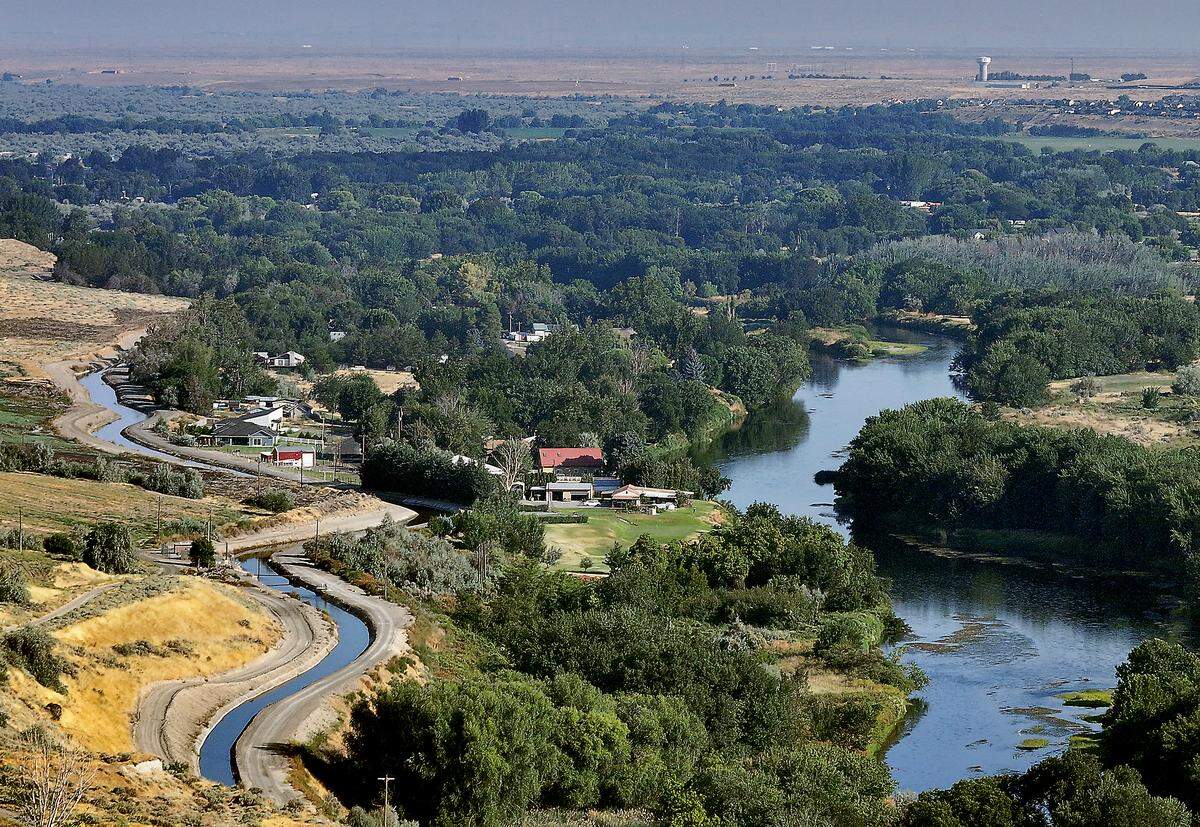
At the heart of the declaration is the Yakima River basin, which is in a drought emergency for a fourth year in a row.
.jpg "unnamed (2).jpg")
“This is where the impacts are felt first and most acutely by farmers, irrigators, the Yakama Nation and communities whose livelihoods depend on the water necessary to support our agricultural economy,” Sixkiller said.
The Yakima River provides water for the Kennewick Irrigation District, both for farms and orchards and also for urban use, from lawns to parks to golf courses.
“There is no way to sugarcoat what is happening today,” Sixkiller said.
Declaring a drought emergency allows the Department of Ecology to distribute emergency response grants and expedite processing of emergency water right permits and transfer applications.
The agency is making $3 million available in drought emergency response grants to public entities to respond to water supply issues due to drought conditions.
Low Washington snowpack
Washington state depends on its snowpack to be at its deepest in April and then gradually melt and fill reservoirs, streams and rivers with the cool water that fish like. Farmers depend on the melt for a water supply through the growing season.
But this April has begun with roughly half of the normal snowpack statewide.
A drive over the Cascade Mountains on Interstate 90 makes the problem obvious. Reservoirs that feed the Yakima River are full already, and the hillsides are bare of snow, Sixkiller said.
Those reservoirs can store about 1 million acre feet of water, but that’s not enough for communities, a $4 billion annual agriculture economy and stream flows for fish.
Those needs require about 2.5 million acre feet of water each summer.
The Bureau of Reclamation predicted a month ago that the Yakima River would have enough water to fulfill only about 44% of the water those with junior water rights and the Kennewick Irrigation District are entitled to use. Those with senior water rights, which were issued before 1905, will receive their full allotment.
An updated prediction could be released Thursday. KID has already gone to a voluntary watering schedule for residential use.
The statewide average snowpack this year is the third lowest since records began to be kept in 1985, said Karin Bumbaco, deputy state climatologist with the Washington State Climate Office.
Similar conditions in other years have led to reduced hydropower and the death of fish, she said.
Problems for the current irrigation season began in December when record warm temperatures brought rain instead of snow to the mountains and caused flooding, including of the Yakima River in West Richland and Richland. Then a mild winter and a dry spell limited the increase in the snowpack.
A series of storms in mid-March brought some snow, but it melted quickly in warmer than normal temperatures, she said.
The average temperature since the start of the water year in October is the third warmest since records began in 1895, she said.
Snow droughts may increase
“This year’s drought is exactly what we expect to see more of in the future,” Bumbaco said.
She couldn’t say how much long-term climate warming had contributed to the current drought, but the climate is warmer than it used to be and the warming likely played some role in this year’s lack of snowpack, she said.
In the past, snow droughts were expected twice a decade on average. Now they happen about four times a decade and computer models estimate that by 2050 they could occur seven years out of 10, she said.
Now is the time to prepare for wildfire smoke, said Lauren Jenks, assistant secretary for environmental public health with the Washington state Department of Health.
If a family member is sensitive to smoke, don’t wait until demand is high to buy an air purifier or a fan that can be used with a filter, she said.
Preparation and conservation will be crucial to minimize drought impacts, Sixkiller said.
This story was originally published April 8, 2026 at 4:49 PM.