
Smoke drifts over Tri-Cities. Weather forecast staff cut as wildfire season underway
AI-generated summary reviewed by our newsroom.
- Burdoin fire near Bingen burned 10,730 acres with 0% containment Monday.
- Air quality in Tri-Cities had deteriorated; worse in Touchet and Connell.
- Sen. Cantwell criticized U.S. weather service forecasting cuts during wildfire season.
The smell of smoke hung in the Tri-Cities air on Monday as smoke drifted northeast from the Burdoin fire burning along the Columbia River between Lyle and Bingen.
The Northwest Interagency Coordination Center said the fire had burned about 10,700 acres and was 0% contained when the Complex Incident Management Team Northwest 13 assumed command of the fire Monday morning.
Highway 14, which runs along the north side of the Columbia River, was closed from near Bingen east to Lyle.
More than 400 firefighters and equipment that included helicopters and airplanes were working to protect Bingen, Lyle, High Prairie, Yakama Nation lands and natural resources. Fourteen houses have burned.
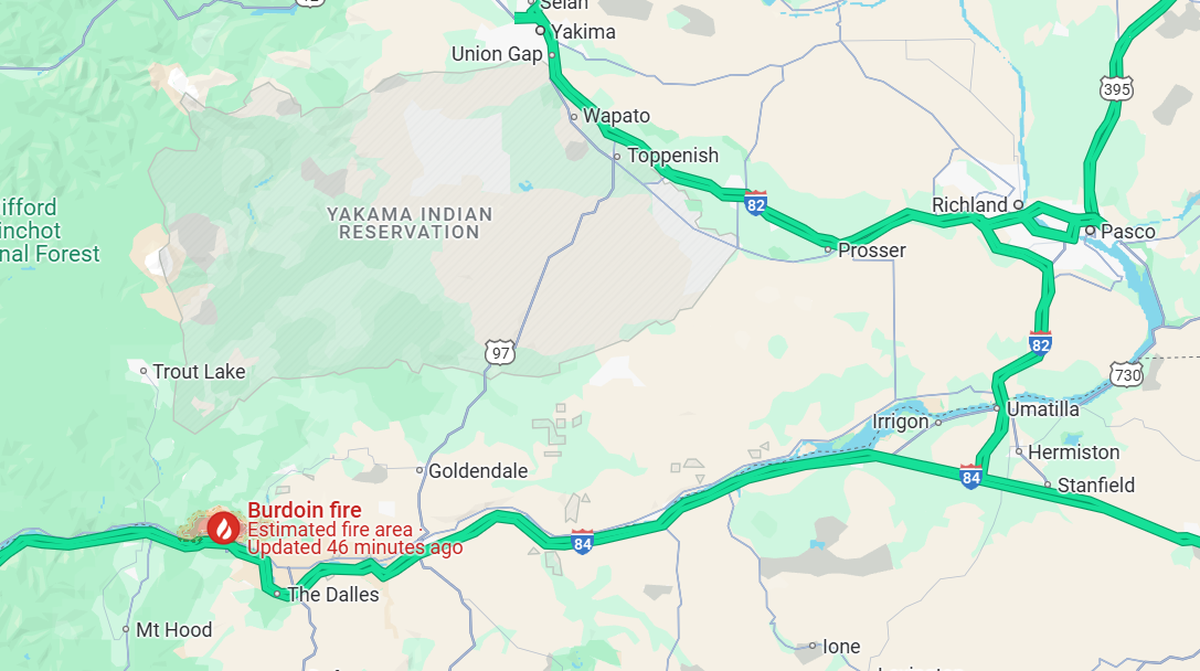
The fire was moving to the north and northeast in steep terrain.
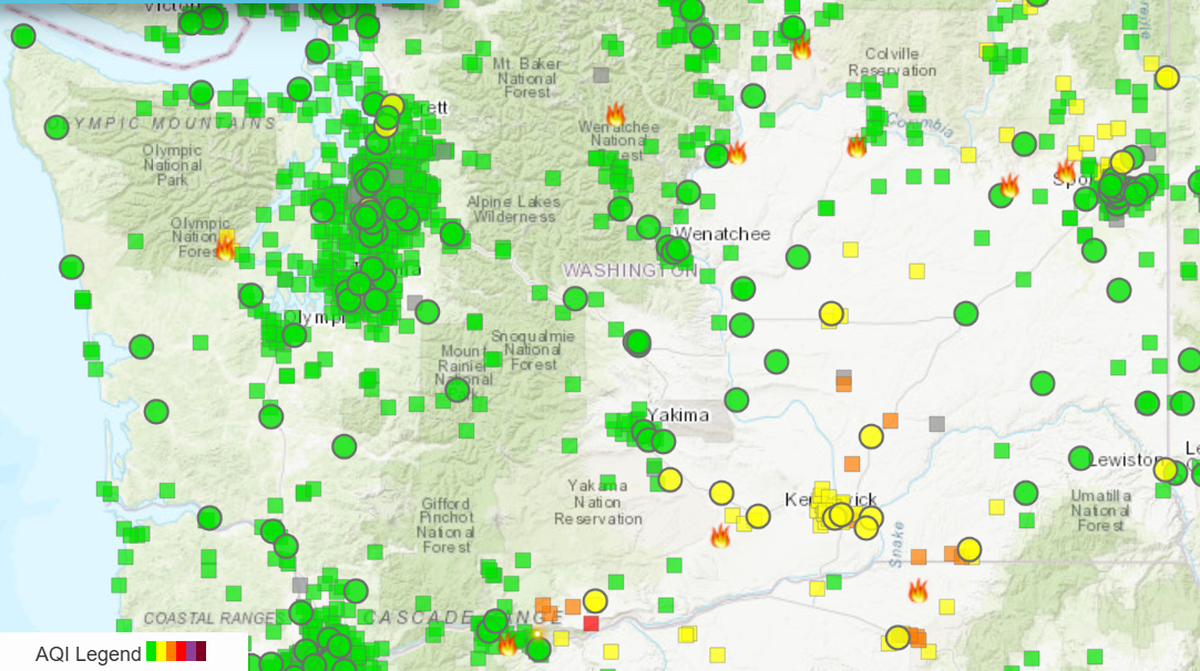
Some smoke also may be drifting over the Tri-Cities from other fires in the area, according to the National Weather Service.
The air quality remained moderate in the Tri-Cities despite the smell of smoke.
The air quality worsened from good to moderate in the early morning Thursday and then was again moderate through much of the weekend into Monday, according to the Washington state Department of Ecology. Air quality was worse in Touchet and Connell, where it was rated Monday as unhealthy for sensitive groups.
By noon Tuesday, air quality in the Tri-Cities was rated as good, according to the Department of Ecology’s Washington Air Quality Map. But Burbank and Finley monitors shows moderate air quality.
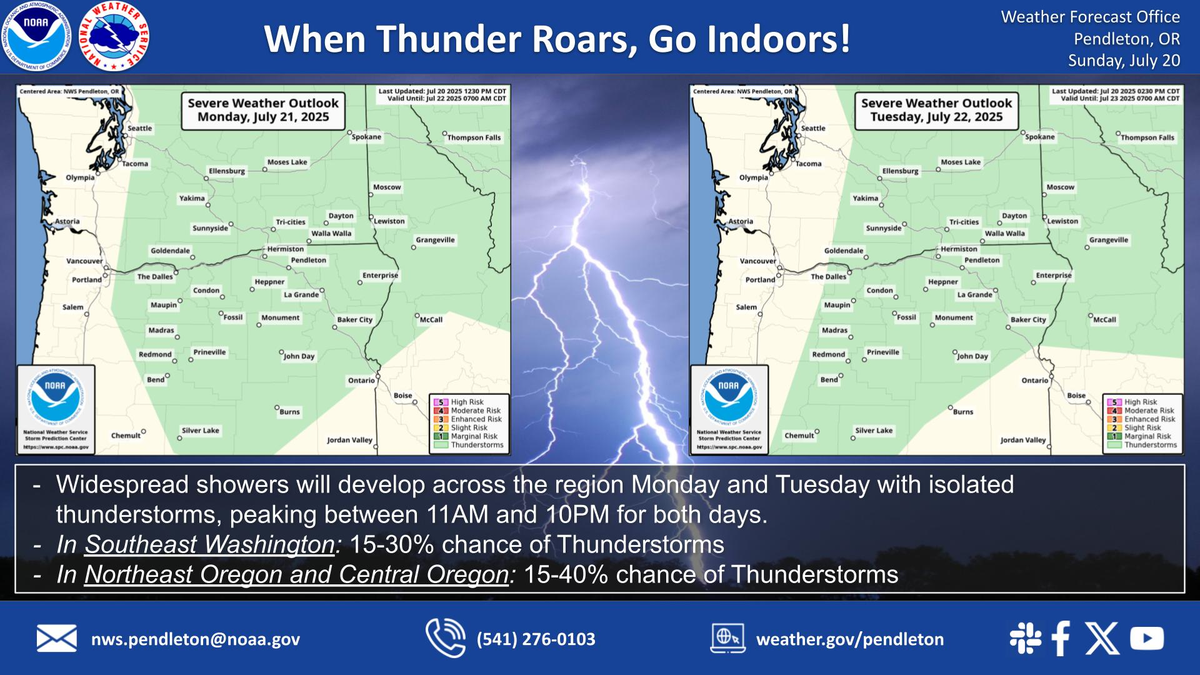
Thunderstorms were forecast from 11 a.m. to 10 p.m. both Monday and Tuesday.
The chance of thunderstorms is low in the Tri-Cities, but there was up to 40% chance of storms, with a potential for lightning strikes and new fires, in the Cascade and Blue Mountains, according to weather service forecasts.
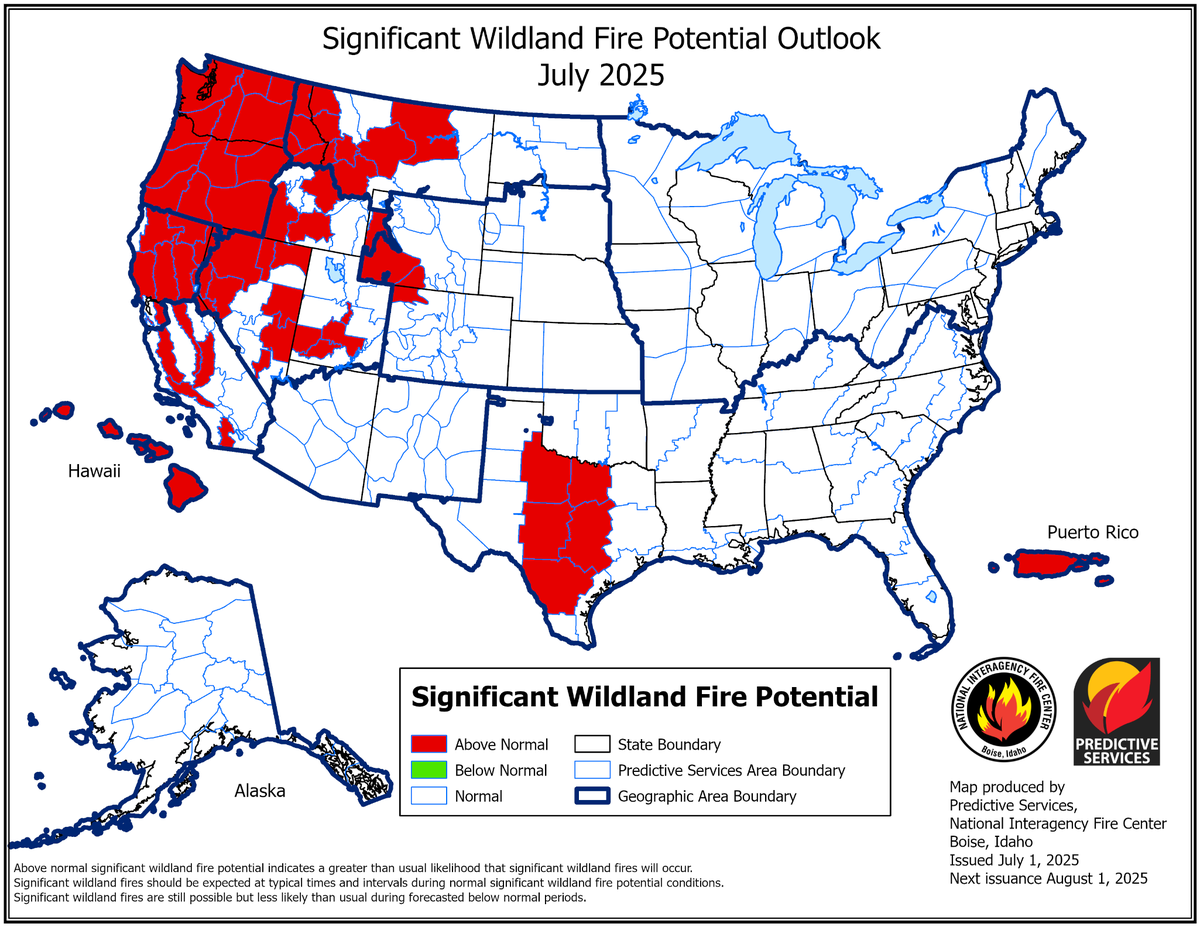
The National Interagency Coordination Center says the wildland fire potential is above normal this month through September in all of Oregon and Washington.
Sen. Maria Cantwell, D-Wash., is worried that wildfire season has started with National Weather Services understaffed.
She said July 9 during a confirmation hearing for Neil Jacobs, President Trump’s nominee to head the National Oceanic and Atmospheric Administration, that the office in Pendleton, Ore., which provides the forecasts for the Tri-Cities has a 44% vacancy rate. As a result it no longer has around-the-clock forecasting, Cantwell said.
“And in my opinion, that is unacceptable in the height of fire season,” she told Jacobs.
The Pendleton office’s Washington state service area includes Benton, Franklin, Walla Walla, Yakima, Columbia, Kittitas and Klickitat counties. It also covers 11 counties in Eastern Oregon, including Umatilla and Morrow counties.
The Trump administration has taken a sledgehammer to NOAA’s budget, which includes weather service office.
“Since the start of the year, NOAA’s workforce has been gutted by 2,000 employees,” she said. “The agency currently has over 3,000 vacant positions, most of which cannot be filled due to the hiring freeze.”
The Trump administration has lifted the hiring freeze on 126 positions for meteorologists, hydrologists, physical scientists and electronic technicians.
Data collected by NOAA, including from satellites and airplanes, are available to support forecasts by private companies, including television stations.
The “fancy maps and other weather products” created by many private companies are derived from that data, according to atmospheric scientists in Scientific American’s Today in Science.
This story was originally published July 21, 2025 at 12:57 PM.