
Wildfire near Richland 100% contained. The difference between controlled, contained fires
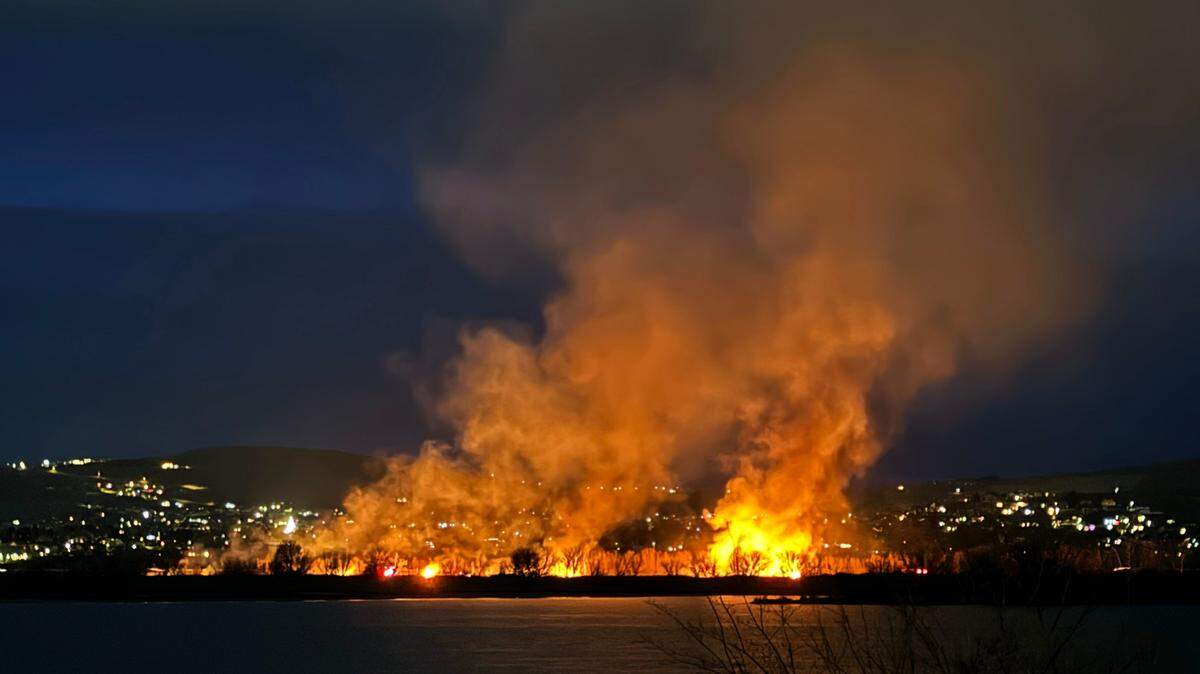
Wildfire season in Eastern Washington hits hard in the summer. Last summer, numerous fires blazed in the region, including one near the Hanford site, one near Lyons Ferry State Park, and others closer to Yakima.
Then-Governor Jay Inslee declared a statewide emergency in August due to a series of fires across the state.
But wildfires begin before summertime, with fires starting in early spring most years.
Earlier this week, a fire near Richland off Highway 240 surfaced and rekindled a couple days later. With high wind, it’s possible the fire could reignite yet again.
Highway 240 fire
The 20+acre fire broke out early Sunday in the delta between the Yakima and Columbia rivers.
It took several agencies a couple hours to stop the fire from growing, according to Richland Fire Battalion Chief Michael VanBeek. He said the terrain made it difficult to access the fire.
The fire grew again on Wednesday. Fire officials expect the fire to continue burning for at least a few days depending on the weather. For now, the fire has been deemed 100% contained by the fire breaks created by fire crews.
The remaining blaze is being monitored for public safety. The nearby bike path was closed for a time but has reopened after officials check the area for fallen or weakened limbs.
Contained vs. controlled fires
What does contained even mean?
Fire containment refers to the perimeter, not the full fire, according to the National Wildfire Coordinating Group.
Responding firefighters work to implement control lines, or man-made barriers that cannot catch fire. Sometimes this means removing all burnable material, or digging a pit.
Control lines can also be created by setting controlled fires around the perimeter, which was done around this fire.
A fire’s containment percentage reflects how much of its perimeter has effective control lines in place. It’s considered effective when firefighters are confident the fire will not grow past that barrier, barring a particularly large gust of wind or other severe complication.
When entirely contained, the fire will have nowhere to go. At this point, fire crews will work to extinguish remaining flames, knowing the fire isn’t spreading.
A fire can be deemed controlled when it has burned out or is mostly extinguished. A controlled fire can have hot spots or embers, but is no longer a public safety issue.
A fire is considered out when there are no signs of smoke or fire activity. That could take days or weeks in the Yakima River Delta near Richland, say fire officials.