2023 was Earth’s hottest year on record. Here’s how hot it got in Tri-Cities last year
2023 was the warmest year on Earth based on records dating back to 1850.
The European climate agency Copernicus announced this week that global temperatures were 2.66 degrees above pre-industrial times, according to The Associated Press.
But while temperatures seemed hot in the Tri-Cities as it sweltered through a heat wave in August, it was not a recordbreaker here in terms of overall temperatures.
However, the year was notable for being unusually dry and having some very hot days for Eastern Washington.
The National Weather Service said that the average high temperature in Pasco in 2023 was 67.5 degrees, which didn’t break a record at 1.1 degrees above normal.
The average low temperature was 42 degrees, which was 1.6 degrees higher than normal.
At the Hanford nuclear site just north of the Tri-Cities, the average temperature was 55.5 degrees, which was 1.2 degrees above normal.
The warmest year on record since Hanford started keeping records in the mid 1940s was in 2015 with an average temperature of 57.5.
But it did record a trend toward hotter summer temperatures in recent years.
Notably, 2023 was the fourth year in a row in which the hottest temperature reached at least 110 degrees.
Before that there were just four times the Hanford Meteorology Station, about 25 miles northwest of Richland, recorded two years in a row with temperatures of at least 110.
In June 2021, Hanford set a state heat record for the state of 120 degrees, and last year the hottest day was 111 on Aug. 15.
In the Tri-Cities, the hottest temperature last year was 109 on the same day and the coldest was 8 on Jan. 29.
The Tri-Cities area got some slight relief from its notorious winds in 2023.
At the Hanford Meteorology Station, the average wind speed was 7.7 mph, which was below the normal of 8 mph.
Dry year in Tri-Cities, WA
The Tri-Cities was unusually dry last year, according to the National Weather Service.
It recorded 5.6 inches of precipitation, which was 2 inches below normal.
.jpeg "Snow_Water_Equivalent_Percent_NRCS_1991-2020_Median_January_8_2024 (2).jpeg")
The year would have been drier if it had not ended with an above normal 1.44 inches of precipitation in December.
As dry as the year was, it did not come close to the record dry year of 1900. Then just 1.62 inches of precipitation fell, according to the weather service.
The entire state has been dry enough to leave it in a snow drought, as of the start of this week.
The Washington statewide snowpack as of Jan. 1, before this week’s mountain blizzards, was the lowest on record since 1985, according to the U.S. Department of Agriculture.
Part of the Tri-Cities area relies on the East Cascade Mountain snowpack to feed the Yakima River for irrigation water for crops and lawns.
A strong El Niño is to blame for the low snowpack, which historically has meant drier and warmer weather than usual in the Pacific Northwest, according to the Department of Agriculture.
It puts chances of the current El Niño developing into a historically strong event at 54%. Warmer than usual weather could melt the snowpack too early for irrigators.
The European climate agency Copernicus also blamed the transition from La Niña in 2020-’22 to El Niño conditions in 2023 for the increase in temperatures globally last year from the year before, but said other factors appear to have also played a role.
The agency predicts that in 2024, the Earth could hit the 1.5 degree Celsius limit that the world hoped to stay within in the 2015 Paris climate accord to avoid the most severe effects of warming, according to the AP. The increase in 2023 was 1.48 degrees Celsius.
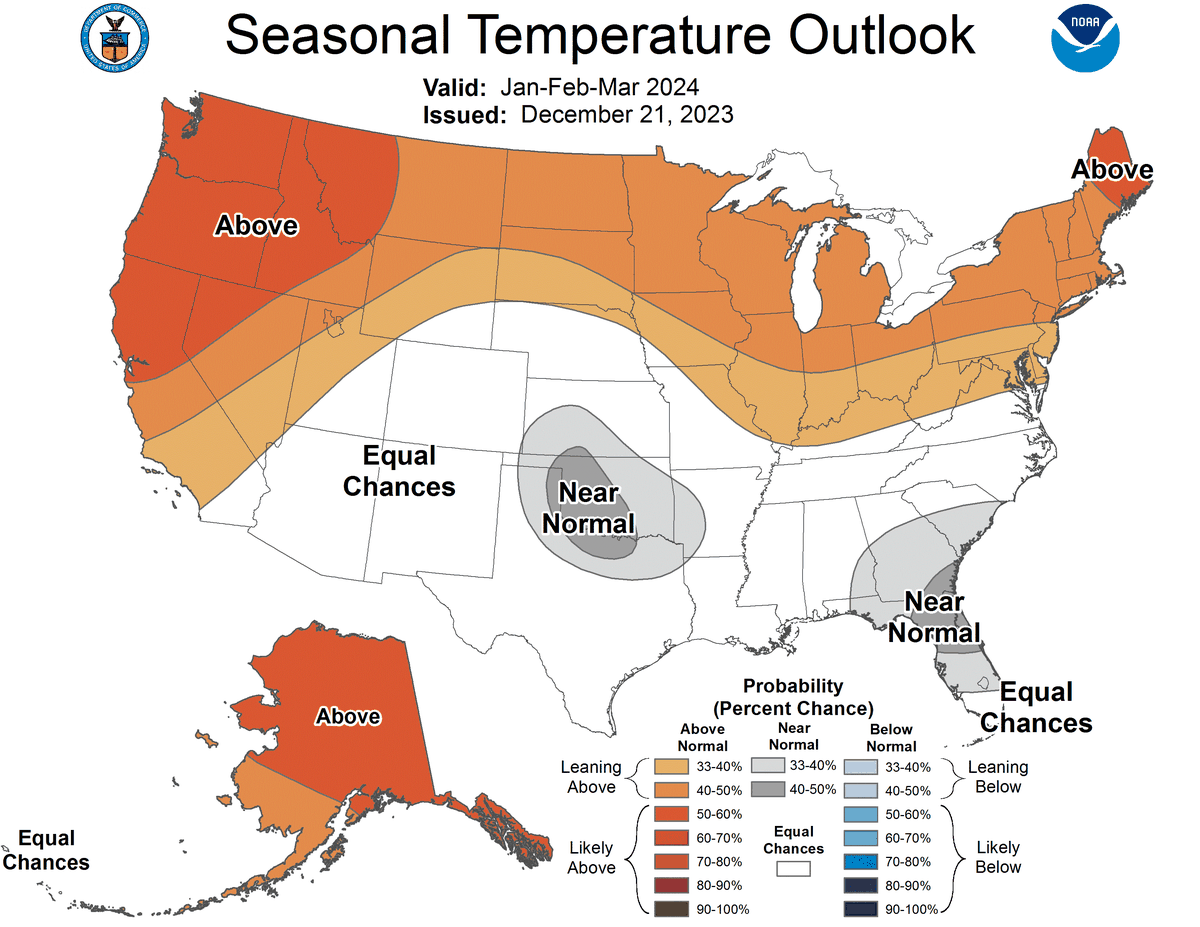
The National Weather Service predicts that Tri-Cities area weather could continue to be warmer and drier than usual through the winter.
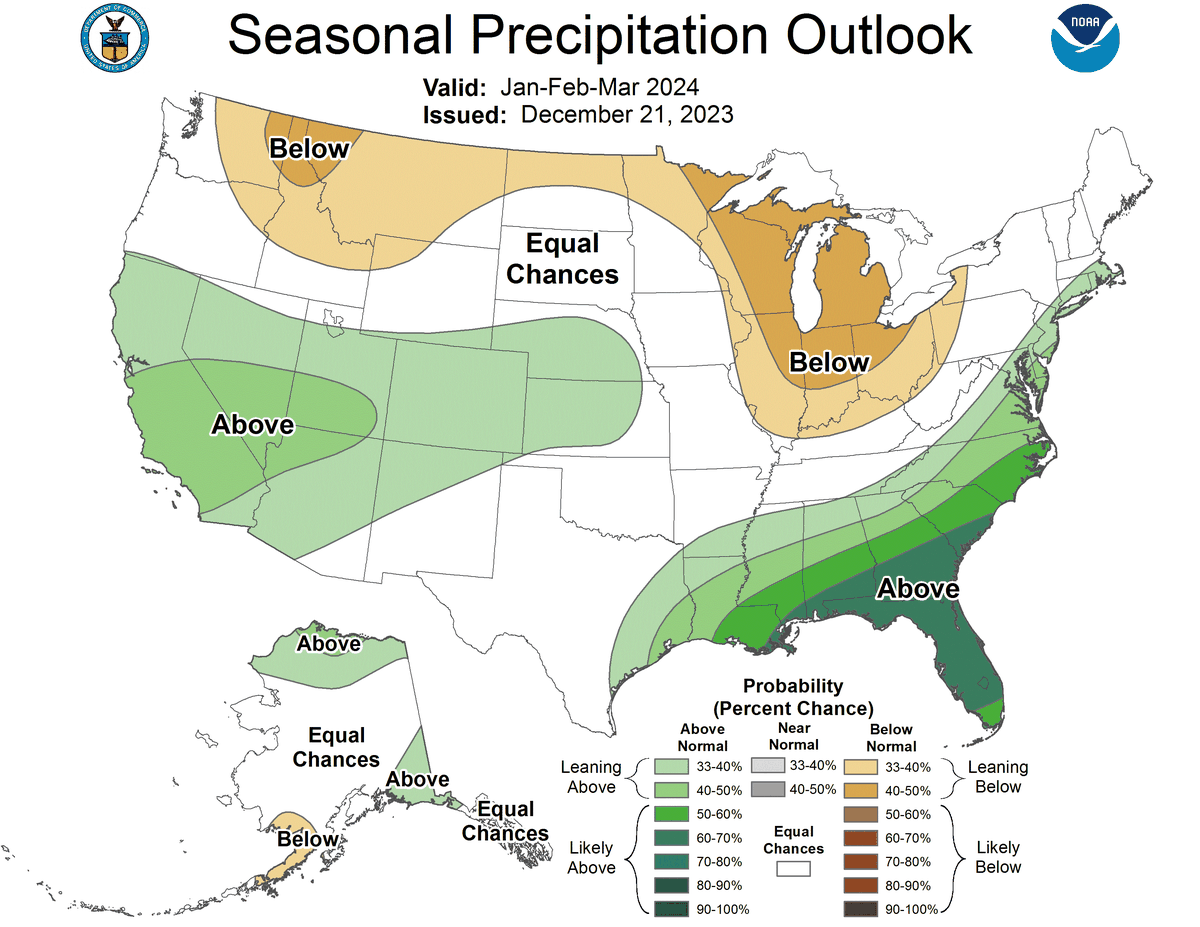
Temperatures in Washington and Oregon will likely continue to be above normal for January through March of this year, and there’s a chance that precipitation in the East Cascade Mountains and the Tri-Cities will be below normal through March, it predicts.