
Tri-Cities air quality alert issued for heat wave. Here’s the cause and what you can do
Ozone could reach levels in the Tri-Cities air that are unhealthy for sensitive groups late in the week and into the weekend as the heat wave lingers, says the Benton Clean Air Agency.
It issued an air quality alert Tuesday.
Levels were forecast to be “moderate,” one step worse than “good,” at least through Thursday.
Ozone is helpful if it is in the Earth’s upper atmosphere, helping shield people from harmful ultraviolet radiation.
But it is harmful if it is near the ground and people are breathing it.
In the Tri-Cities, pollutants, particularly those blown by light winds from the north, dam up against the Horse Heaven Hills. There particles bake in the sunshine on the hottest days of the summer, producing ozone, which spreads across the Tri-Cities.
The chemicals that create ozone can come from the exhaust of motor vehicles, a major contributor in the Tri-Cities, and the reason ozone is most often a problem in large cities, including Seattle.
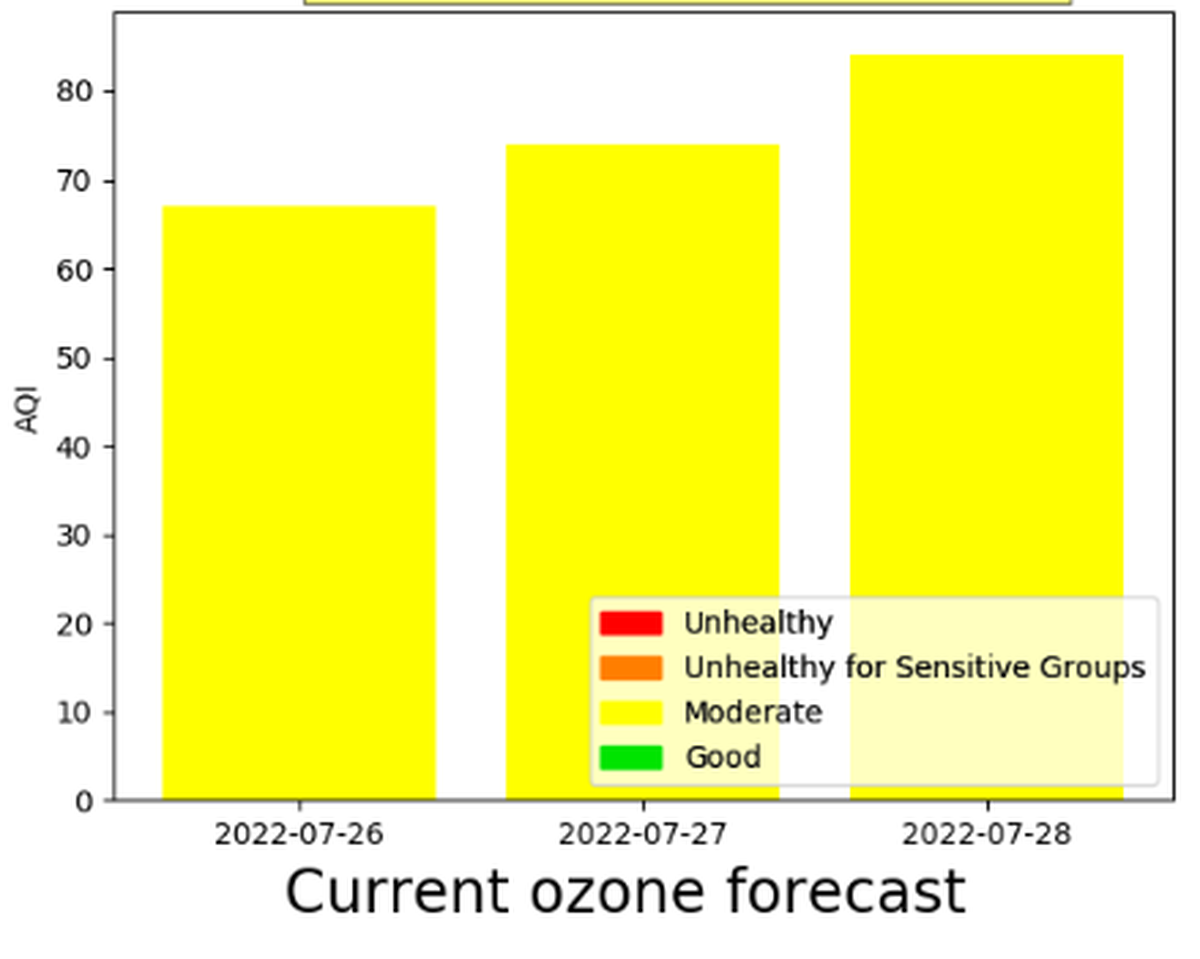
If ozone in the Tri-Cities air increases later this week, it could be particularly unhealthy for older adults, children and teenagers, and people with lung disease, including asthma. It could also affect people who are active outdoors.
Those groups should reduce heavy or prolonged outdoor exertion, take more breaks and watch for symptoms such as coughing or shortness of breath. They also can schedule outdoor activities in the morning when ozone is lower.
People with asthma should keep medicine for quick relief handy, according to information from the Washington state Department of Ecology and Washington State University.
Ozone can inflame and damage lung tissue and increase the likelihood of pneumonia.
You can help reduce ozone on hot days by:
▪ Driving less unless you have a zero emissions vehicle. Instead car pool, use Ben Franklin Transit, walk or bike.
▪ Don’t let your engine idle.
▪ Filling up vehicles with gas in the evening after weather has cooled.
▪ Don’t mow lawns with gas-powered mowers, barbecue or use solvents and aerosols when temperatures are high.
This story was originally published July 26, 2022 at 3:59 PM.