Tri-Cities’ winter could be colder and wetter than usual, thanks to La Niña
For the second year in a row La Niña climate conditions have developed, says the National Oceanic and Atmospheric Administration.
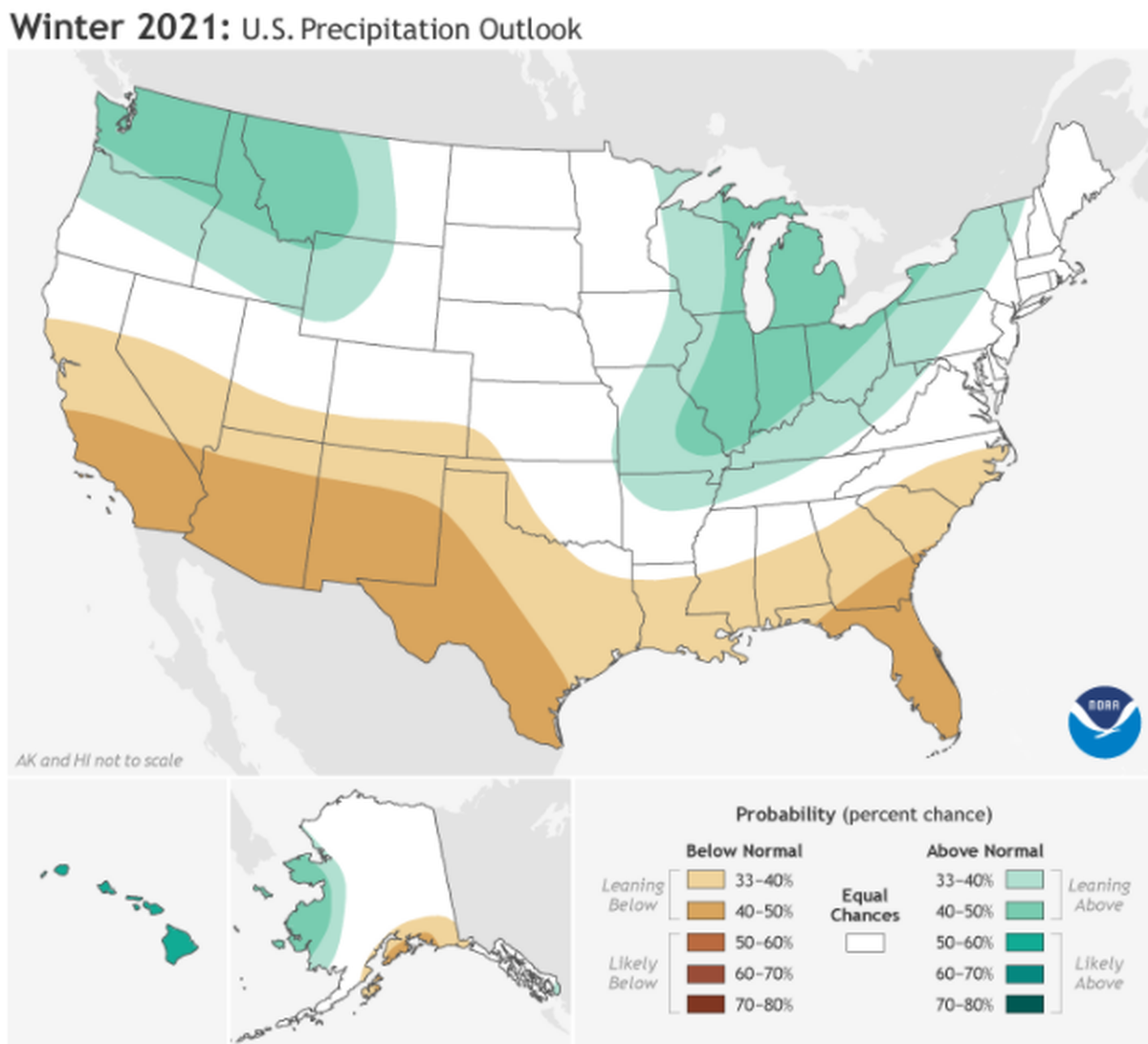
For the Tri-Cities area that may mean a colder winter than usual and also one with more snow or rain.
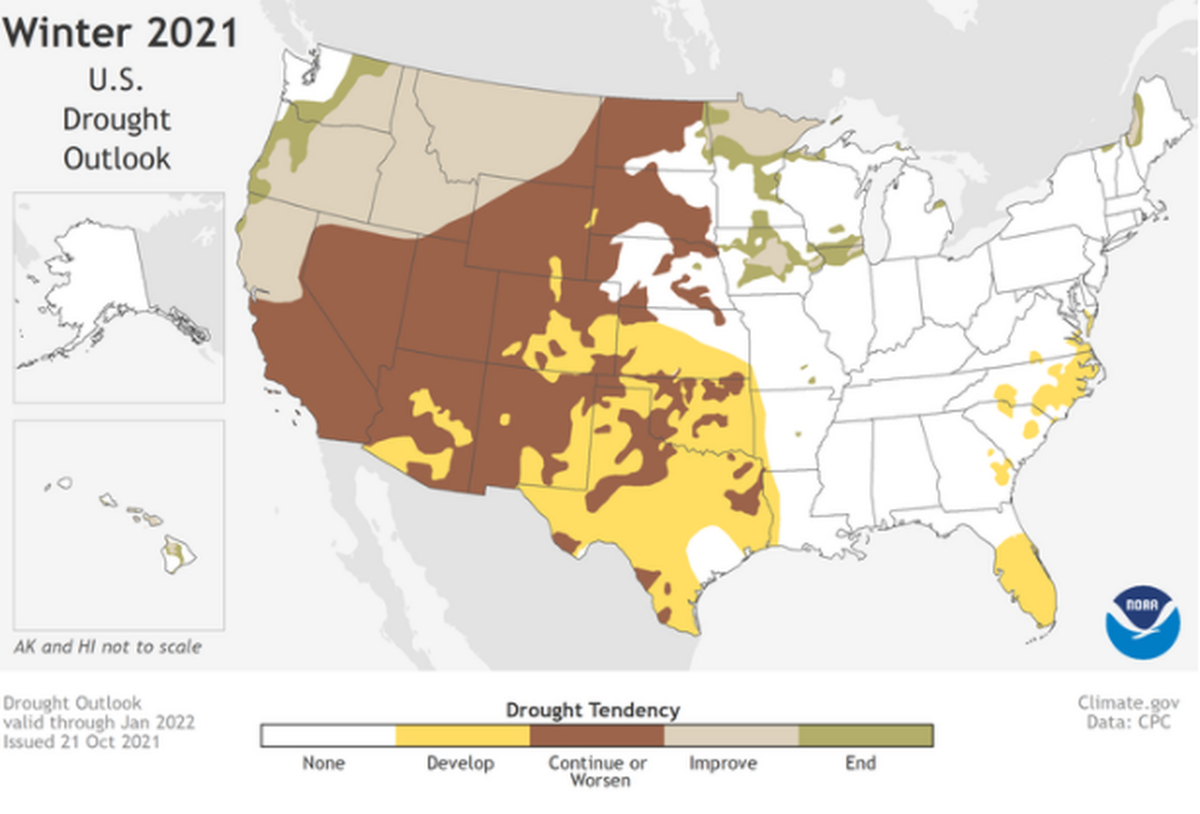
It could bring to an end the drought conditions in parts of the Washington state and northern Oregon Cascade Mountains and at least improve drought conditions in Eastern Washington, according to NOAA.
The U.S. Drought Monitor rates drought conditions now in Benton and Franklin counties as “exceptional.”
La Niña results from cooler than normal sea surface temperatures in the tropical Pacific Ocean, which changes tropical rainfall patterns, which changes the pattern of the jet streams across the Pacific in north America, said Jon Gottschalck, lead forecaster for NOAA’s Climate Prediction Center.
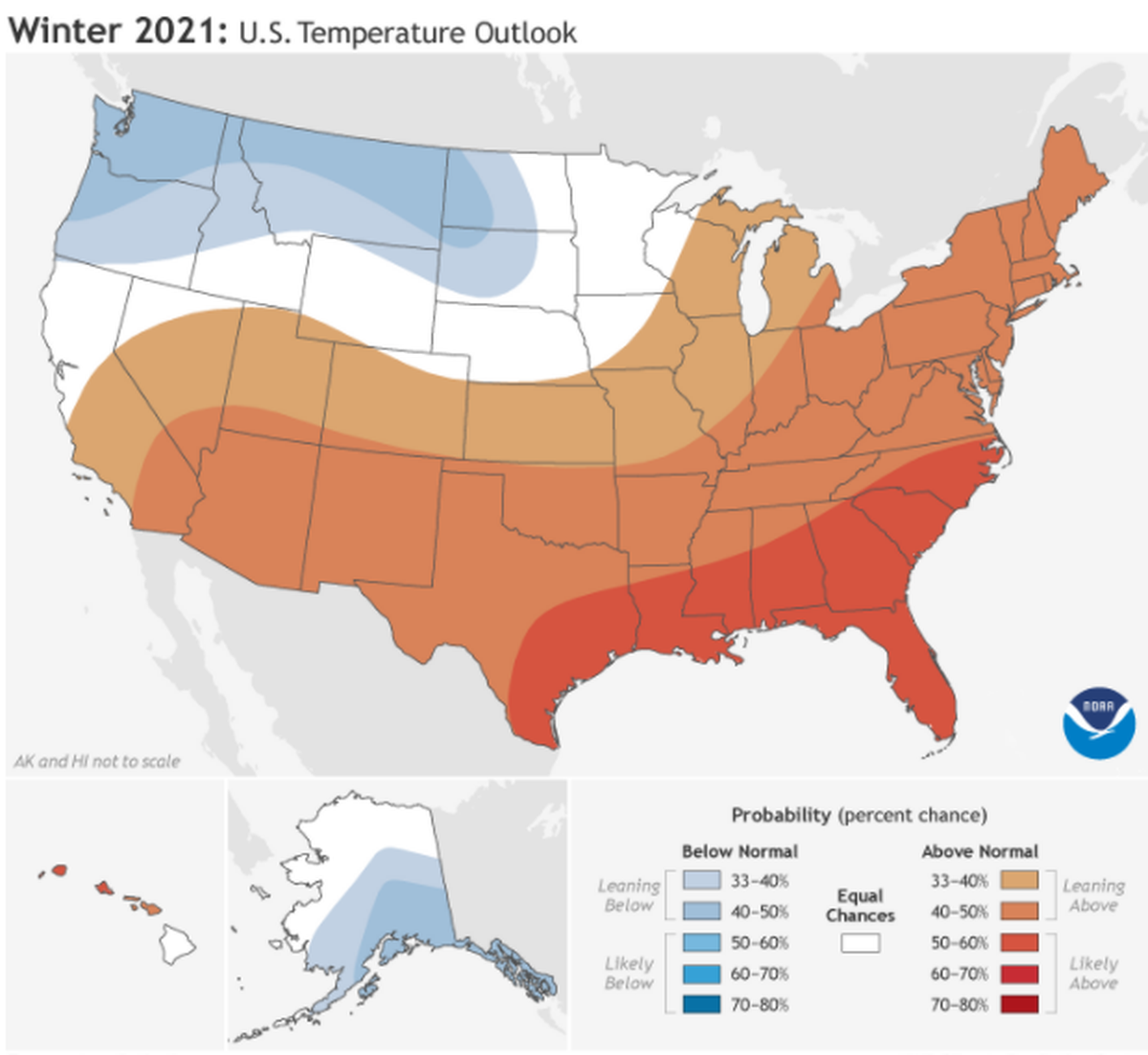
For most of Washington state NOAA predicts a 40% to 50% chance of below normal temperatures and above normal precipitation this winter.
“Typically La Niña impacts — whether it be both the temperature or precipitation — is strongest in the later winter,” Gottschalck said at a news media briefing.
For the Tri-Cities that means possibly colder than usual weather for the Northwest in January to March, with the La Niña impacts sometimes the strongest in March, he said.
AccuWeather also has forecast a La Niña winter.
It may not bring as much snow as last winter in the Pacific Northwest, but enough for a healthy snowpack for ski areas, it said.
The Northwest is the only part of the nation that is forecast to have colder temperatures than usual this winter, according to NOAA.
In the Southern United States and much of the Eastern United States, La Niña will mean a warmer than usual winter, with the strongest chance in the southeast, according to NOAA.
The areas of the nation most likely to experience drought improvement are the Pacific Northwest, northern California and the upper Midwest.
Drought conditions are forecast to persist in the Southwest.