
‘Heat is kicking our tails.’ Blistering temps pound Tri-Cities outdoor workers
Record-breaking temperatures don’t bring the world to a screeching halt. The work must go on, as they say.
From delivering packages to building houses, the heat is pounding workers, especially those who must be outside.
“Our guys are fairly seasoned — they don’t mess with the heat, and we don’t push them,” said Britt Creer, developer and owner of Urban Range Builders and Ranchland Homes.
Creer said his crews know to stay hydrated, and he sees them ditching the soda in favor of water in triple-digit weather. Carrying a gallon jug of water at all times is common on job sites.
The risk of heat exhaustion and other heat-related illness is exceptionally high this week and hydration is critical.
Tuesday, risk levels to outside crews in Tri-Cities moved from “very high” to “extreme” on the U.S. Department of Labor’s risk index.
The rating system gauges safety based on temperatures and humidity and offers guidance to prevent injury or death.
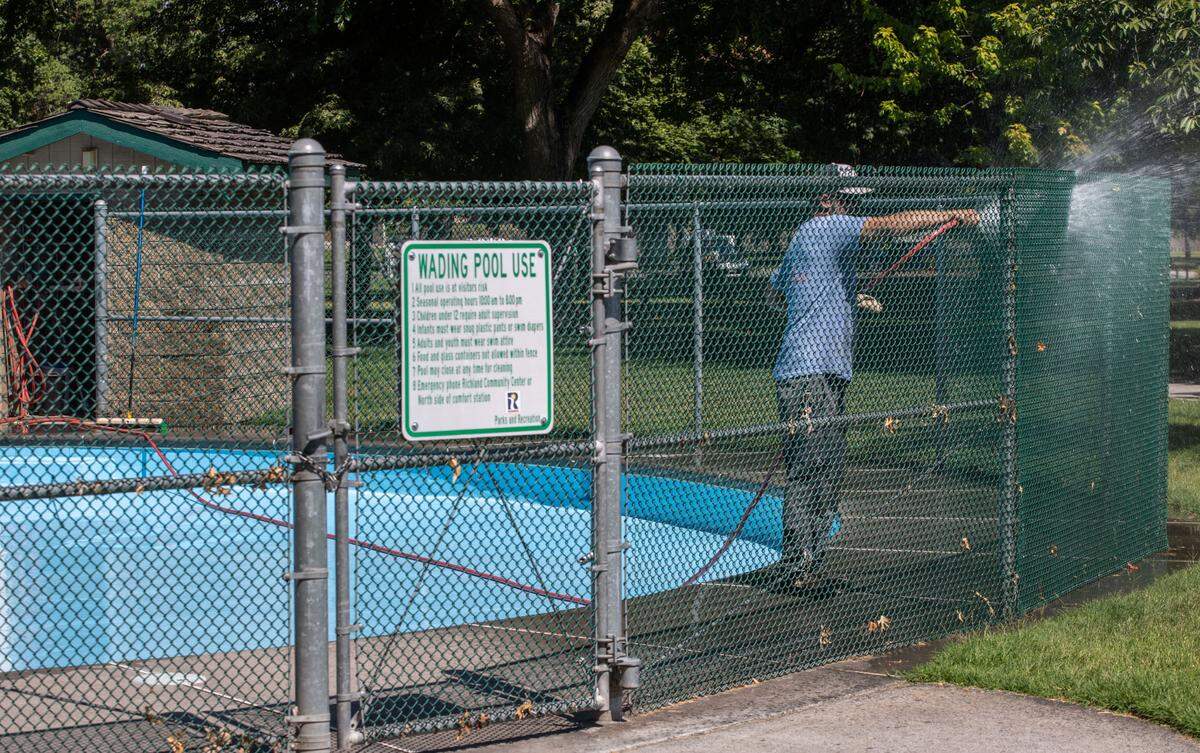
Any temperature above 115 is considered the riskiest and the largest number of protective measures must be taken. When the thermometers dip, the risk is less but still rated “high” for anything over 103. Wednesday’s forecast was for a high of 111.
It’s even worse for those who do prolonged and strenuous work, have to wear heavy protective clothing and work in direct sunlight — all things that those in construction can’t avoid.
Early start to day
“Landscapers are typically out once it hits triple digits because there is no way to avoid the sun,” Creer said.
Jeannie Gamache, co-owner of Gamache Landscaping in Richland, says all their crews are continuing to work on jobs this week but are making adjustments.
“We are insanely busy,” she said.
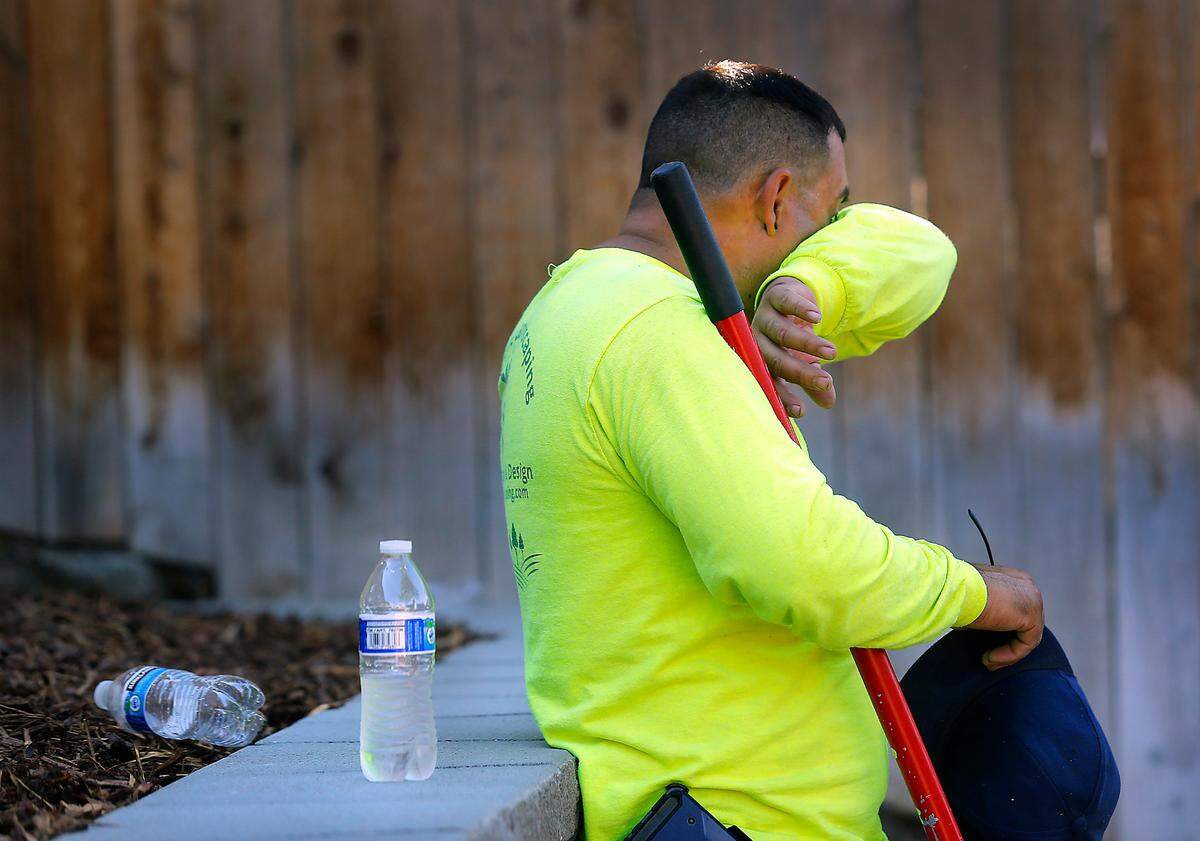
Gamache said that throughout the day she delivers Gatorade to crews who have been starting at 6 a.m. to end their days early.
While crews still are moving full speed ahead, workers are given annual training on heat exhaustion — how to avoid it, signs and treatment. Workers know to drink lots of water and take lots of breaks, she said.
Creer said that the workers on his job sites also make adjustments to their hours to avoid the hottest parts of the day in late afternoons.
There often are limitations on when work can start because of the noise, but framers start pounding nails as early as 7 a.m. and concrete trucks start running at 5 a.m. so folks can call it quits early.
Creer said that reduced hours are key to getting inside to air conditioning and to avoid the heat getting the better of them.
Farm work
And some local growers are getting out in the fields in donning headlamps to pick blueberries before the sun even peeking out.
“We won’t lie, this heat is kicking our tails and our berries. To beat the heat, we started picking our “we pick” orders early this morning. If you’ve ever wondered what it would be like to pick berries at 3 a.m. by headlights and headlamps, well here ya go!” Eastside Sustainable Farm in Kennewick wrote on their Facebook page.
The farm at 2600 S. Washington St. usually has their U-Pick open until 4 p.m. on weekdays and 6 p.m. on weekends — they’re calling it a day at noon this week.
Slow going
One UPS worker told the Herald that loads also are being reduced on the hottest days this week so that drivers can get done with routes earlier.
He added that even though delivery trucks don’t have air conditioning, drivers do get used to the heat
But the reduction in hours can create a backlog of work, and in construction is creates a scheduling domino effect.
“We will lose a full week because it is so hard to get people back and to reschedule subcontractors,” Creer said. “Once we saw the heat forecast, we knew this would happen.”