
This could be Tri-Cities hottest week of summer. Heat advisory issued
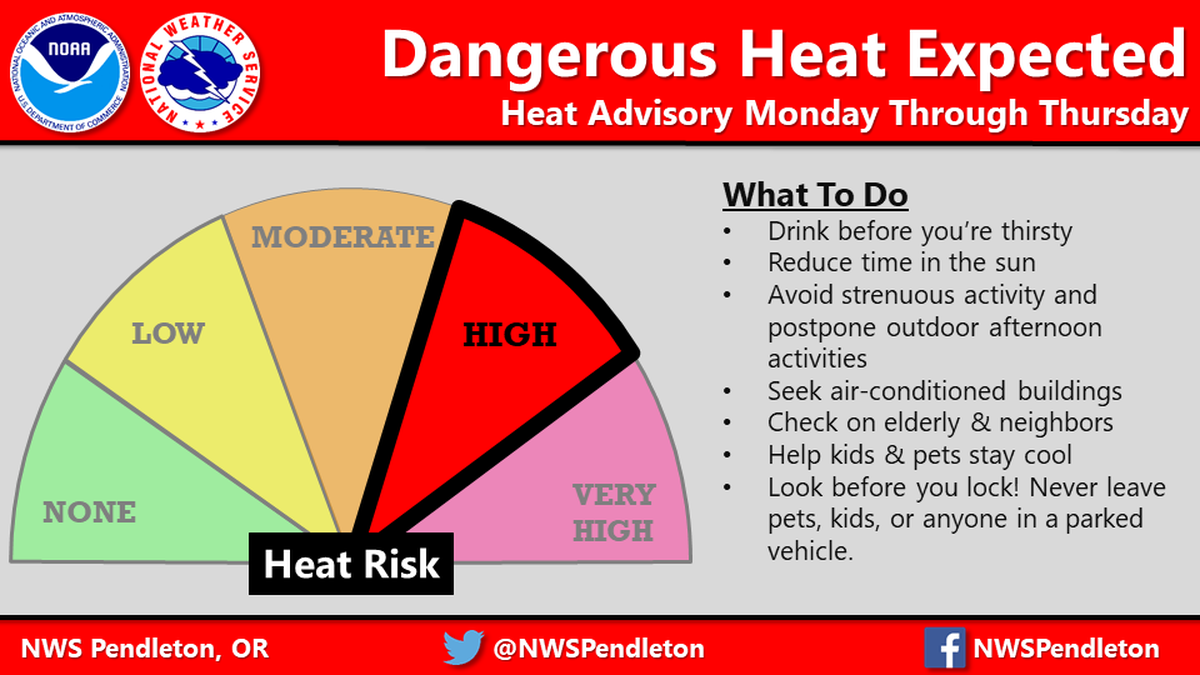
A heat advisory has been issued for what may be the hottest week of this summer in the Tri-Cities.
Highs are expected to be in the 100s from Monday through Thursday, according to the National Weather Service.
A high of 104 is forecast on Monday, climbing to 105 on Tuesday.
Wednesday the high is predicted to be 102, dropping to 100 on Thursday after some overnight clouds on Wednesday night.
The heat advisory issued by the National Weather Service is for all four days.
Not only will daytime temperatures be well above the normal average high for July in the Tri-Cities of about 90 degrees, but limited overnight cooling is predicted.
Monday night the low may be 71, dropping to 66 to 68 degrees the next three nights.
Overnight lows normally average about 59 degrees in July.
Temperatures will not be back to normal until Saturday, Aug. 1, when the high should be about 90, according to the early forecast.
The hot spell follows a couple days at the end of the last work week when highs were in the 80s.
Prevent heat stress
People spending time outside should take precautions and schedule strenuous activities for early morning or evening, recommends the weather service.
The Occupational Safety and Health Administration recommends that outdoor workers schedule frequent rest breaks in the shade or inside air conditioned vehicles or buildings and drink plenty of fluids.
The Washington state Department of Health says people who take prescription diuretics, antihistamines, mood-altering or antispasmodic drugs should be particularly cautious about sun and heat exposure.
Watch for signs of heat stress, which include decreased energy, light-headedness and nausea. People with those symptoms should go to a cool place, drink fluids, remove excess clothing and rest.
More serious signs of heat stroke require the same steps plus a call to 911. Those signs can include a rapid heartbeat, throbbing headache, dry skin, chest pain, confusion, vomiting, staggering or difficulty breathing.
Babies, toddlers, pregnant women, nursing mothers, and seniors may be particularly vulnerable to heat stress.
Pets also may show signs of heat stress. If they are outdoors, shade and water should be available, and they should not be left in cars.
The Franklin PUD recommends pulling shades to block the sun from heating up houses. Hanging a blanket over the window or lining it with aluminum foil or newspaper also can help.
If your house is hot, take a cold bath or shower to cool off, it recommends. Residents can also soak bandannas or towels with water and cool them in the fridge or freezer and then drape them on their heads or necks.
Fridges and freezers in warm houses will keep food cold better if their doors are opened only briefly and infrequently, the PUD reminds residents.
This story was originally published July 26, 2020 at 2:04 PM.