
Local guide summits Mount Rainier for the 100th time. Is it a big deal?
At 10,188 feet up on Mount Rainier, just under the Cowlitz Glacier, sits Camp Muir, a ranger station and climber refuge constructed out of nearby stone in 1916 and later expanded in 1936, complete with bunks and toilets and staffed by climbing rangers in the spring and summer climbing seasons.
One of Camp Muir’s buildings, known by local guides as the “Cook Shack,” was occupied by local guiding company RMI (Rainier Mountaineering, INC) from 1969 to 2005, before the National Park Service took it back over for ranger duty.
Inside the Cook Shack, there are long wooden poles that make up the roof structure, with names carved into them. At first glance, it just looks like graffiti, like maybe some employees got bored. But it’s much more than that.
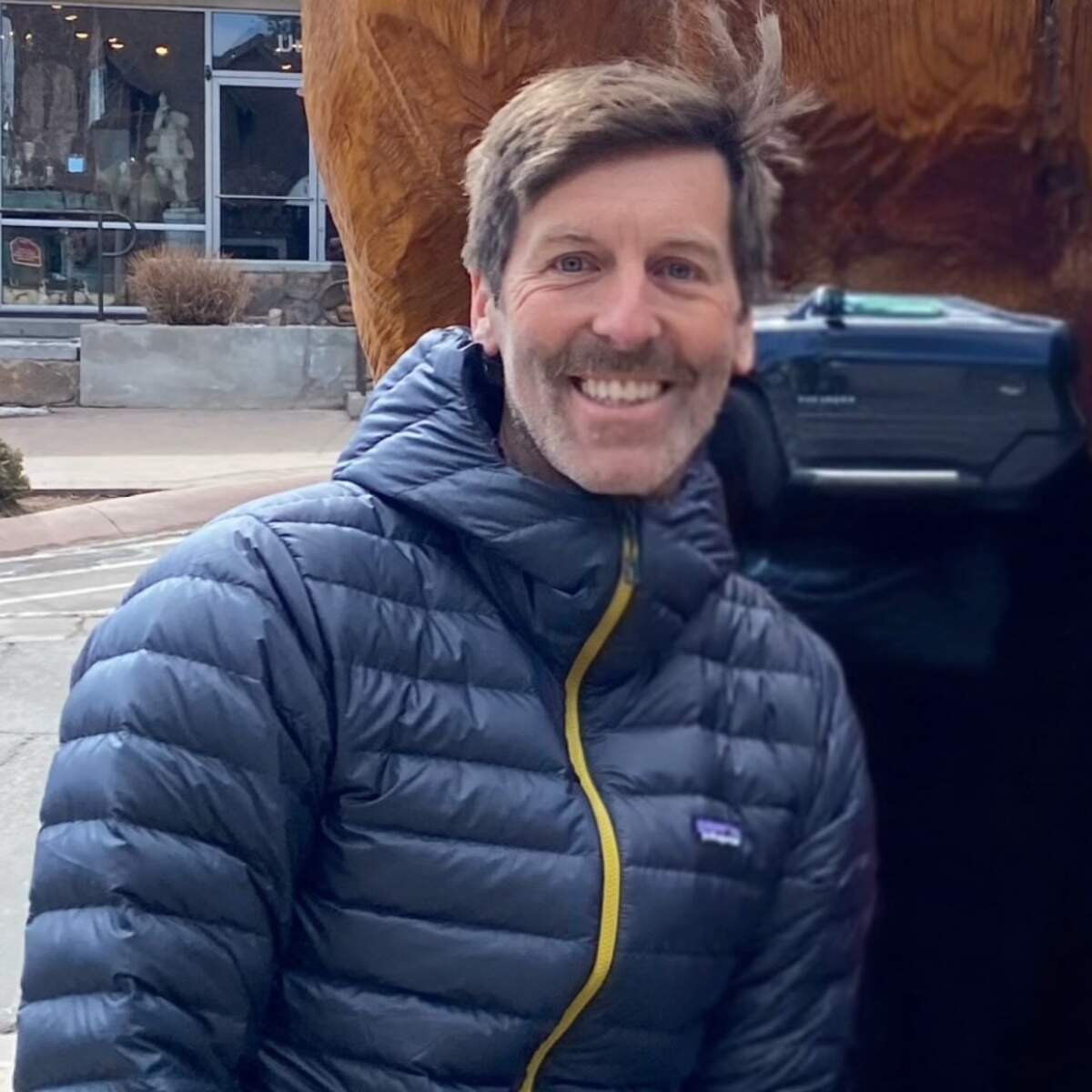
“The tradition is when you hit your 100th summit of Mount Rainier, you get to carve your name into the wooden poles,” RMI Guide Mike King told The News Tribune over the phone on Wednesday.
Those names are longtime guides with history on the mountain. And because they’re historical, the NPS won’t cover them up.
King was on his way down from his 100th summit of Mount Rainier on Monday when he ran into a climbing ranger friend of his.
“I didn’t know if it was still a thing. So I asked him out of curiosity, you know… kind of joking. I said, ‘Does that mean I get to carve my name into a wood post?’ And he said, ‘Oh, yeah, come on in. Do it right now.’
“So it’s kind of cool that they’re still letting guides carry on that tradition.”
100 summits
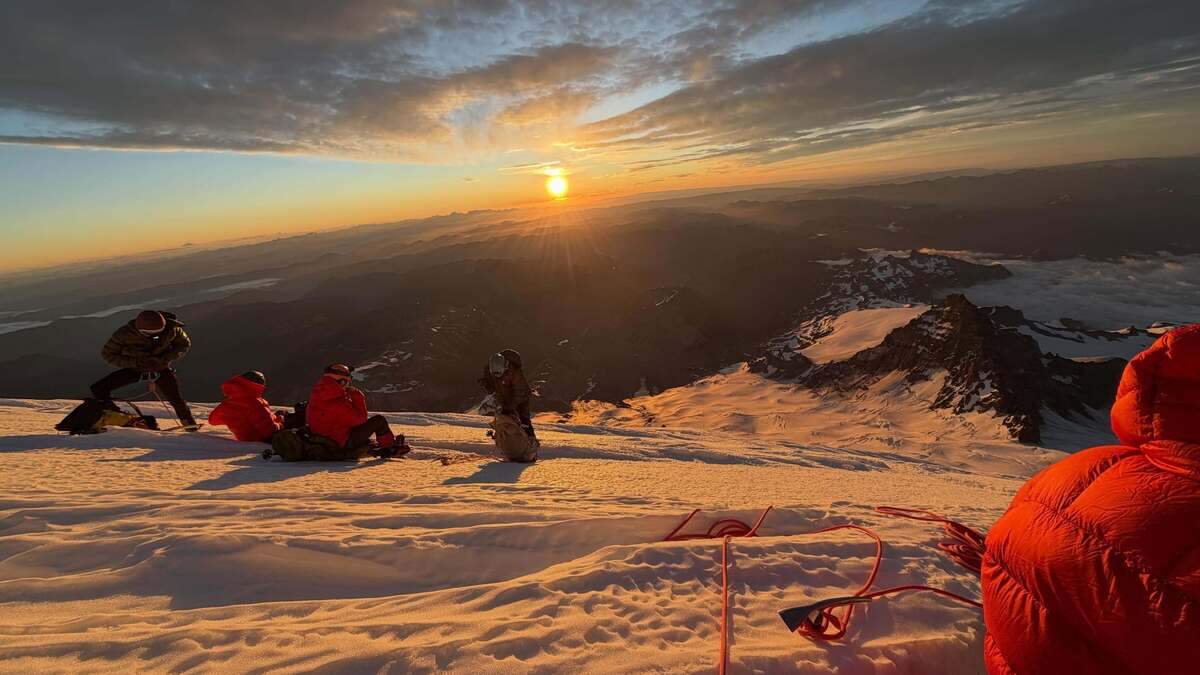
King, a humble man of 46 years, does not enjoy talking about himself. He completed his 100th summit of Mount Rainier on Monday and told The News Tribune he was proud of the accomplishment but that the experience wasn’t particularly memorable.
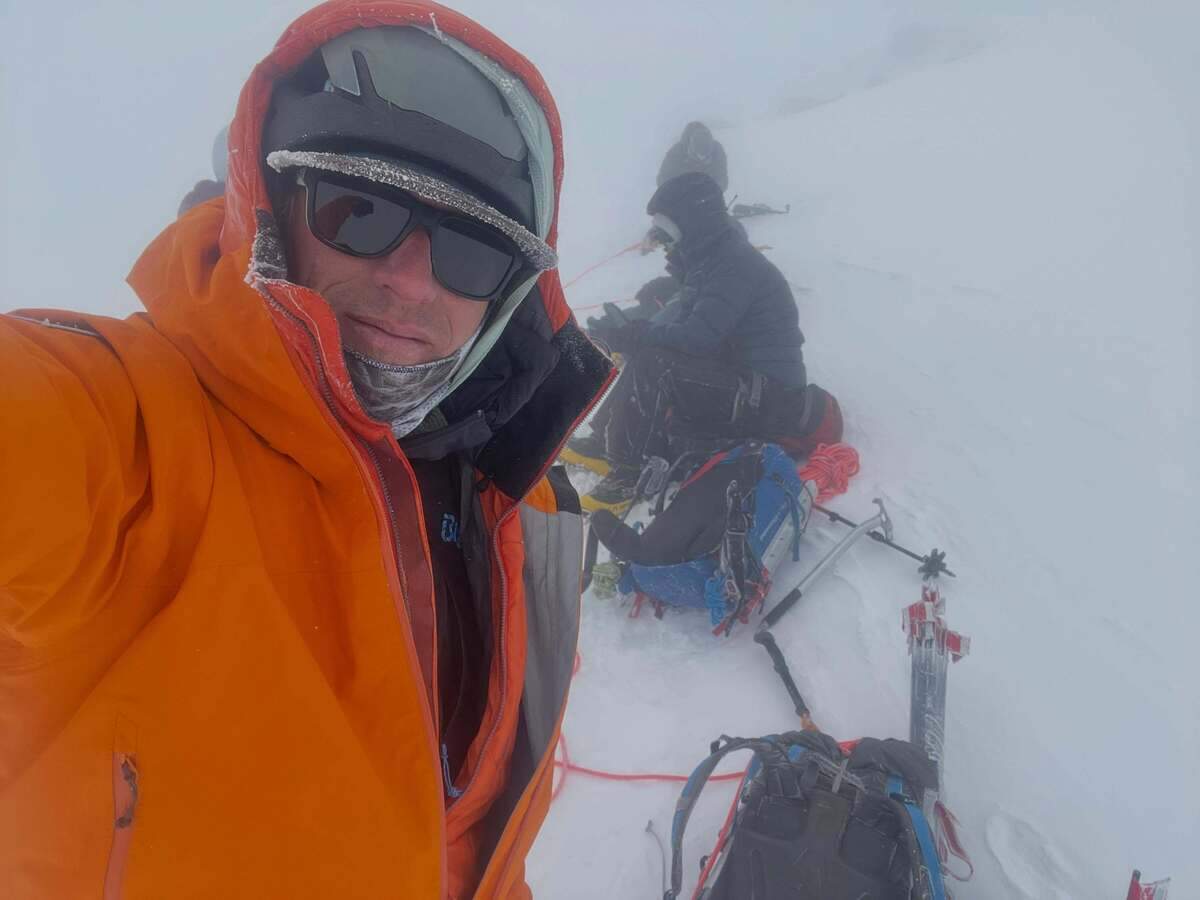
“It was just another climb,” he said. “I didn’t know it was going to be my 100th. On my last trip, we had really bad weather, and it kept us at Camp Muir. I didn’t want to put too much planning or thought into whether this last one would be my 100th because nothing is a given up there.”
King did tell the group he was guiding that it could be his 100th summit and said they were fortunate to have a warm climb with little wind. Monday was also the tail end of the holiday weekend, so the mountain wasn’t crowded.
“It was a safe, efficient climb, and we got a lot of our people to the top. Just what a guide likes.”
On the way back down, King admits he got a lot of high fives. When he got back to RMI offices in Ashford, he went out and had a couple beers with guides after work.
“Now it’s on to the next one.”
Is 100 summits a big deal?
“Nothing is a given up there,” King says.
To nab 100 summits, King had to attempt the mountain 180 times. That’s a success rate of 57%. Mount Rainier National Park statistics state that under 50% of unguided teams reach the summit of Mount Rainier, and 60% of guided teams do.
King’s statistics reflect almost exactly that.
King says he can think of 15-20 guides who have summited Mount Rainier 100 times. There’s also a 200 Summits Club with roughly half that amount. Two of King’s guiding mentors, Dave Hahn and JJ Justman, have over 300 summits each. Hahn started guiding in 1986, and Justman in 2000.
There’s a 400 Summits Club and 500 Summits Club. Only two or three people belong to those. And there’s a single member in the 600 Summits Club, RMI Guide Brent Okita, who passed 600 last year.
If we were to use King’s success rate as a metric, that would mean Okita has attempted to summit Mount Rainier around 1,080 times. He currently holds the record.
However impressive or unimpressive one might find all of that, the truth of the matter is that these are people who live their lives in the mountains. One mountain, in particular: Mount Rainier, Tahoma, Snowy Peak, Mother of Waters, “The Mountain.” And nobody knows it better.
When I look up at Mount Rainier, I see a marvel of a mountain. King looks up and sees Ingraham Direct, Disappointment Cleaver, and the Emmons Glacier, but he also sees ski lines and descents his friends have done, first ascents and historic climbs that have changed the culture of our region forever.
King’s first summit
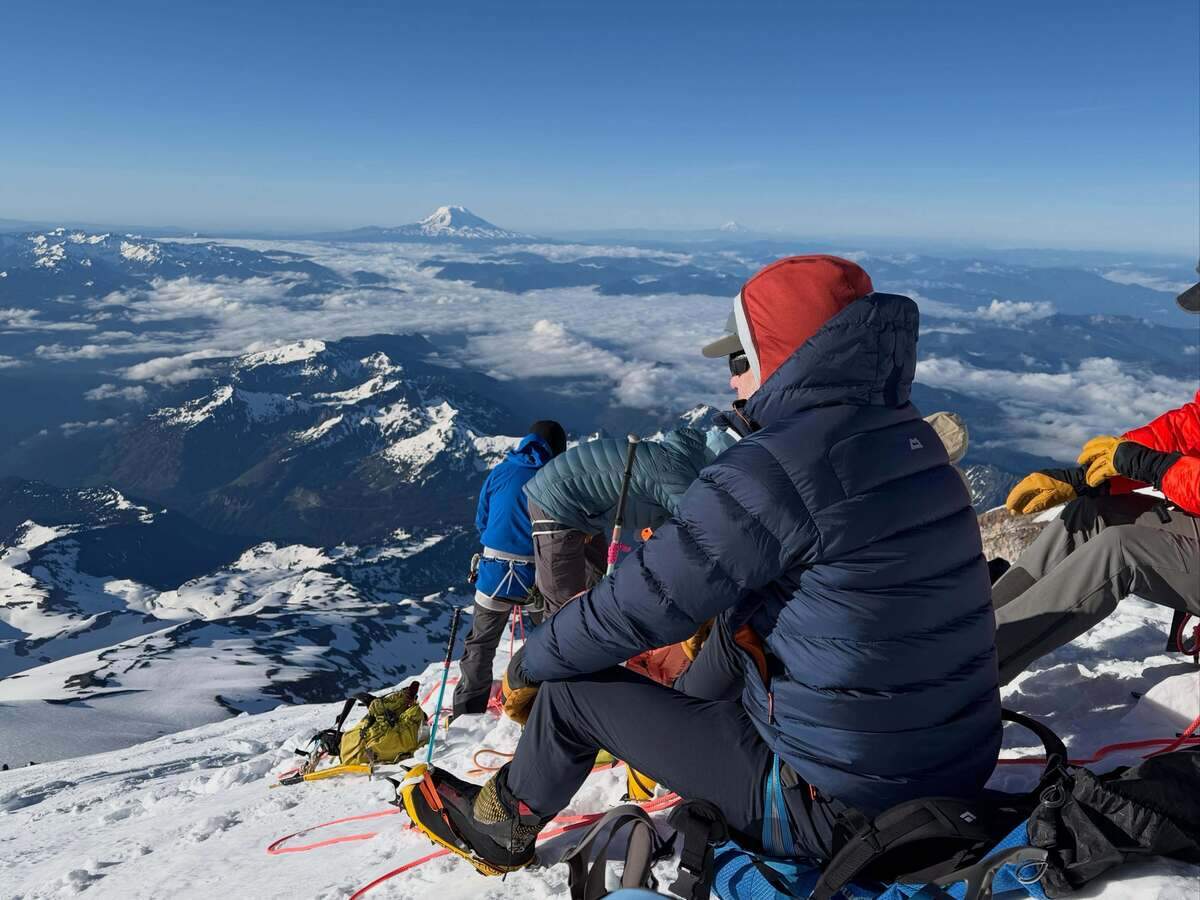
King first summited Mount Rainier in 2011. He’d attempted with friends five years earlier but hit some bad weather on the Emmons Glacier, and his party had to turn around.
But that was enough.
“I got bitten by the mountaineering bug,” King says.
In 2011, he had been guiding for some time in Oregon and Alaska and decided he’d like to try again. He was about to get married and decided to make an attempt with his soon-to-be brother-in-law and another guide friend from Oregon.
He hadn’t spent a lot of time on big glaciated mountains, only smaller ones like the volcanoes found around Central Oregon. But this time, they were going for a more popular route, Disappointment Cleaver through Camp Muir.
Disappointment Cleaver, unlike the Emmons Route, is maintained by guide services in the summer and has its trail shoveled in sections, with ladders and boards where appropriate. There are even bamboo poles, called “wands,” in sections that border the correct path.
Still, mistakes are made by those unfamiliar with the terrain.
“We got up too early,” King remembers. “We were out in the middle of the night with no one else up there. I was following the path that had been kicked into the snow and following the wand lines. At first, it seemed fairly straightforward. Then we got onto the Disappointment Cleaver, which in August is all rock with very little snow. There are all these little rock paths, and it’s pretty easy to get confused.”
King’s team ended up on the east side of the Cleaver, off route on a ledge system.
”It’s not even there anymore,” King says. “It collapsed over the years. But at the time I was on what looked like a path. Maybe back in the day it was.”
Finally, they ended up so far off the east end of Disappointment Cleaver that it was clear they weren’t correct. They found a steep gully and climbed safely back onto the ridge, where, suddenly, a row of bamboo wands marked a clear way up.
“You learn from it and hope not to repeat that kind of stuff,” says King.
They ended up with a cold and windy summit on Columbia Crest, well before the sun came up.
On their way down, they finally began to pass guide services and other independent climbing parties as the sun came up.
It was an uneventful descent, other than running into an old friend on the snowfield.
“It was this guy I met once at a dinner party. He had a distinctive laugh,” King says.
It turns out this guy was an RMI guide, and he and King chatted all the way to the parking lot about what guiding for RMI was like.
“The next season I was in Ashford going through new guide training.”
That was successful summit No. 1. Successful summit No. 2 was guiding for RMI the very next year.
Most memorable experience
King says there are guides who seem to have scary stuff happen to them more often than others. He is not one of those guides.
“Knock on wood,” he emphasized.
Still, his most memorable experience is pretty scary.
He was in his second year with RMI and got stuck in the back of a group, with two teams heading to Camp Muir ahead of him. The weather turned.
“You get high enough on the Muir snowfield, and you get close to shelter [Camp Muir], where you can get your clients dried off and warmed up. So we kept pushing to Muir, which is what we do.”
RMI has guides at Muir. And the rangers are there. There’s access to GPS, compass bearings, bunks and sleeping bags, walls and a roof.
“Our job is to get to Muir and see what the weather does that night. Then hopefully go climbing if we can the next morning.”
King was stuck back with two people who were moving slowly. They were exhausted and barely advancing through the storm.
“We ended up having to hunker down in some rocks 500 feet below Muir in a whiteout,” King said. “I had to make a call to my guide team to come get us. Come help.”
King got his people to Camp Muir, but to do it, they had to trudge through thigh-deep snow for 500 feet in 100+ mph winds.
But the ever positive King says it was also an example of the efficiency of guide services.
“We had the resources, and we worked as a team to get people to safety. No one got frostbite, and had we just been independent climbers without the resources of other talented guides, that would have turned out way differently.”
Nothing is a given up there.
This story was originally published July 10, 2026 at 5:00 AM with the headline "Local guide summits Mount Rainier for the 100th time. Is it a big deal?."
.jpg)