
Life, and with it hope, returns to waters decimated by Mount St. Helens eruption
On a recent June day on upper Mount St. Helens, there was a tail flap, a splash, and a native species returned to its ancestral waters for the first time in four decades. Chinook salmon had thrived in the North Fork Toutle watershed for thousands of years before the 1980 eruption of Mount St. Helens wiped out their spawning grounds (and nearly everything else in its path).
Now, thanks to efforts by the Cowlitz Indian Tribe, conservation groups, and state and federal agencies, Chinook salmon have returned to their home waters, with hopes that they will continue to return.
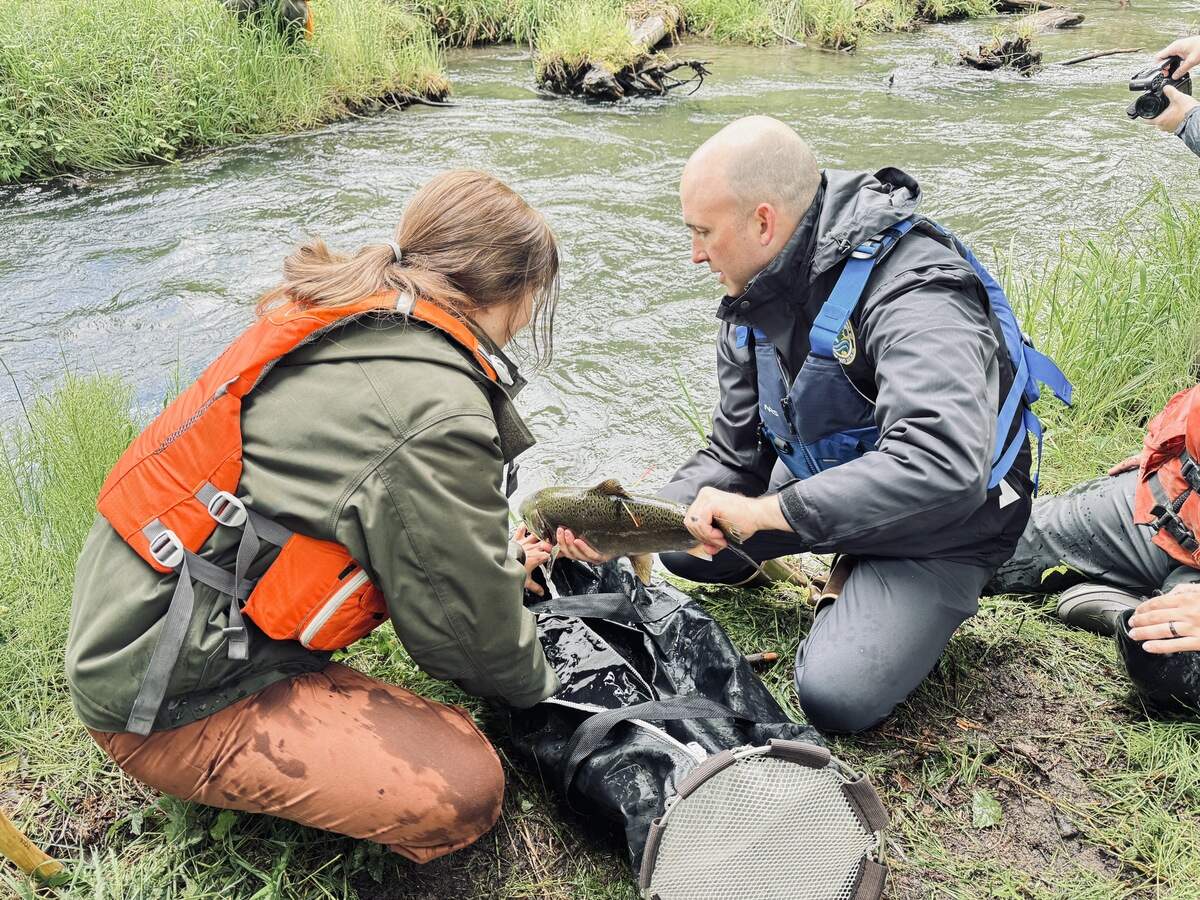
Another name for Chinook salmon is king salmon. Thomas Burhrens, a research scientist with the Washington Department of Fish and Wildlife, spoke to The News Tribune by phone last week and highlighted the significance of the event.
“They’re a cultural icon up here; spring Chinook are the first returning anadromous salmon, and they’re of incredible importance to tribal and non-tribal culture throughout the Northwest. With the reintroduction of spring and fall chinook, we’re putting two species back into the landscape that hadn’t been present in nearly 50 years. We’re returning a cornerstone of a social and biological ecosystem back to it,” he said.
“That’s very exciting.”
A melted habitat
During the eruption, the entire north face of the mountain collapsed in a giant debris flow. It wiped out roughly 230 square miles of the ecosystem and left unstable sediment deposits across the entire upper North Fork Toutle Valley. There was no vegetation at all. And with no vegetation, there were no roots to hold the sediment.
Immediately after the eruption, rain and runoff began moving huge amounts of sediment downstream. So much sediment went down the Toutle River that it knocked out every bridge and even took out bridges on the Cowlitz River. Sediment kept flowing, and eventually it blocked the main navigation channel between the ocean and Portland on the Columbia River.
Finally, in 1989, the Army Corps of Engineers built the Sediment Retention System (SRS), essentially a large dam, to catch all the sediment and stop it from continuing to flow into river systems and communities below.
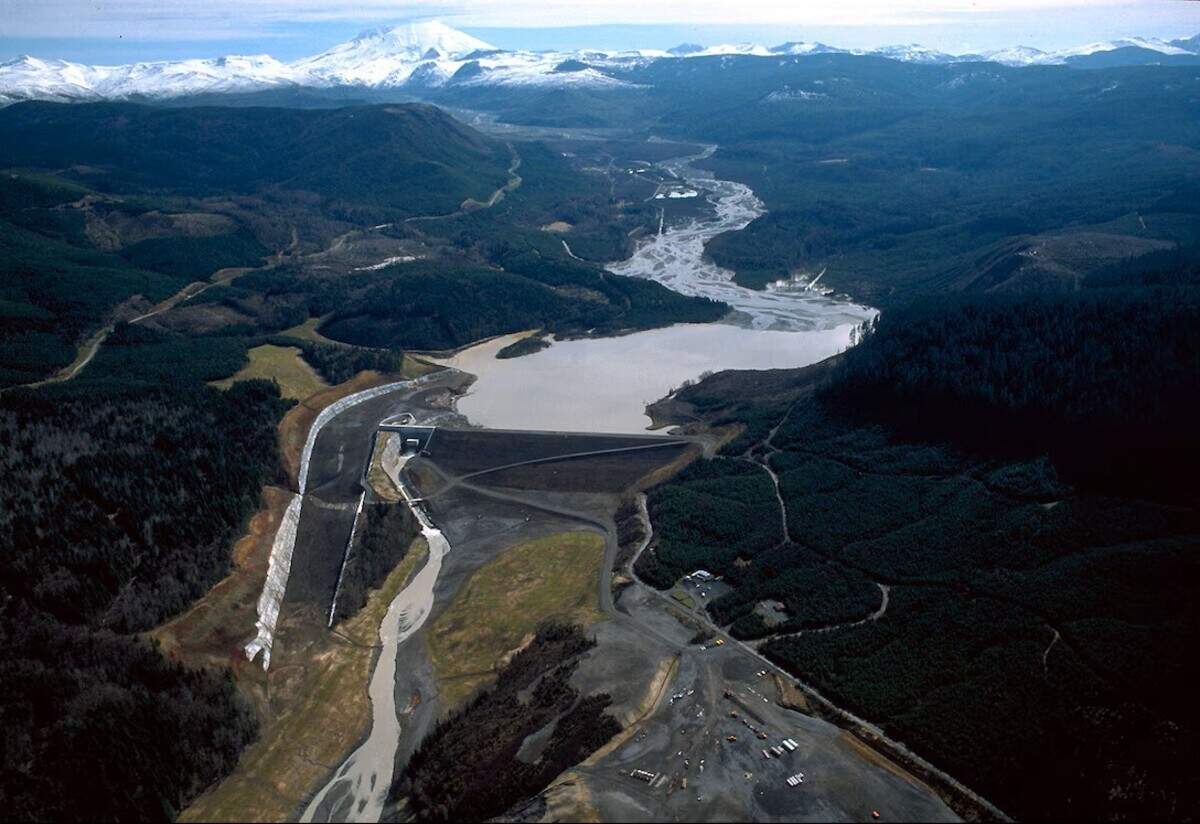
In the decades since, the habitat slowly healed. As a result, the Washington Department of Fish and Wildlife began releasing steelhead and coho salmon back into the lower watershed tributaries.
The fish Uber
To get steelhead and coho salmon back into the upper Toutle watershed, above the SRS, they run a “fish Uber” service of sorts.
Officially, it’s called a “trap and haul,” and it’s just how it sounds. They trap native steelhead and coho and transport them in a large truck from the lower watershed to the upper watershed above the SRS.
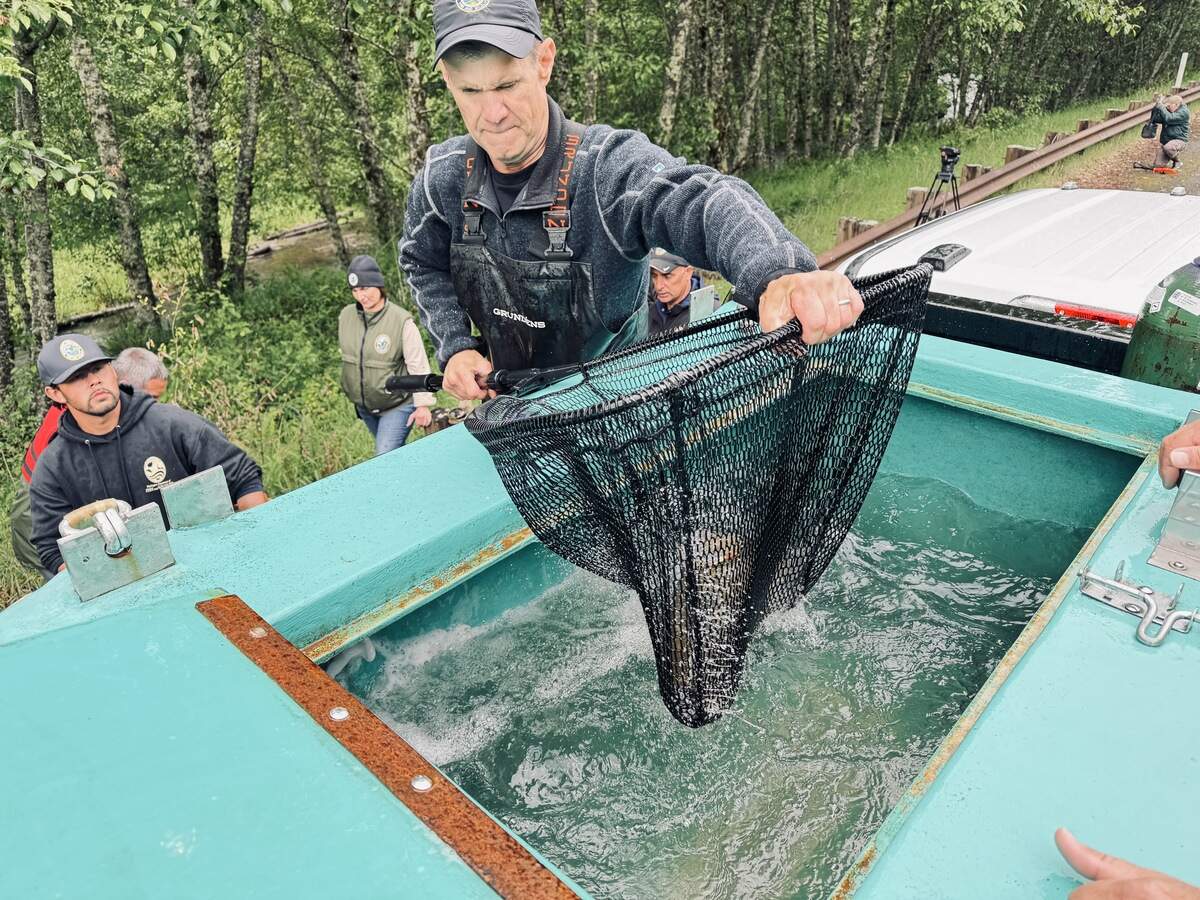
“Our problem is how do we get them moving upstream much more than downstream. And how do we make sure they’re able to access all the habitats upstream?” Buehrens said.
The SRS is close to 200 feet tall. Below it, in the lower Toutle watershed, is the Toutle Fish Collection Facility, what’s called a “lowhead dam” that the Army Corps constructed a mile or two downstream of the SRS.
The Toutle Fish Collection Facility diverts fish into a fish ladder so the WDFW can load them into a truck and take them upstream, above the SRS.
There are many dams worldwide with a perpetual upstream trap-and-haul system for native fish. The dams are just too tall, and fish ladders can’t be built.
With the Toutle River on Mount St. Helens, a trap-and-haul system was implemented because it was the only viable option.
“The SRS is a dam, and there’s a reservoir behind it. There wasn’t a feasible way to build anything else,” Buehrens said.
According to Buehrens, the SRS is almost full. The Army Corps has been slated to slightly raise its height over the coming years to increase its capacity to hold more sediment.
“But not indefinitely; there are only one or two more raises,” he said.
Life finds a way
The spillway of the SRS was blasted out of bedrock, and it was blasted at a 6% or 7% slope. It looks like a steep set of cascades in a canyon.
“The interesting thing is that somewhere between 2010 and 2015,” Buehrens told The News Tribune, “USGS put radio tags in adult steelhead and coho and released them below the SRS wondering what will our fish do, and can they swim up it?”
Surprising everyone, about half of the steelhead were able to swim up the face of the SRS spillway with no assistance. The coho had less success, but the steelhead that made it did so on their own.
What that told the WDFW is that this structure, as it is now, is nearly passable to salmon and steelhead.
“And that became our long-term goal,” Buehrens said. “We will find a way to construct passage up the spillway. I don’t know if it will be a fish ladder, or exactly what the design details are. But that is our stated long-term goal. That there will one day be volitional fish passage up the spillway of the SRS.”
Return of the Chinook
On June 10, 30 Chinook salmon were released into Coldwater Creek above the SRS using the trap-and-haul method, marking the first time the species have returned to the upper watershed since the eruption.
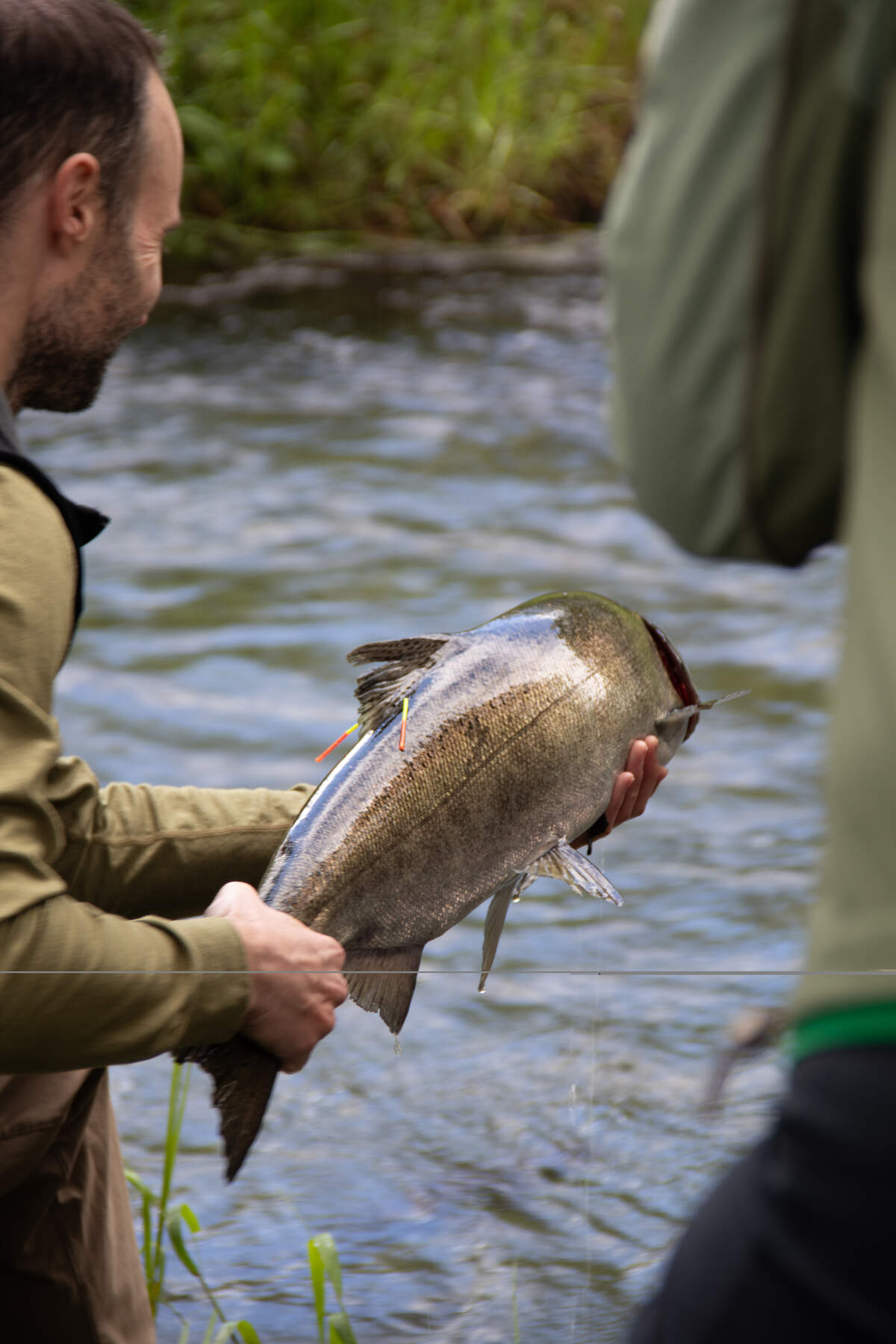
Buehrens was there for the occasion, as were conservation groups, state and federal agencies, and members of the Cowlitz Indian Tribe.
“It’s been phenomenal working with the Cowlitz Tribe,” Buehrens told The News Tribune. “It’s been a great honor for us, and they’ve been amazing collaborators.”
“If we don’t do this work today, there will be nothing for anybody in the future to fish,” William Lyell, chairman of the Cowlitz Tribe, told The News Tribune in an email. “So we want to protect that resource and protect the interests of all so that one day we participate at the level that we did for thousands and thousands of years to feed our people with critical first foods.”
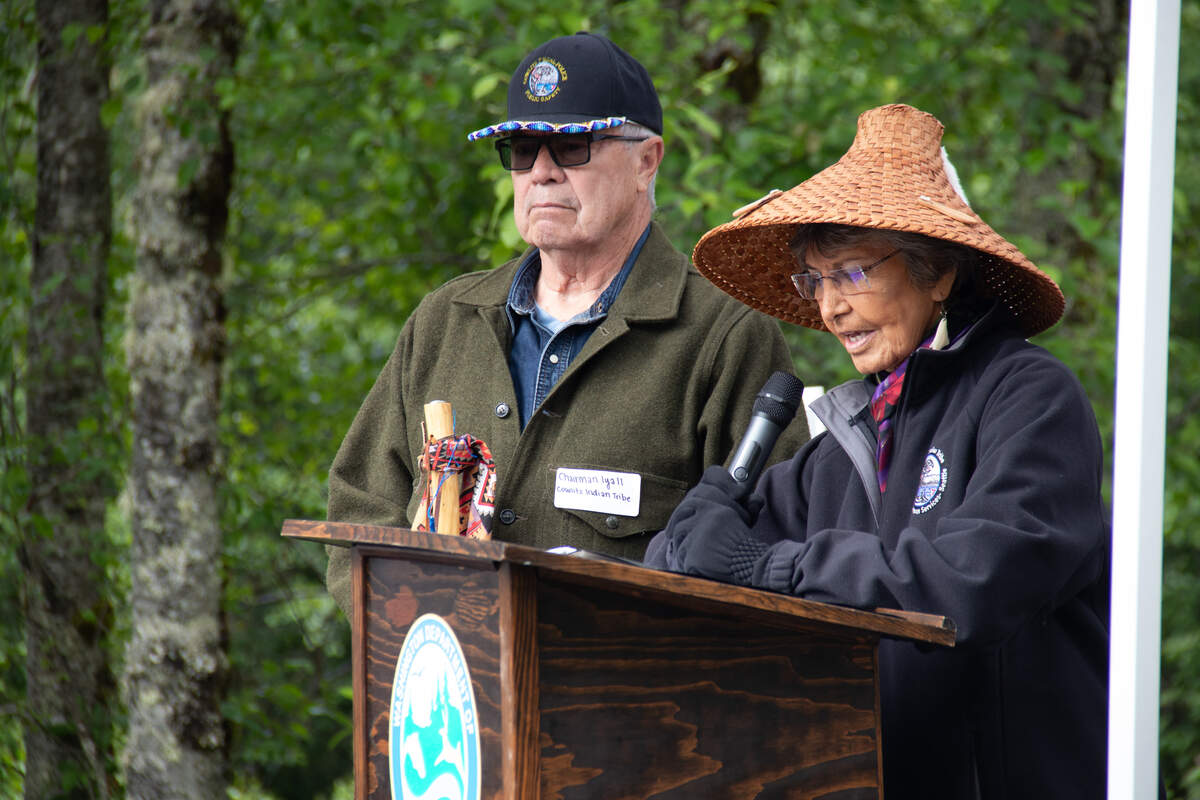
On that day, a press conference was held at the release site, near the North Fork of the Toutle River, where federal and state agencies and members of the Cowlitz Indian Tribe spoke to the media.
Thirty Chinook were released, but the goal is to release at least 300 fish annually, both spring Chinook and fall Chinook, into the watershed.
“It’s significant in the standpoint that that small number brings a lot of hope with it. And how many can make it back?” Lyell told KATU, an ABC television station out of Portland.
“That’s sort of how the world began, wasn’t it?” Tanna Engdahl, spiritual leader of the Cowlitz Tribe, responded.
This story was originally published July 1, 2026 at 5:00 AM with the headline "Life, and with it hope, returns to waters decimated by Mount St. Helens eruption."
.jpg)