
Can I cut my neighbor’s tree if it’s on my property? What Washington law says
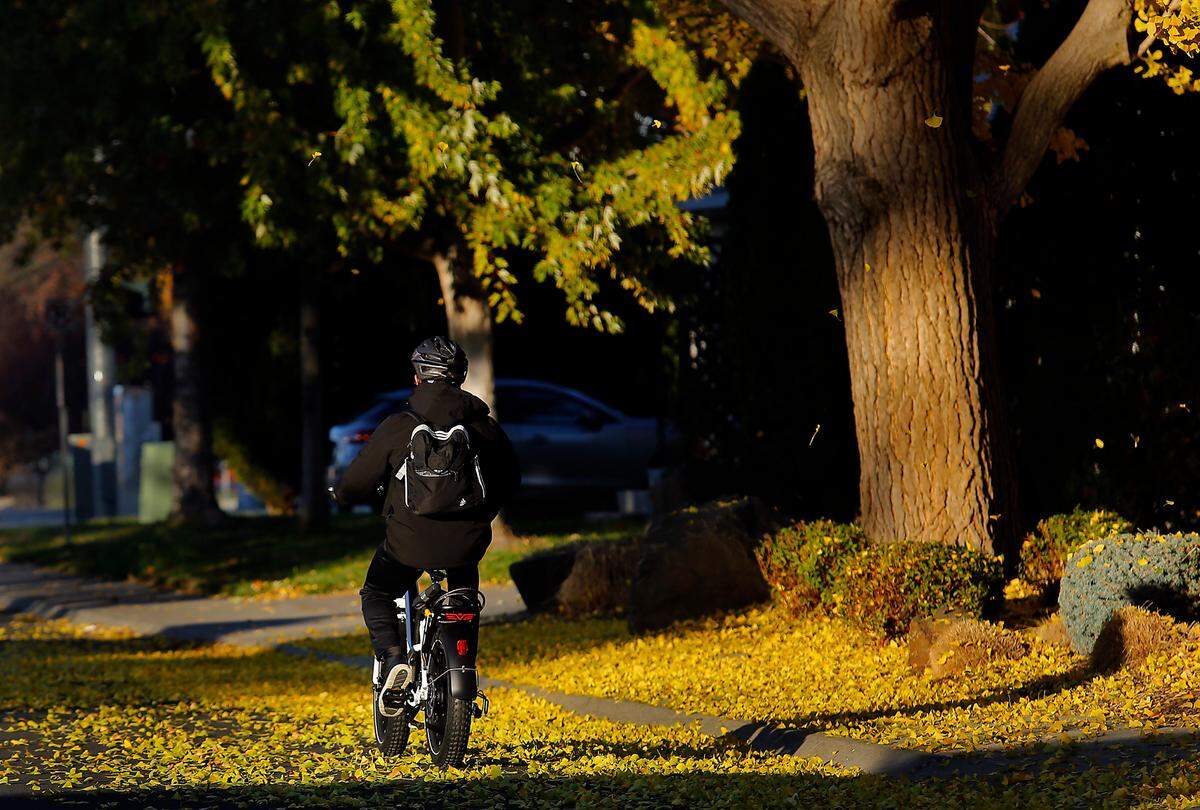
It’s a familiar experience: You step outside to find your yard covered with tree limbs and leaves.
Washington residents may wonder what happens when it’s not your landscaping that is making a mess, but your neighbors’.
Are you allowed to cut your neighbor’s tree if it’s across your property line? Who’s required to clean up leaves, twigs and broken branches that fall over the fence?
Here’s what Washington state law says:
How does tree ownership work in Washington state?
In Washington state, who owns a tree “depends on the location of the tree’s trunk at ground level,” according to Sound Tree Care, a SeaTac company that provides arborist services throughout the Puget Sound.
“If the entire trunk is located on one property, that tree is typically owned by that property owner,” Sound Tree Care said.
If that trunk sits directly on the boundary between two properties, it belongs to both neighbors under Washington state law.
“Ownership affects who can legally prune, remove or alter the tree,” Sound Tree Care says, as well as who’s responsible if the tree is damaged or fails.
Can I trim my neighbor’s tree if it’s on my property?
In general, you’re allowed to trim tree branches or roots that encroach on your property, even when the tree’s trunk is “located wholly on a neighboring property,” according to Seattle law firm Montgomery Purdue.
“The property owner must be careful not to trim or cut any portion of the tree that is not located on their property,” the law firm said. “They can only trim or cut up to the property line.”
“Trimming should be done in a way that does not unreasonably harm the tree,” Sound Tree Care said.
That includes damaging the tree’s roots, trunks or doing anything that could cause the tree to fall.
Before cutting a part of the tree, ask or inform your neighbor what you’re planning to do to their tree. It’s the neighborly thing to do. Sound Tree Care said
Does my neighbor have to clean up leaves or branches?
According to legal experts, you are responsible for disposing of leaves, twigs and branches that fall on your property — even if they come from a neighbor’s tree.
“Once they land on your property, they become your yard waste,” online legal resource FindLaw said.
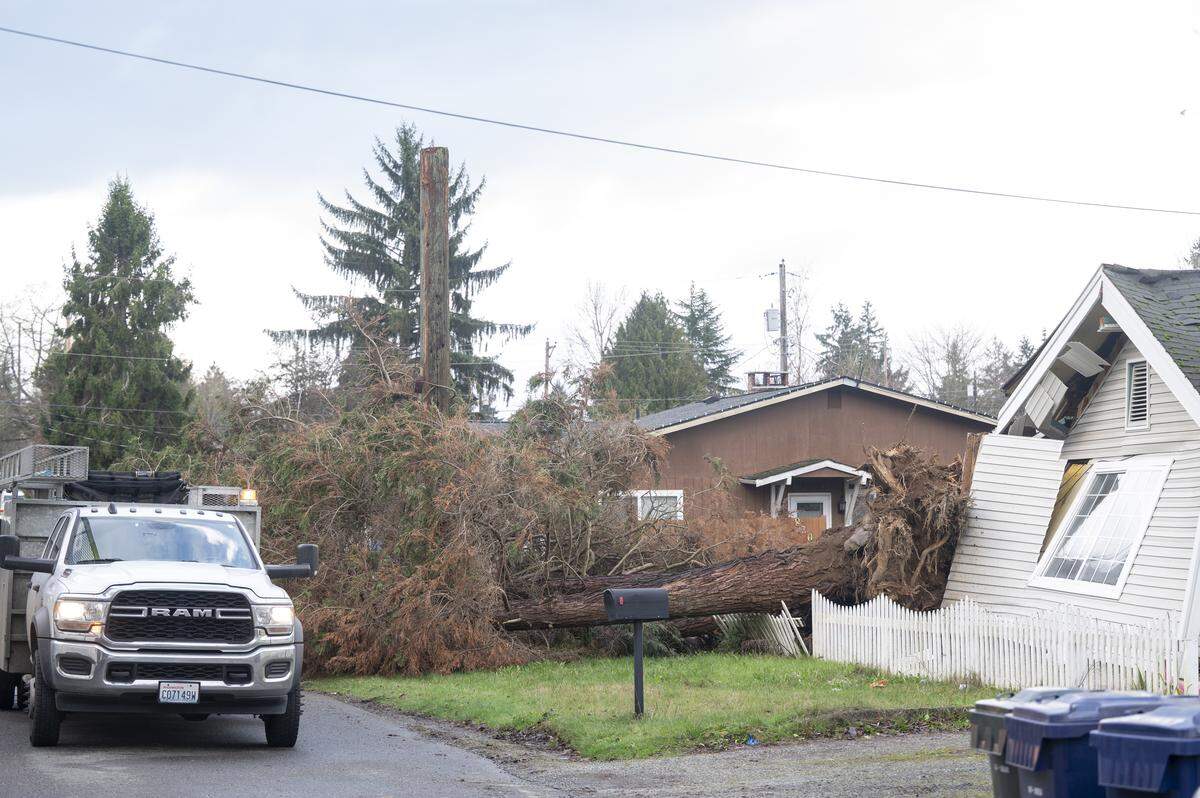
Who’s responsible for tree damage to my property?
Are homeowners responsible for the damage their trees cause to other properties?
It depends on the circumstances, according to FindLaw.
“If your neighbor took reasonable care to maintain the tree branch, and the tree branch did not seem to a reasonable person to be threatening to fall,” they’re “probably not” liable if a storm sends that limb crashing onto your roof, FindLaw contributor Eric Harvey wrote.
Such an event would be deemed an “act of God.”
“On the other hand, if the tree was not properly maintained, then your neighbor could be liable for the damages caused,” Harvey said.
What if my neighbor refuses to tend to their tree?
“Landowners are responsible for maintaining the trees on their property,” Harvey said.
Legally, property owners must “make reasonable inspections and take care to ensure the tree is safe,” according to FindLaw.
If you believe your neighbor’s tree could cause a safety issue, Sound Tree Care recommends documenting the condition of the tree, including photos with dates and any communication you’ve had with your neighbor about the tree.
You should also consult an arborist for a risk evaluation, Sound Tree Care said.
Branches and roots that damage your property can be considered a nuisance under Washington law, experts say, especially if they’re “interfering with your use and enjoyment of your own property.”
At that point, you may want to get lawyers — or your local municipality — involved.
”If the court finds that the tree is a nuisance, it may order the tree removed,” Harvey said, while cities with ordinances prohibiting landowners from keeping dangerous conditions on their property “may remove the tree themselves or order your neighbor to do it.”
Can I legally cut down my neighbor’s tree?
If you want to prune or chop down a tree on someone else’s property, ask first.
“If it is necessary to enter the other property for trimming, permission of that property owner must be obtained before entry, unless the limbs threaten to cause imminent and grave harm,” Clark County Public Works said.
According to the Revised Code of Washington, it’s illegal to “cut down, girdle otherwise injure” any tree or shrub “without lawful authority.”
That includes trees on private property as well as those standing on the street in front of someone’s house.
What are the penalties for chopping down a tree?
If you’re caught cutting down a tree without permission, you may be liable for three times the value of the tree.
“Most trees have a replacement value of between $500 and $2,500,” Clark County Public Works said. “Ornamental or landmark trees can have a value of between $20,000 and $60,000.”
This story was originally published February 16, 2026 at 5:00 AM with the headline "Can I cut my neighbor’s tree if it’s on my property? What Washington law says."