Owl busts into coop to prey on chickens — but ends up tangled in netting in Washington
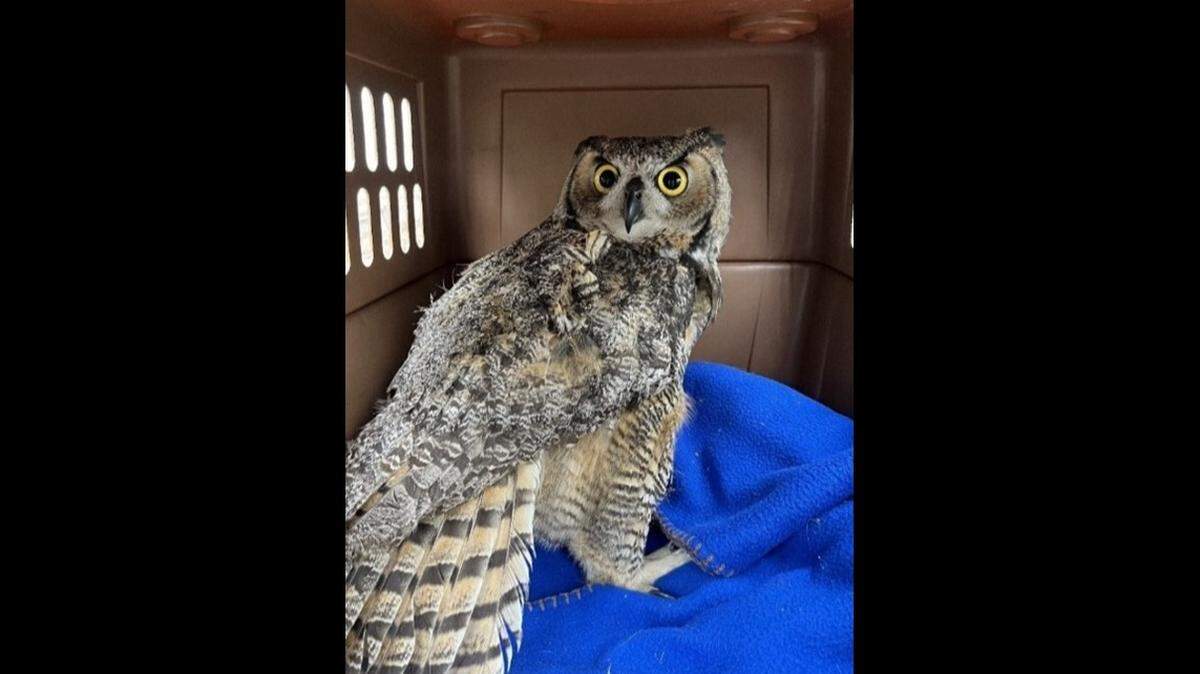
A great horned owl tried to bust into a chicken coop in Washington.
But things didn’t go as planned when the owl ended up injured and empty-handed at a home near Spokane, the Washington Department of Fish and Wildlife said in a Nov. 14 Facebook post.
When the bird attempted to break into the chicken coop, its leg got tightly wrapped in the mesh netting, officials said.
A homeowner found the struggling bird trying to free itself, officials said.
They called for help, and a wildlife biologist and conflict specialist removed the netting that had been cutting off the owl’s circulation.
“This great horned owl got itself into a bad situation,” officials said in the post.
Wildlife officials then took the raptor to a wildlife rehabilitation facility where they said they would evaluate and monitor it.
“It is expected to make a full recovery and be released back into the wild soon,” officials said.
What to know about great horned owls
Great horned owls are found in Washington and in “dense forests, open woodlands, clear-cuts, deserts, and urban environments” within North America, according to Fish and Wildlife.
The raptors can be recognized by their big yellow eyes and ear tufts that look like cat ears, according to wildlife officials.
They have dark brown coloring with black spots, and they are about 20 inches tall and have a wingspan of 48 inches.
These owls can turn their heads 270 degrees.
They typically eat smaller animals, including rabbits, skunks, rodents, or birds like quail and ducks, wildlife officials said.
Wildlife officials said they can injure or kill themselves when they attack prey.
“It is, for instance, common to find these owls riddled with porcupine quills or reeking of skunk scent,” according to officials.
This story was originally published November 14, 2023 at 11:38 AM with the headline "Owl busts into coop to prey on chickens — but ends up tangled in netting in Washington."