One month into war, Israel military enters Gaza City. 5 myths on the conflict, debunked

On November 7, the Israeli army entered Gaza City, marking a significant milestone in the conflict there that started last month on October 7. The Israel-Hamas war has led to the deaths of over 10,000 people of many nationalities living in Gaza, Israel and the West Bank. The vast majority of those killed were in Gaza, a 140-square-mile enclave on the coast of the Mediterannean Sea.
Hundreds of thousands more of the 2.2 million living in Gaza have evacuated or been displaced, while many more remain missing. Hostages, refugees, children and other vulnerable populations are still in Gaza as the conflict enters its second month. The Israeli government and media report that about 200,000 of its residents have been internally displaced. Localized violence and targeted attacks continue throughout the West Bank, including in Bethlehem, where local residents say the army has blockaded roads with bulldozed dirt and boulders.
According to Israel-based human rights organization B’Tselem, 874 Palestinians have been displaced in the West Bank across 15 different communities in areas under Israeli control since Oct. 7.
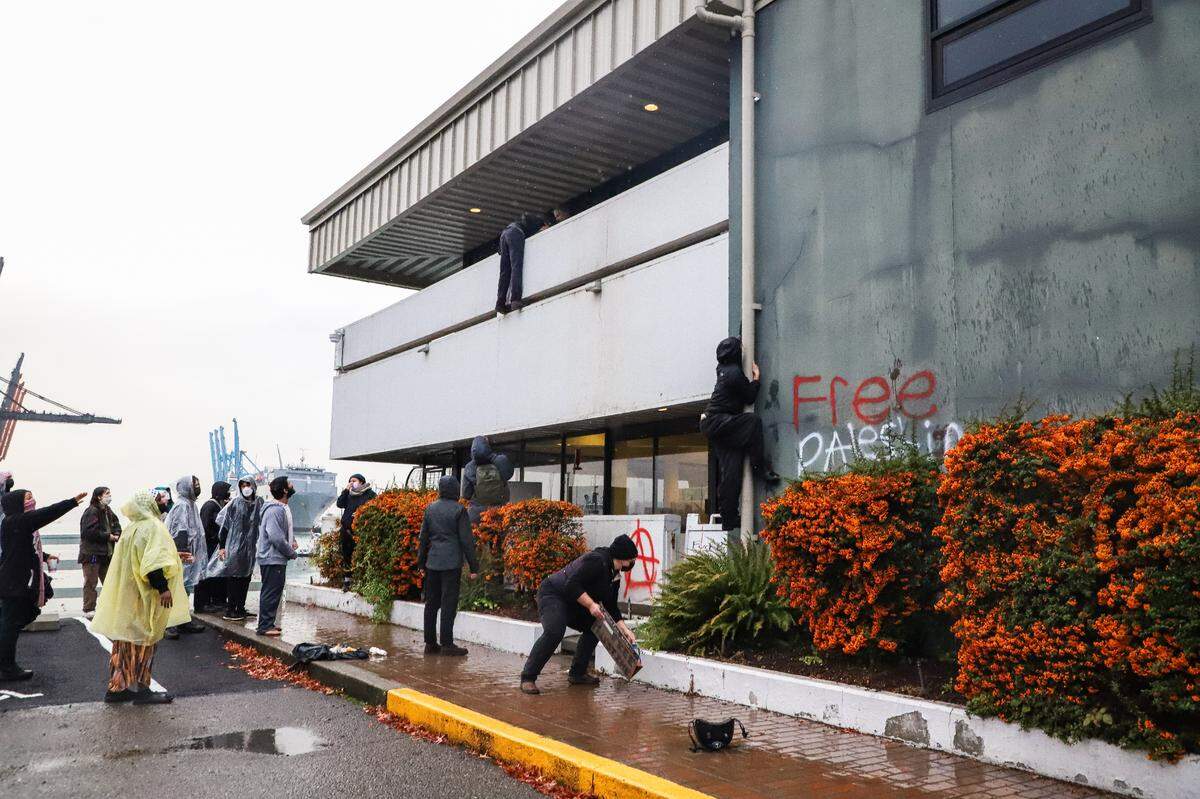
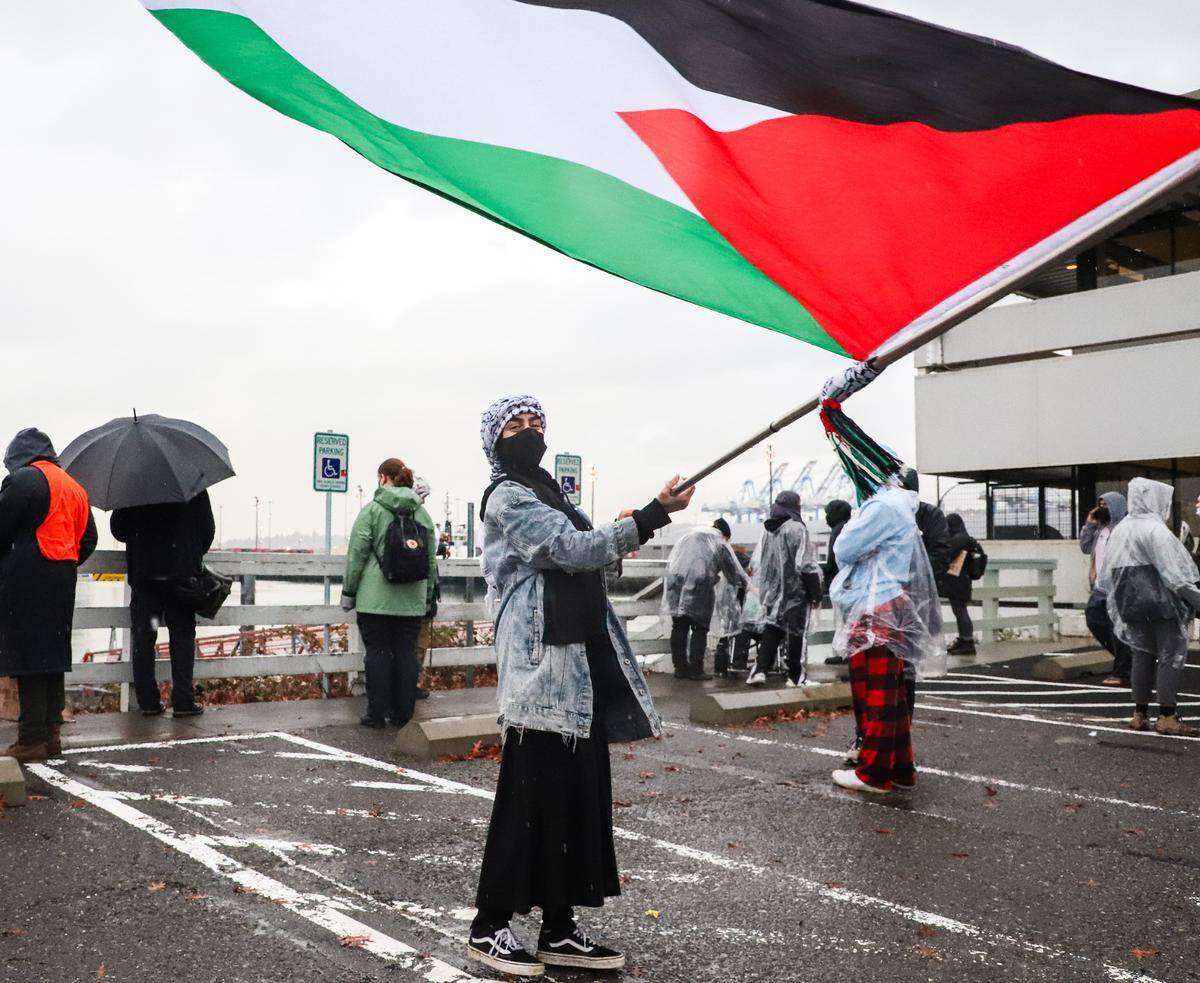
In the U.S. and Washington state, ongoing protests and rallies have continued in recent weeks, including thousands who gathered in Olympia on November 4 and hundreds at the Port of Tacoma on Nov. 6.
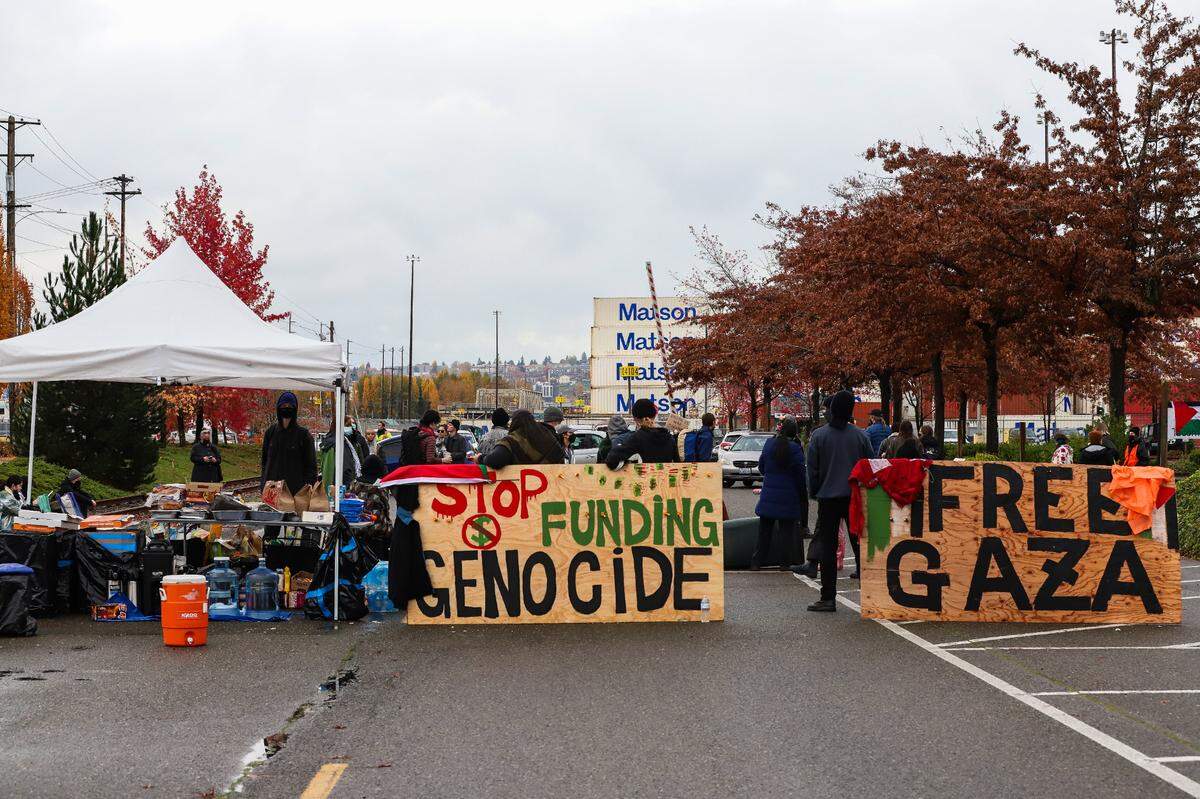
Amid the protesting and increasing involvement of the U.S. government and other nations, what are some key facts to know? Here are five common misconceptions about the Israel-Hamas war.
Myths about the Israel-Hamas War
▪ Myth: Oct. 7 was the beginning of the conflict
The conflict in the Middle East, as it is often called, has been going on for many years. Depending on the view of history you take, there has been some level of conflict between Israelis, Palestinians and neighboring countries since the formation of the state of Israel in 1948. Over the years, the violence has intensified at times, notably during the 1948 Arab-Israel war (also known as the Nakba), the 1956 Suez Crisis, the 1967 Six-Day War and the First Intifada from 1987-1993. That First Intifada ended with a peace agreement on the table, and a two-state solution on the horizon under the leadership of then-Prime Minister of Israel Yitzhak Rabin, Palestinian leaders and others. However, when Rabin was assassinated by an Israeli extremist in 1995, peace talks collapsed, and Benjamin Netanyahu became prime minister. Netanyahu is now in an unprecedented sixth term and is a highly controversial political figure. There was also the Second Intifada from 2000-2005 and numerous other outbreaks of violence over the years since. All of these conflicts have served to continually draw and redraw borders in the region.

▪ Myth: The conflict is only happening in Gaza
Israel is a very small country that can be traversed in about six to seven hours by car from north to south, and about three to four hours from east to west. It is deeply mired in geographic and demographic complexities that are susceptible to disruption in times of violence. The eastern part of Jerusalem is home to about 500,000 Palestinians and 250,000 Jewish settlers, as it is technically in the West Bank according to international law. Domestically, Israel considers Jerusalem their capitol city. Israel proper is home to about 1.6 million Palestinian citizens of Israel. Where Israel meets the West Bank, which is home to about 3 million Palestinians and about 400,000 Jewish Israeli settlers, there are also a patchwork of territorial claims utilized for control by the Israeli military and others. Many of these areas have also seen violence, bloodshed, intimidation and murders since Oct. 7 that are directly connected to fighting in Gaza.
▪ Myth: The Israel-Hamas War is a regional conflict
Since the start of the conflict on Oct. 7, people of many nationalities and from many countries have become involved both voluntarily and involuntarily. Some are hostages, others have lost their lives, and still others remain in the region as residents or visitors. In addition, numerous countries have pledged and acted on their support for the state of Israel, for the Palestinian people, or for the Palestinian Authority. The U.S. has a longstanding position in the world as one of Israel’s staunchest allies, if not the staunchest. The strength of that alliance is evident in U.S. policy and military spending to support Israel.
▪ Myth: Only Hamas is being targeted
There have been a steady stream of reports in the past month from domestic media and regional residents that Palestinian communities, towns and villages are being targeted in response to the Oct. 7 attacks. Israel’s highly controversial use of collective punishment is well-documented and occurs on a fairly regular basis under more normal circumstances. It is a state-sanctioned tactic used in response to violent aggression, and can include things like demolishing homes. Other actions include things like barricading roads that go in and out of Palestinian towns, raids and arrests. Vigilante violence in the West Bank has also occurred. There have also been numerous reports of Palestinians being driven out of their communities and other reports of murder. There have also been reports of white phospohorous, illegal under international law, being used in the bordering country of Lebanon.

▪ Myth: It’s a religious conflict
The state of Israel is officially a Jewish state, and the only one in the world at that, but within the region there is enormous ethnic and religious diversity. According to the U.S. State Department, about 73% of Israel’s population is Jewish, 18% is Muslim, 2% Christian and 1.6% Druze. Not all ethnic Jews practice Judaism, not all Arab people practice Islam, and not all Christians in the region are of European descent. To frame the current conflict as religious in origin is to conflate the factors that actually govern life in the region. It would be more accurate to call it a regional war, as multiple bordering nations like Egypt have proxy factions in Gaza and a direct interest in the outcome. In addition, many religious Jews and Arabs in Israel have actively protested the conflict.
What do WA state congressional members say?
McClatchy’s Northwest Service Team has reached out to all of Washington’s congressional legislators for statements regarding the war, its regional impacts and ongoing U.S. involvement. So far, three have responded with statements from their teams: Representative Dan Newhouse (R), Senator Patty Murray (D) and Representative Derek Kilmer (D).
The statements acknowledge both sides, but end up ultimately focused on funding Israel, which is in lockstep with the Biden-Harris administration’s pledge to provide $14 billion in U.S. aid. Other themes common in the responses include focusing on American allies in the Middle East, humanitarian aid for Gaza residents, Israel’s right to defend itself. There is mention of a peaceful outcome, though it is not specified how it would be achieved. Biden has expressed a desire to leave space for a two-state solution, an accomplishment that has been elusive for generations of politicians.
Newhouse, Murray and Kilmer all condemned the Hamas attack against Israel on Oct. 7, and noted Israel’s “right to defend itself against terrorism.” At the same time, Murray calls for a humanitarian “pause” in the conflict. She and Kilmer both called for aid to Gaza through the supply of water, medical supplies and other resources, asking for confirmation when it gets to Gaza. Hundreds of aid trucks have been making their way into Gaza in recent weeks, but it is reportedly not enough.
Newhouse did not mention aid, instead saying the U.S. should stand “unequivocally” with Israel, because they are our “strongest democratic ally in the Middle East.” He has given his support for any funding needed to secure an “Israeli victory.”
A total of 128 members of congress signed a letter to the Biden Administration and Secretary of State Anthony Blinken on Oct. 20 emphasizing the necessity for humanitarian aid into Gaza. Those who signed included Kilmer and six other members of Washington state’s congressional representatives, but not Newhouse. The letter came out of the House, so Murray would not have been able to sign it.
“...both Israelis and Palestinians deserve equal measures of freedom, security, opportunity, and dignity,” states the letter. “There will never be an end to the violence until that goal is achieved, and we know the United States will have a significant role in the pursuit of the peaceful coexistence between Israel and its neighbors.”
This story was originally published November 8, 2023 at 5:00 AM with the headline "One month into war, Israel military enters Gaza City. 5 myths on the conflict, debunked."