
WA state needs public’s help to monitor for three invasive species and one plant partner
There’s a reason it’s called the Evergreen State — Washington has no shortage of beautiful flora and fauna, a unique and storied ecosystem can be found throughout its multiple regional and micro-climates. Those who enjoy Washington state outdoor recreation need to be adept at species recognition.
Knowing which species are native and which may not be can make a massive difference, and you don’t have to be a biologist or scientific field expert. Simply observing and reporting inconsistencies is one of the best contributions outdoor recreation-lovers can make to maintain and protect the state’s native ecosystems.
Part of invasive species control is prevention, and the Washington Invasive Species Council considers dozens of species to be priority threats. Experts note which species could come here and wreak havoc on Washington’s natural systems, then implement processes to prevent that from happening.
Of course, that means there are many, many species on a sort of watchlist. It can be difficult for non-experts to keep all of these species in mind, so what’s the best way to help protect Washington’s wilderness? McClatchy spoke with experts at the state’s Invasive Species Council to go over some top priorities and effective community responses.
The council was established in 2006 by the Washington Legislature. Since then, it has become a hub for multi-agency efforts to combat invasive species and prevent other potentially dangerous species from getting into the state, according to Stephanie Helms, the council’s executive coordinator.
Priority invasive species in WA
With so many ecological differences between eastern and western Washington, concerns are sometimes listed for each region. But according to Jessica La Belle, an invasive species program specialist with the Invasive Species Council, it’s important to keep an eye out for certain species statewide. La Belle says that there are avenues for invasive species across the state.
While the concern may be in keeping a specific species away from a certain area, if something pops up elsewhere in the state, information about that infestation can offer valuable insight. The council experts have narrowed down the list of priority species to three primary concerns, each of which has an area where it would cause the most damage. The species can still appear in other parts of Washington and should be reported anywhere, in order to keep it from the identified area of concern.
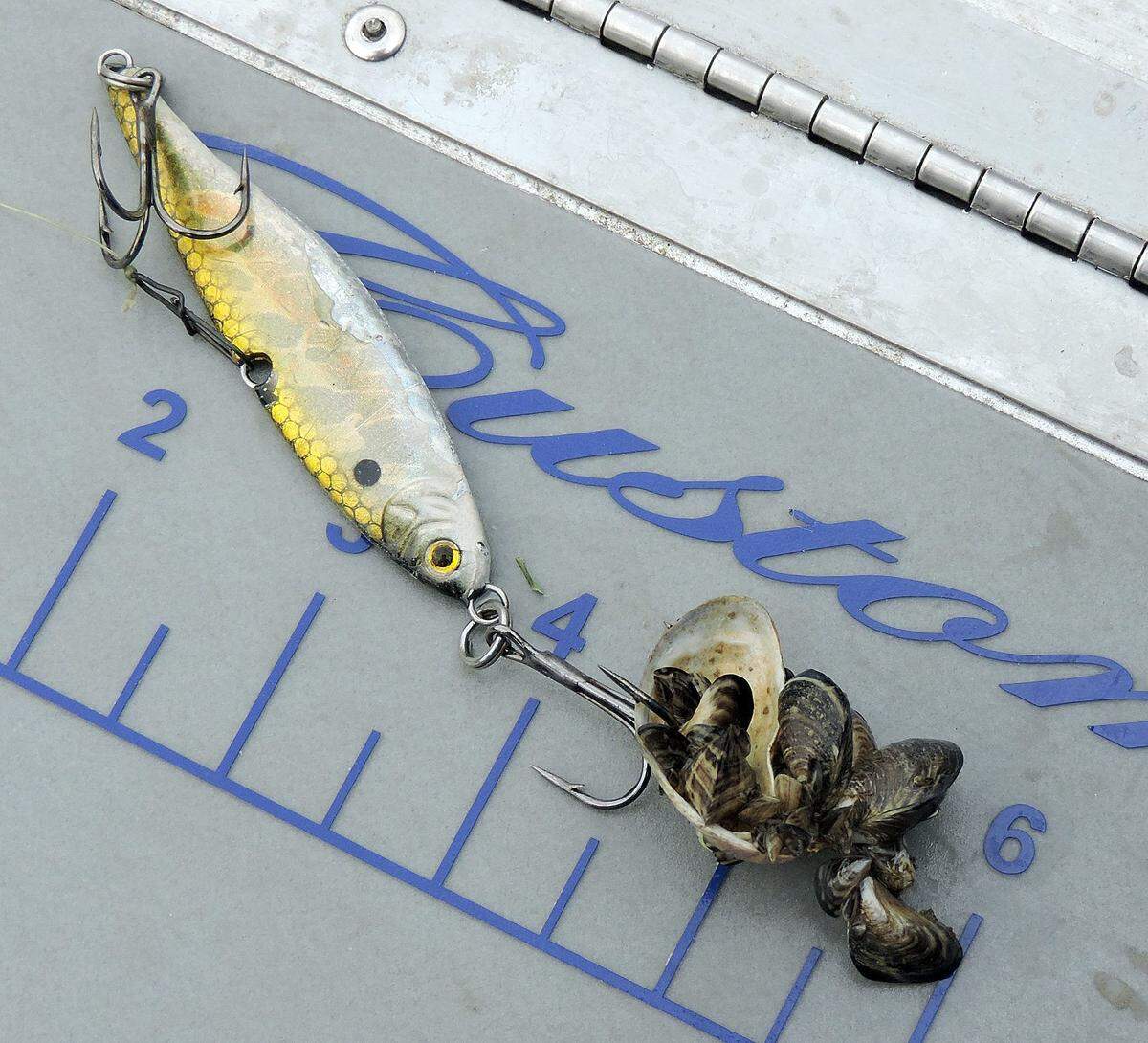
While two separate species, zebra mussels and quagga mussels are often lumped together because they look the same, act the same and are often found co-habitating. Both are invasive freshwater mussels, with growing presence across the country. According to the Washington Department of Fish and Wildlife, the Columbia River Basin is the only large river basin left in the United States that is not infested by zebra or quagga mussels. Because of this, the council is very interested in preventing the species from reaching the Columbia River Basin.
Identifying zebra/quagga mussels:
- Razor-sharp shell
- Byssal thread at its bottom, used to attach itself to things
- Smaller than native species, around the size of a fingernail
- Shaped like a teardrop
- Striped (native mussel species are solid)
Why are zebra/quagga mussels so devastating?
The byssal thread at the base of these mussels is used to attach itself to surfaces. Once this thread is used, it’s like these mussels are cemented in, according to La Belle. They like to congregate on hard surfaces in calm waters like dams, pipes, salmon ladders and boat areas. The species colonize on top of each other, so once they infiltrate an area, they continue to take up more and more space. This can be devastating for pipe systems and the like, as is occurring in other states.
La Belle notes the technology, energy, water and other resources supplied by the Columbia River systems. If mussels disrupt any of these systems, she estimated it could result in hundreds of millions of dollars per year to manage the infestation.
The sharp nature of these mussels’ shells poses a threat to our native species, particularly salmon. Plus, because they are filter feeders that strip nutrients out of the water, long-term infestations would likely kill many other native freshwater species.
Zebra and quagga mussel females can produce up to a million young each year, allowing for fast infestation. Young mussels can reproduce after they’re one year old.
How is Washington preventing zebra/quagga mussel infestations?
Several campaigns are in place to prevent these mussels from infesting Washington’s waters. The state’s Department of Fish and Wildlife has mandatory watercraft inspection stations at state borders and common recreational areas. These inspections have detected more than 100 boats with mussels that were intercepted, according to La Belle.
People are asked to take part in the Clean, Drain, Dry campaign. Any equipment or material going in a body of water should be cleaned, drained and dried before and after entering in order to prevent moving species around. This includes boats, water shoes, paddleboards, etc.
Anyone traveling from out of the state is asked to take part in the Call Before You Haul campaign. A toll-free line is available for anyone transporting a boat across state lines to set up proper inspections.
La Belle says prevention protocols are working so far to keep this threat out of Washington.
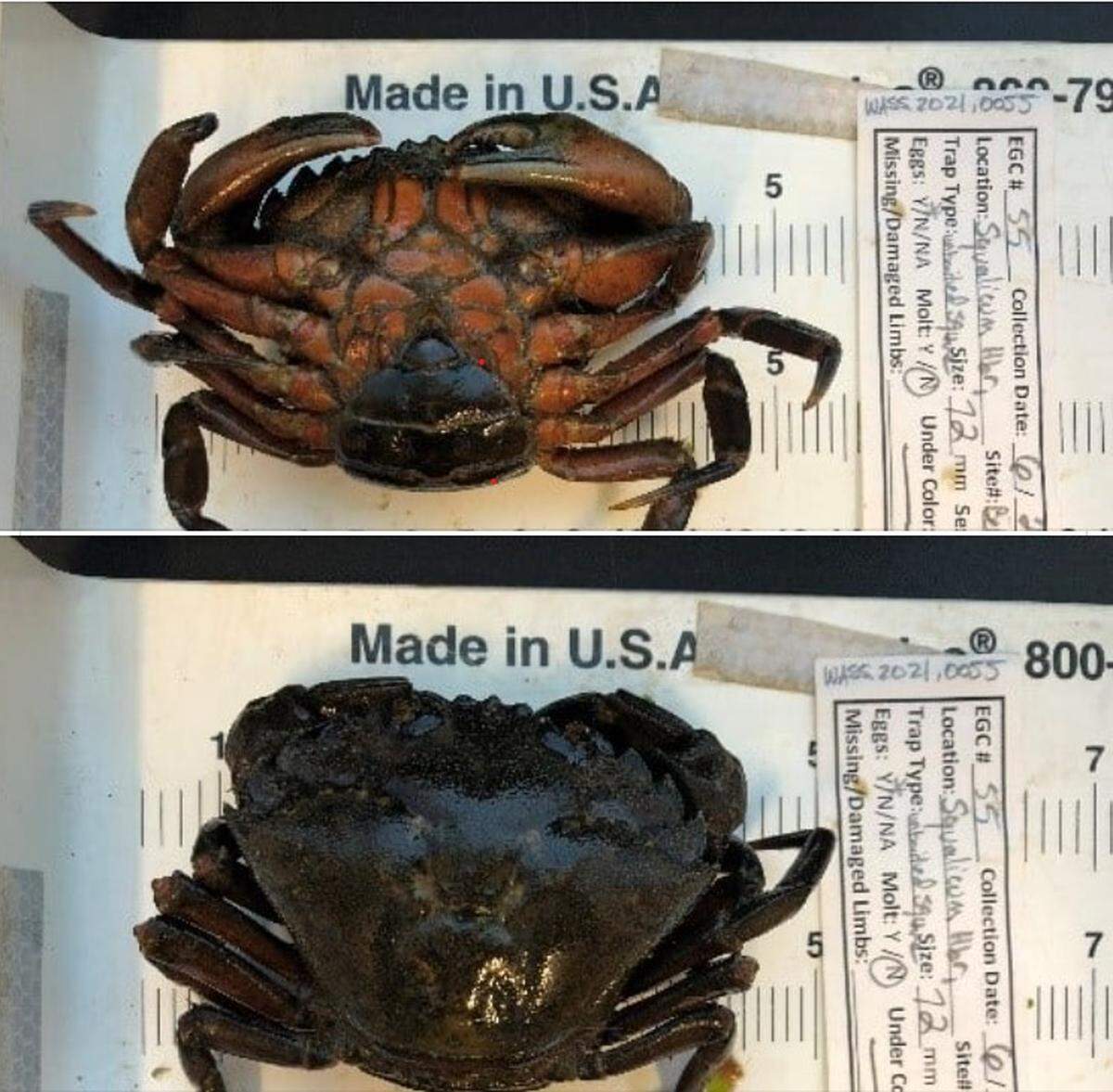
The species of highest priority in Western Washington is likely the European green crab, as it is an active infestation proven to be detrimental in other states. The invasive saltwater crab is a coastal nightmare, impacting crabbing industries and aquaculture wherever it infests.
The species was first identified in Washington in the late ‘90s, but due to massive population increase, a state of emergency was declared in 2022. The Washington Legislature allocated $8.9 million to the Department of Fish and Wildlife in order to manage the infestation and remove the crabs, which has become a multiple agency effort. Since the start of 2022, nearly 423,000 crabs have been removed from state beaches, according to La Belle. More research is being done regarding their behaviors in multiple tribes, universities and state organizations.
Identifying European green crab:
- Shell no larger than the back of your first, a couple inches wide
- All colors, not just green
- Five distinctive zigzag notches on either side of the body leading to the eyes
- Three bumps between their eyes
- Wedge-shaped, wide in the front and narrow in the back
- Found along the shore, usually in less than 25 feet of water
- Easily mistaken for native crabs, take a lot of photos if you suspect a sighting
Why are European green crabs so devastating?
These crabs eat and outcompete native crabs, according to La Belle. They can eat native species like Dungeness crabs, all while also eating their prey. La Belle says the crabs threaten shellfish aquaculture and dig up eelgrass beds, where young native salmon live.
These behaviors can be detrimental to clam and crab industries, as seen in other states.
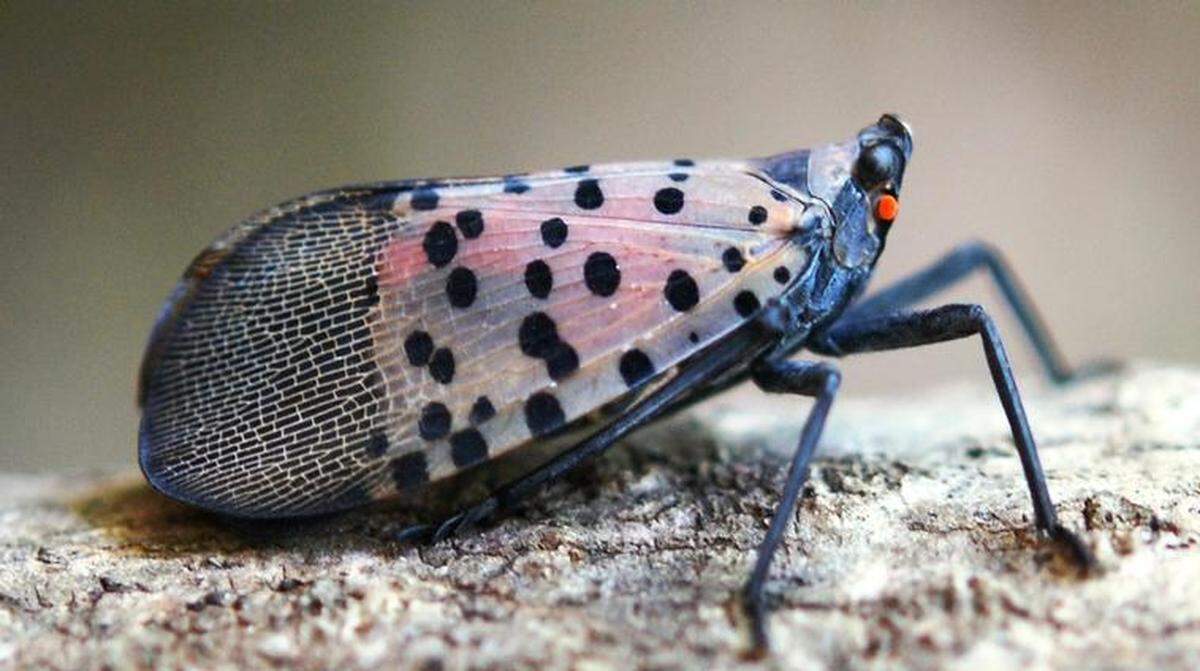
This small insect can pop up anywhere and has been found in 15 states so far. The council is adamant on keeping them out of Eastern Washington because the “sap suckers” are detrimental to crops.
Their presence on the east coast has prompted “stomping parties,” which are exactly what they sound like, and mentioned on most late night talk shows.
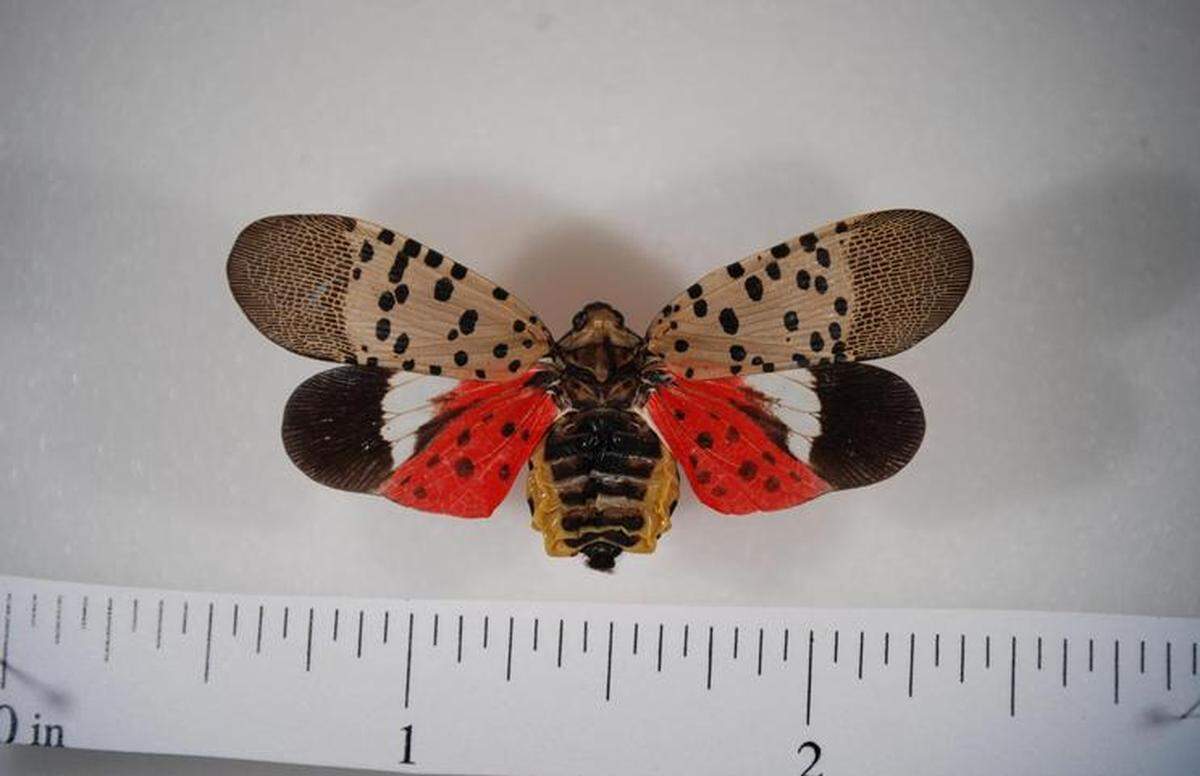
Identifying spotted lanternfly:
- Adults about an inch long
- Wings are light brown or gray with distinct black spots
- Hind wings have red and black pattern
- Youth are black with bright white spots and become red over time
- Egg masses look like a smear of light clay, often found on outdoor furniture, vehicles and plants
Why are spotted lanternflies so devastating?
These flies pierce plants and pull out the sap that plants use for energy and photosynthesis. While they eat this sap, they continually excrete, which leaves behind a very high sugar content. This attracts other pests and mold, weakens the plants and can kill them.
The more they spread, the larger number of species they can actively feed on. Right now, the flies can feed on hundreds of species. They prefer some of Eastern Washington’s major producers, like stone fruits, grapes, hops, apples and berries.
Studies have shown that Eastern Washington would be a prime habitat for spotted lantern flies, if they ever got here, particularly along the I-5 corridor, according to La Belle.
The species travels by hitchhiking, often laying eggs on smooth, rusty surfaces like railway cars. They easily hide in methods of transportation and travel from state to state this way.
How is Washington preventing spotted lanternfly infestations?
Anyone traveling from an infested area is asked to thoroughly examine their belongings and vehicles for pests and egg masses.
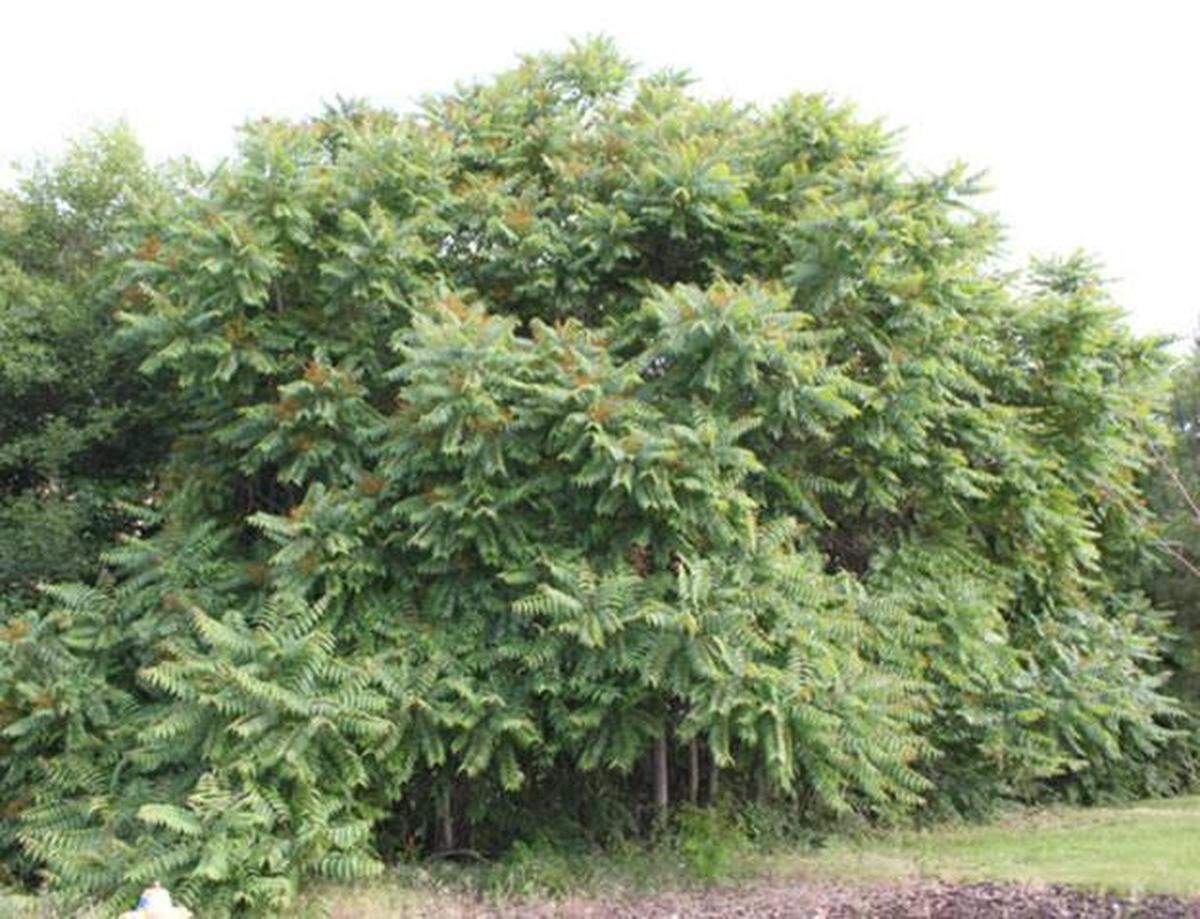
Besides increasing awareness and community response for spotted lanternflies, experts have identified another way to combat potential infestations. Research shows the species prefer to feed and lay eggs on Tree of Heaven, a noxious weed. According to La Belle, the lanternflies are better able to survive and reproduce when exposed to Tree of Heaven. Washingtonians should keep an eye out for both species.
Report potential WA invasive species sightings
Regardless of the species, if you think you see an invasive species in Washington, you should take photos and report it. Even if you aren’t sure, the only way experts can weigh in is if you inform them.
“We would rather have hundreds of reports that end up being harmless species or native species, rather than miss the one that really is an invasive,” La Belle said.
How to report:
You can make a report online or through the WA Invasives app. The app acts as a digital field guide to help you distinguish determining characteristics about native and non-native species. It offers an easy way to report a sighting, submit photos and include the location.
You’ll learn something where the species was invasive or not, according to Helms. Reports are met with a quick expert response, letting you know what you identified. So even if you aren’t sure about your observation, it can’t hurt to make a report.
“There are only so many invasive species professionals,” La Belle said. “We can only be so many places at once, so it’s helpful to have eyes across the state.”
This story was originally published September 6, 2023 at 5:00 AM.