
Public records shed new light on how WA state lawmakers are avoiding releasing information
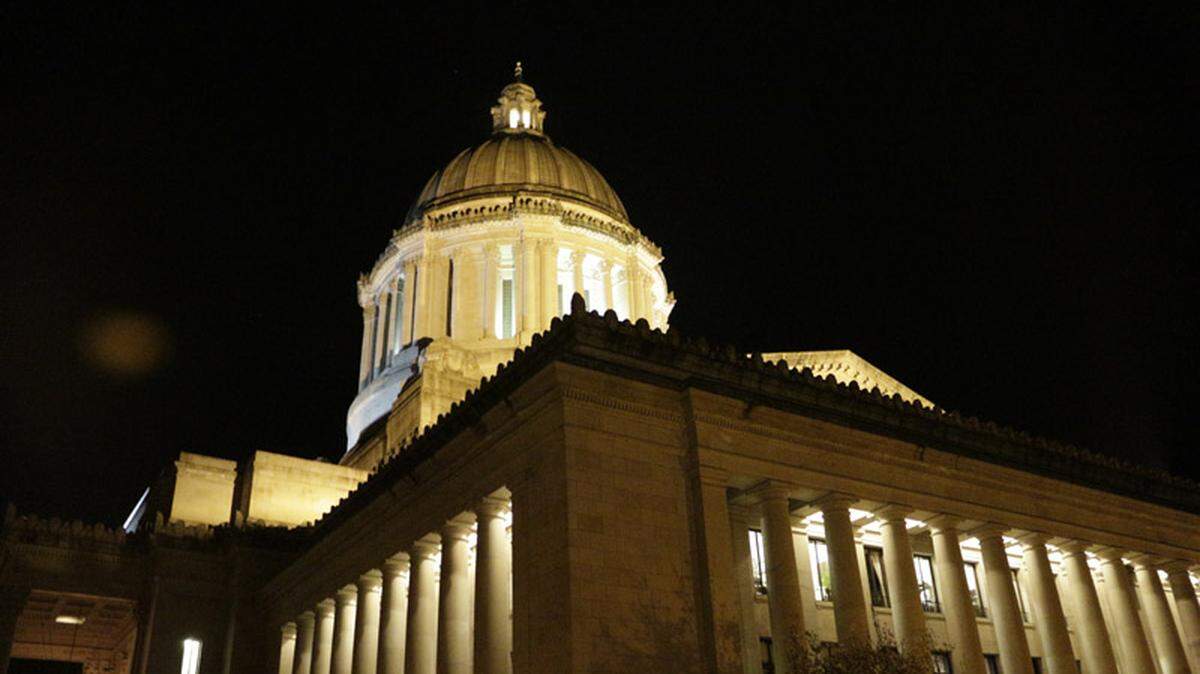
New records released by the Washington State Legislature demonstrate how some House lawmakers are using a claim of legislative privilege to shield their records from public disclosure.
In January, McClatchy requested both redacted and unredacted copies of all public records withheld under legislative privilege by House members between November 2021 and January 2023. The requests were made after some leading lawmakers’ assertions that they are entitled to the exemption under the state constitution.
Article 2, Section 17 of the Washington State Constitution says that “no member of the legislature shall be liable in any civil action or criminal prosecution whatever, for words spoken in debate,” but it does not speak specifically to public records, such as emails and texts, held by legislators.
House records requested by McClatchy were released on Monday after a partial denial.
Out of 22 House members’ records that were withheld under legislative privilege, only nine of those members’ records were delivered fully unredacted from House Democrats and Republicans. The remaining redacted records are still being withheld by current and former House Democrats.
One former House member’s records were released with 136 fully blacked-out pages out of 166 pages total that claimed exemption due to legislative privilege. The fully blacked out pages related to a draft amendment proposed by Sen. Noel Frame on ESSB 5531 during her time as a House member, she told McClatchy.
Partial redactions were also used on Frame’s communications about amendments relating to that same legislation, passed during the 2022 legislative session and sponsored by Sen. Jamie Pedersen, D-Seattle. That bill updated the Uniform Unclaimed Property Act.

Frame told McClatchy that she chose to assert legislative privilege on those documents.
She said the pages in question were internal deliberations with nonpartisan staff on potential amendments for Pedersen’s bill. The redacted documents, she said, was an amendment that she never offered. The reason there are so many redactions, she explained, is because the legislation was a “long, boring technical bill.”
Frame also said that the reason she is choosing to keep the documents exempted from disclosure is because she didn’t offer the amendment to the public, and that it was never considered. She said she thinks she has the right to deliberate with nonpartisan staffers to determine what she will ultimately do on a piece of legislation, and that she shared publicly what she ultimately did decide to do on Pedersen’s bill.
“From a public interest standpoint what I offered is public record, what I didn’t is part of my legislative privilege and my deliberative process and that’s why it was redacted,” Frame added.
“At the end of the day the courts are going to decide on this and I’m going to follow ultimately whatever the court tells me to do,” she said. “I think at this point legislative privilege is being deliberated, and obviously there’s some case law that supports it exists and that’s being deliberated in the court system again...Whatever happens I will comply with, but until then I think I’ve got a case to be able to deliberate with my nonpartisan staff before making final decisions and I think it’s important that we get to retain that privilege.”
Several House legislators’ records regarding a Chinese American History Month bill that was sponsored by Sen. Keith Wagoner, R-Sedro Woolley, were withheld in the release Monday. That bill stalled in the House during the 2022 legislative session after first passing the Senate due to House members’ concerns that the bill was brought forward by a conservative group called WA Asians 4 Equality.
Wagoner previously said that he was not asked if he wanted to invoke legislative privilege on those records, according to reporting by Crosscut.
Those records were visible in one House member’s records that were fully disclosed Monday.
Records released by the House on behalf of Rep. Marcus Riccelli, D-Spokane, showed an email exchange between Wagoner and Rep. Cindy Ryu, D-Shoreline, days before the Legislature adjourned in 2022.
“I respectfully request you withdraw your amendment to my bill. I appreciate the intent to connect to other important individuals and groups but feel that it has the potential to dilute the intent of the bill. Having it brought to my attention at this late juncture doesn’t allow time for us to discuss it and give your amendment the consideration it deserves. Thank you for your consideration,” Wagoner began the exchange.
Ryu told Wagoner that she added the amendment to mitigate some of the concerns from the House Democratic Caucus, and that she had intended to keep his bill alive.
That email exchange remained redacted in Ryu’s public records after the release Monday.
Communications regarding a bill that would have allowed legislative staff to unionize have all remained redacted, despite the requests for unredacted versions. That bill was sponsored by Riccelli but failed to make it to the floor for debate during the 2022 session. Emails released in public records were too heavily redacted to tell what the discussion surrounding the bill included, and Speaker of the House Laurie Jinkins, D-Tacoma, is still withholding those emails from being released.
Notably, the exchanges between Riccelli and Jinkins regarding the staff unionization bill only appeared in the Speaker’s records. They were not included in Riccelli’s records released on his behalf by the House.
But Riccelli told McClatchy Tuesday that he waived legislative privilege on his end for those documents to be released unredacted.
Another House lawmaker who previously had documents withheld under legislative privilege released his redacted documents after the controversy was first reported by McClatchy in early January.
Rep. Jim Walsh, R-Aberdeen, released draft impeachment articles in January that he crafted against the governor in 2021. Those were also included in the files released by the House Monday.
He told McClatchy that the first time he was ever asked if he wanted to assert legislative privilege was during the drafting of those articles of impeachment after a public records request had been filed to search those specific documents. He explained that House Counsel told him about the inquiry for the draft, and that he did not receive a “conventional [Public Records Office] request” for the documents.
Walsh didn’t end up filing the articles, and they remained withheld until he chose to have them unredacted.
Walsh also told McClatchy that he released those records recently because he believes in transparency. He said he still thinks there may be some situations where lawmakers are protected by legislative privilege, however.
Other records obtained by McClatchy also showed that not all House lawmakers knew that legislative privilege could be used as an exemption, despite Jinkins’ prior claims to reporters that all lawmakers were able to invoke the exemption.
Emails from September and October 2022 show that Rep. Gerry Pollet, D-Seattle, was asked by House public records staff if he wanted to exert legislative privilege over records that pertained to the Chinese American History Month bill.
“I am NOT asserting any ‘legislative privilege,’” Pollet responded to the public records officer in the exchange. “Please clarify for me how the citations in your email are being asserted more generally in response to public records requests. This is the first time I have seen such an email from your office advising me or other legislators that there is such a thing as ‘legislative privilege.’”
The lawmaker, who is also a sitting board member for the Washington Coalition for Open Government, then explained in the email how he believed legislators were not entitled to the exemption.
“Article II, Section 17 of our State Constitution is the speech and debate clause which is a shield against civil liability for comments made during debate,” Pollet wrote. “Such provisions were extensively discussed in the task force that considered application of the [Public Records Act] to the Legislature. Claims that these somehow prevent disclosure are a minority opinion among legal experts. Disclosure of communications in regard to positions on legislation is not implicated by shielding legislators from liability for words spoken in debate.”
Additionally, Pollet pushed back against the assertion that lawmakers could also cite Freedom Foundation v. Gregoire, a ruling by the Washington state Supreme Court that said governors of the state “could assert executive privilege to justify withholding documents that would otherwise be disclosable under the Public Records Act.”
He noted in the email that the case applied only to the executive branch, and that Gov. Jay Inslee himself has vowed not to use it.
“The privilege is akin to the internal advice exemption of the Public Records Act in its purpose,” Pollet continued. “That exemption ends as soon as a decision is made, e.g., for the Legislative application: if legislation passes or fails. The Court decision is solely about an Executive Privilege. The holding and rationale have no relationship whatsoever to a ‘legislative privilege.’”
This story was originally published February 7, 2023 at 5:00 AM with the headline "Public records shed new light on how WA state lawmakers are avoiding releasing information."