Prescott voters decide fate of school district + Other rural Mid-Columbia results
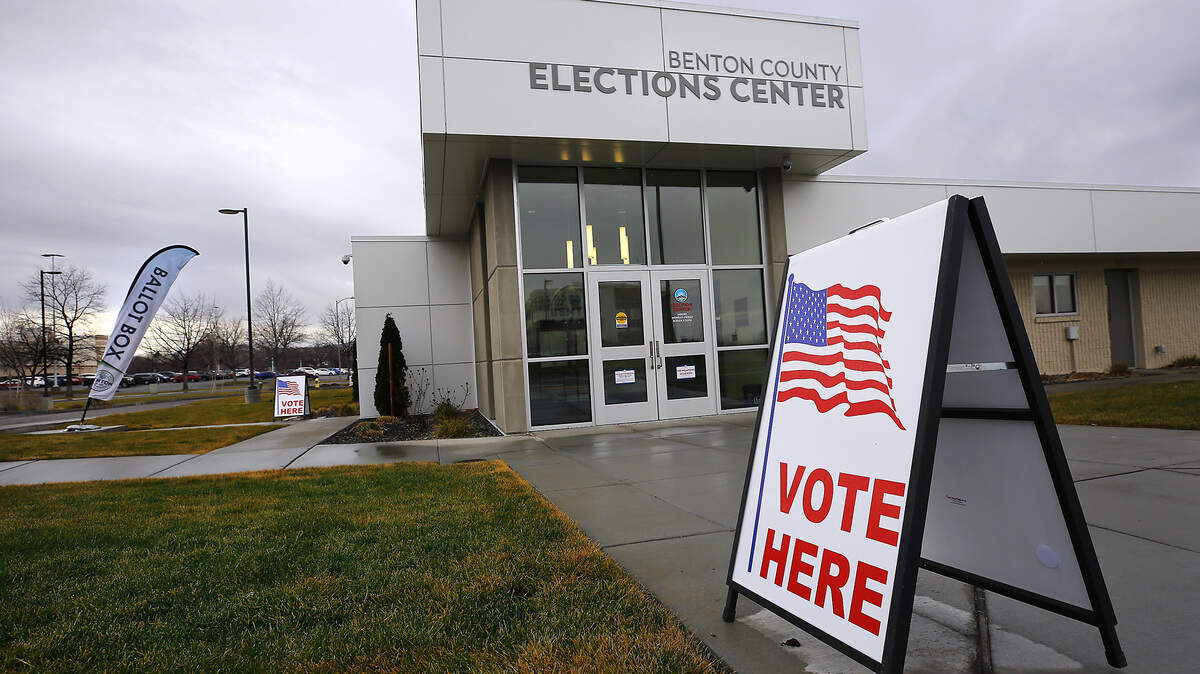
A rural Eastern Washington school district is inching toward remaining open after voters rallied to save it after the state recommended it be dissolved.
Feb. 10 special election results released Tuesday night showed the Prescott School District’s supplemental levy was passing with 180 ballots in support, or 87%, and 27 against, or 13%.
The tax increase will be crucial for the school district serving 230 students, which needs about $1 million by April 1 to keep the classroom lights on.
A closing date has also been set for Tuesday, Feb. 17, for the district’s old teachers cottage property. The City of Prescott has agreed to buy it for $380,000.
But Prescott will also need to secure additional funding from the Legislature in order to dodge dissolution.
Prescott Superintendent Jeff Foertsch said the early results are a strong vote of confidence from the community.
“I am deeply grateful for your partnership and commitment to Prescott’s schools,” he told the community in a statement. “This result is the second major hurdle that we are passing on our way to solvency. Grrreat job, but our fight continues as we wait for potential help in the Legislature.”
If funding from the Legislature falls through, the district will still be at risk of closing and could shutter as early as June.
Those students would instead attend classes in the neighboring Columbia-Burbank and Waitsburg school districts.
State Sen. Perry Dozier, R-Waitsburg, who graduated from Prescott High School in 1977 and has vocally condemned its closure, said the election result is a community effort.
“This level of support puts a lot of wind in the sails of our students, educators and families. It sends a powerful message: We believe in our kids, our schools and our future,” Dozier said in a statement.
“I couldn’t be prouder of Prescott. When we work together, there’s nothing we can’t accomplish,” he continued.
$42M in crucial Mid-Columbia school funding up for renewal
Elsewhere, rural Mid-Columbia school districts — Grandview, Columbia-Burbank, Kahlotus and North Franklin — asked voters to continue funding more than $42 million for teachers, athletics, nurses, transportation and the arts.
These local dollars supplement per-pupil education funds districts receive from the state, and help bridge the gap between what the state and federal government pay and what is actually needed.
Columbia School District was asking voters to renew two levies that would raise more than $20 million locally over the next four years.
The operations levy would raise $18.6 million for educational programs, and the capital levy would raise $1.9 million for technology improvements to enhance student learning.
The operations levy would tax about $3.30 on every $1,000 of assessed value, while its capital levy would tax about 34 cents on every $1,000.
Both measures passed by similar margins: About 450 ballots in support, or 61%, to 290 opposed, or 39%.
Nearly 800 students attend the rural Walla Walla County school district
North Franklin School District was asking voters to renew a two-year, $5.5 million operations levy. These funds make up about 10% of the district’s budget.
The tax rate is estimated at $1.56 per $1,000 of assessed value for collection in 2027, and $1.57 in 2028. About 2,000 attend the rural Franklin County district.
It passed with 513 ballots in support, or 68%, to 245 opposed, or 32%.
Grandview School District serves about 3,500 students in Benton and Yakima counties, and was asking voters to renew its four-year, $16 million operations levy.
The district would collect $1.65 per $1,000 of assessed value in 2027, $1.67 in 2028, $1.69 in 2029 and $1.71 in 2030. The state would kick in an extra $22 million on top of that if voters approve it.
Local dollars make up about 9% of Grandview’s budget.
It was passing with 520 ballots in support, or 58%, to 370 opposed, or 42%.
Kahlotus School District is asking voters to renew a two-year, $280,000 operations levy that would cover about 3% of its general fund.
The tax would collect $1.47 on every $1,000 assessed property in 2027, then $1.43 in 2028. That’s about $440 for a home valued at $300,000.
That measure was passing with 44 ballots in support, or 69%, to 20 opposed, or 31%.
Located in the northeast part of Franklin County, Kahlotus has fewer than 100 students.
This story was originally published February 10, 2026 at 9:00 PM.