
Tiffany Smiley PAC for ‘political outsiders’ actually pays campaign debt first
A few months after her unsuccessful bid to unseat U.S. Sen. Patty Murray, Republican challenger Tiffany Smiley announced the launch of a new PAC to boost “political outsiders” across the country.
Making the rounds of sympathetic conservative TV and radio shows, Smiley promoted Endeavor PAC and appealed for money.
On a local radio show in February, she said donations would go to “helping our country, all across the country.” On another, in March, she said “every dollar amount goes directly towards helping candidates.” On Fox News in April, Smiley said the PAC will aid “candidates who are ready to rescue the American dream for our kids today.”
“Very cool,” said Fox host Steve Hilton.
With more than a year to go in the 2024 election cycle, it remains to be seen whether Endeavor PAC will succeed in its stated mission of recruiting and funding fresh candidates.
But what Smiley did not mention during her media tour is that donations solicited by her PAC are earmarked first to retire a six-figure debt lingering from her Senate campaign.
$1 million debt
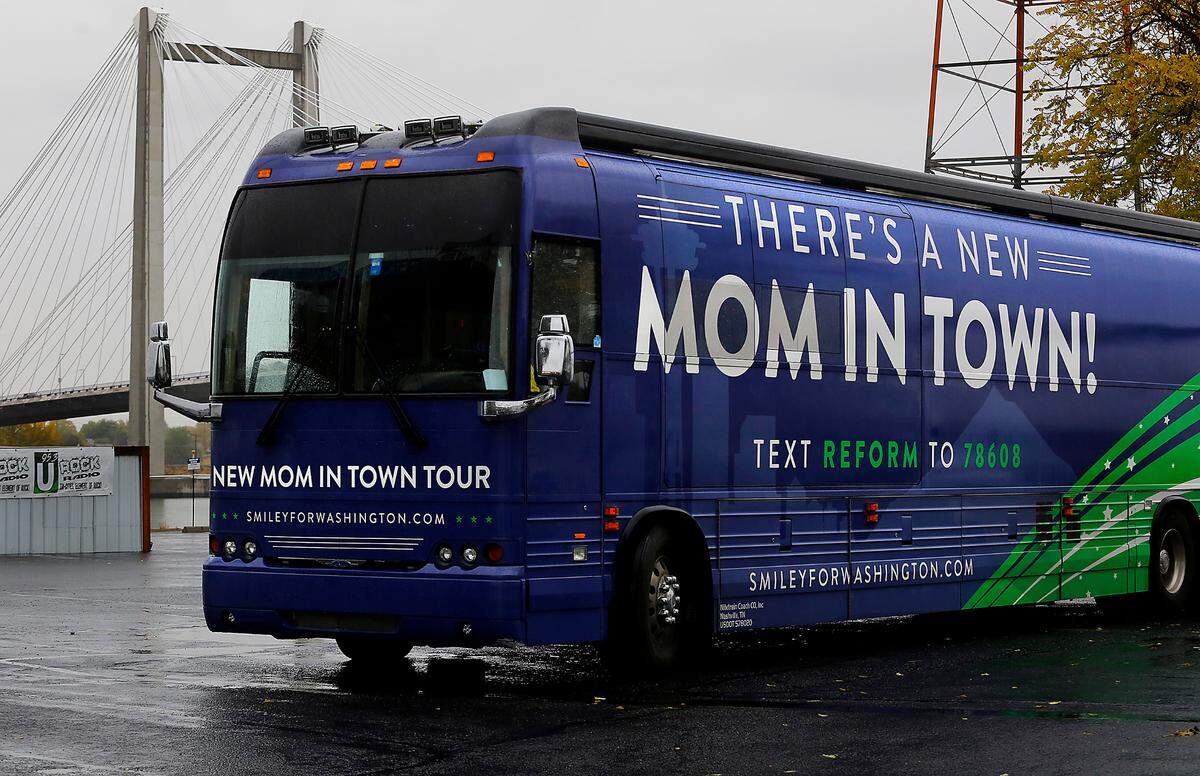
Backed by national Republicans, Smiley, a first-time candidate and veterans advocate from Pasco, raised and spent more than $20 million during the 2022 midterm election, but lost to Murray by nearly 15 percentage points.
Her campaign ended the year owing more than $1 million, according to Federal Election Commission filings. By the end of March, that had been whittled to $780,000.
The money is owed to Targeted Victory, a prominent Virginia-based Republican consulting firm that was paid more than $3.5 million by the Smiley campaign through the end of last year for fundraising and digital advertising.
Smiley did not respond to repeated email and voice messages sent to her PAC and spokesperson over the past week.
In her round of media appearances and on social media, Smiley directed donors to the Endeavor PAC website, which touts the effort as an act of service to America. “Tiffany could have easily returned to private life after a grueling campaign, but that would not be the Smiley way,” the site says.
Donations made through the Endeavor PAC site flow to a joint-fundraising committee, the Smiley Victory Fund, which earmarks them first to pay off her campaign’s debt – a detail disclosed only deep in the fine print if people click through to donate.
Fine print
The eighth paragraph of tiny print on the PAC’s donation page says the first $2,900 of any individual contribution and the first $5,800 of any contribution from a couple “shall go to Smiley for Washington Inc. to retire debt from the 2022 general election.”
Only money donated above those thresholds – up to $5,000 for individuals and $10,000 for couples – will go to Endeavor PAC. That means small-dollar donors are likely to see their cash entirely directed to the debt repayment.
“You get into the fine print, which most people are probably not seeing,” said Brendan Glavin, senior data analyst with OpenSecrets, the nonprofit group tracking money in politics. “If you are not familiar with this stuff, it all looks like a bunch of gobbledygook.”
Glavin and another campaign finance expert said Smiley’s fundraising – even if misleading – appears to fall within the rules.
Joint fundraising committees like the Smiley Victory Fund have increasingly been used by both Republicans and Democrats to pull in big checks that are split among various party organizations, candidates and PACs.
“It is a way which makes it easier for politicians to sort of obfuscate where the money is going,” Glavin said.
Erin Chlopak, senior director of campaign finance at the Campaign Legal Center, a watchdog group, said court rulings have granted political fundraising wide latitude on how they operate.
“The First Amendment has been used to shield quite a bit of questionable activity in fundraising,” Chlopak said. “There are all kinds of examples out there of committees and even candidates claiming that money is going to be used for one purpose and not seeing it used for that at all.”
For example, former President Donald Trump used false claims about the 2020 election to raise hundreds of millions of dollars, claiming it would go toward an “Official Election Defense Fund,” that did not exist.
The Democratic Congressional Campaign Committee has also drawn criticism for blasting out misleading fundraising emails with language suggesting a membership or bill is overdue, tactics that have been shown to fool some elderly people into signing up to make recurring donations.
It’s not clear how much money Endeavor PAC, which was registered on Jan. 18, has pulled in so far. The PAC has yet to file any fundraising reports to the FEC.
The Smiley Victory Fund, meanwhile, reported raising just $489 between January and April, with zero money sent to the new PAC. (The fund was originally set up in 2021 to distribute money among the Smiley campaign, the state Republican Party and another Republican PAC.)
As for Murray, she spent nearly $24 million during the full six-year Senate election cycle, including $19 million as the midterm campaign heated up in 2021 and 2022. She reported no outstanding debt as of April.
It’s not unusual for congressional candidates in expensive races to finish up with unpaid debt to campaign vendors.
Roll Call reported in March that 18 members of the House and Senate began the year with campaign committees owing at least $100,000 in unpaid bills, with the GOP firm Targeted Victory owed the most.
“A candidate who wins and is in debt is in a much better situation to take care of that. When you don’t win, it’s very hard,” Glavin said.