A $43M solution to stinky sewage treatment. It’s a 1st in the NW
AI-generated summary reviewed by our newsroom.
- Kennewick built a $43 million biosolids facility with solar-thermal pasteurization.
- The plant will produce a dried Class A biosolid fertilizer called "Kennegro.”
- The facility will cut biosolids volume by about 67% and lower disposal costs.
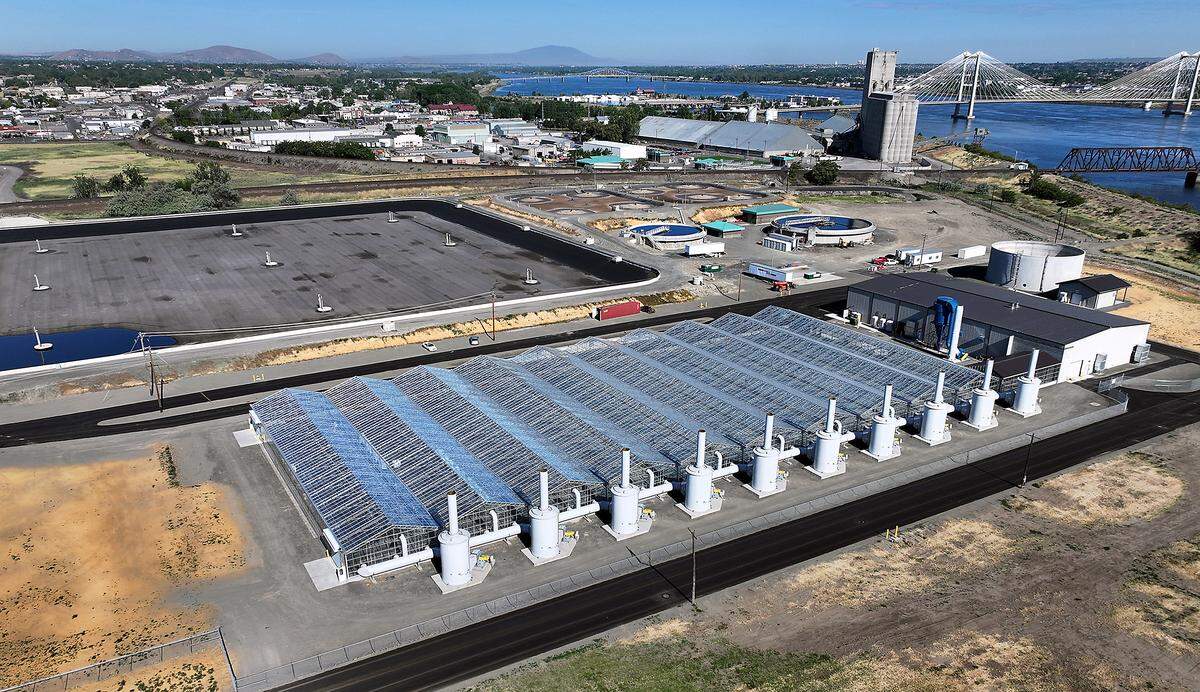
Kennewick residents living downwind of the city’s sewer treatment facility will get some much-needed relief thanks to a state-of-the-art $43 million biosolids facility.
It’s the first of its kind in the Pacific Northwest, incorporating a solar-thermal pasteurization system, patented at a Florida facility, that will create a nutrient-rich dried product from sewage that can be used for commercial purposes.
Constructed over the last 18 months, the 175,000-square-foot facility in the long run will lower municipal sewer costs and support the city’s future growth. It will create and support three new city operator jobs, too.
The project is seven years in the making. It was designed to address the limitations of the city’s traditional lagoon systems, which includes odor concerns, and high maintenance and dredging costs, and capacity limits.
One of the city’s two lagoons will be taken out of service, and the other will remain in operation for contingency.
Mayor Jason McShane said at a Wednesday open house event that public works and utility projects often go unseen despite their importance. This project will serve a growing city, which has seen a population surge of more than 14,000 in 10 years.
“Kennewick is a great place to live and to raise a family, and it’s a wonderful place to call home, but that growth comes with its own challenges,” he said.
The event also was an opportunity for municipal public works staff from around the region — from King County to Coeur d’Alene and Redmond, Ore. — to get a sneak peek at the latest and greatest in biosolids production.
Sewage waste will be piped into the facility using sewer and processed through a multistep process.
Kennewick will produce about two dump-trucks worth of biosolids a day, said Deputy City Manager Cary Roe.
The city will create an all-purpose fertilizer dubbed “Kennegro” that will be tested at city parks and possibly sold to the public at a later date.
Water from the sewage will be treated into a form clean enough to drink and pumped into the Columbia River. Kennewick’s treatment plant refines and discharges about 5.5 million gallons of water each day into the waterway.
Inspired by the Sunshine State
Kennewick’s biosolids complex uses the same “FloridaGreen Solar-Thermal Pasteurization” approach as a facility in Pasco County, Florida, that’s about five times larger.
Ted Merrell, co-founder of Indiana-based Merrell Bros., said they patented that new technology and commissioned it in the Florida facility about eight years ago. It combines two tried-and-trusted processes for making biosolids: belt pressing and solar drying.
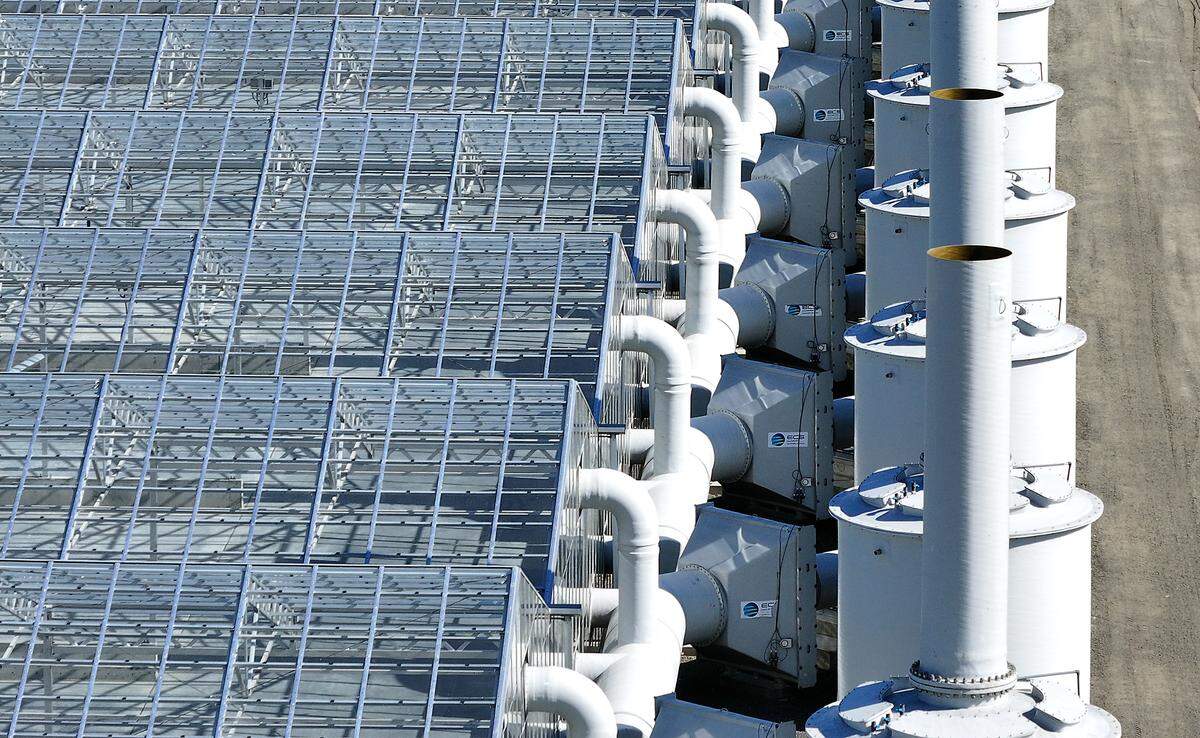
Waste is stored at a 1.1 million-gallon concrete tank before being processed. It will then go through a mixing and aeration process before the water is squeezed out through a belt.
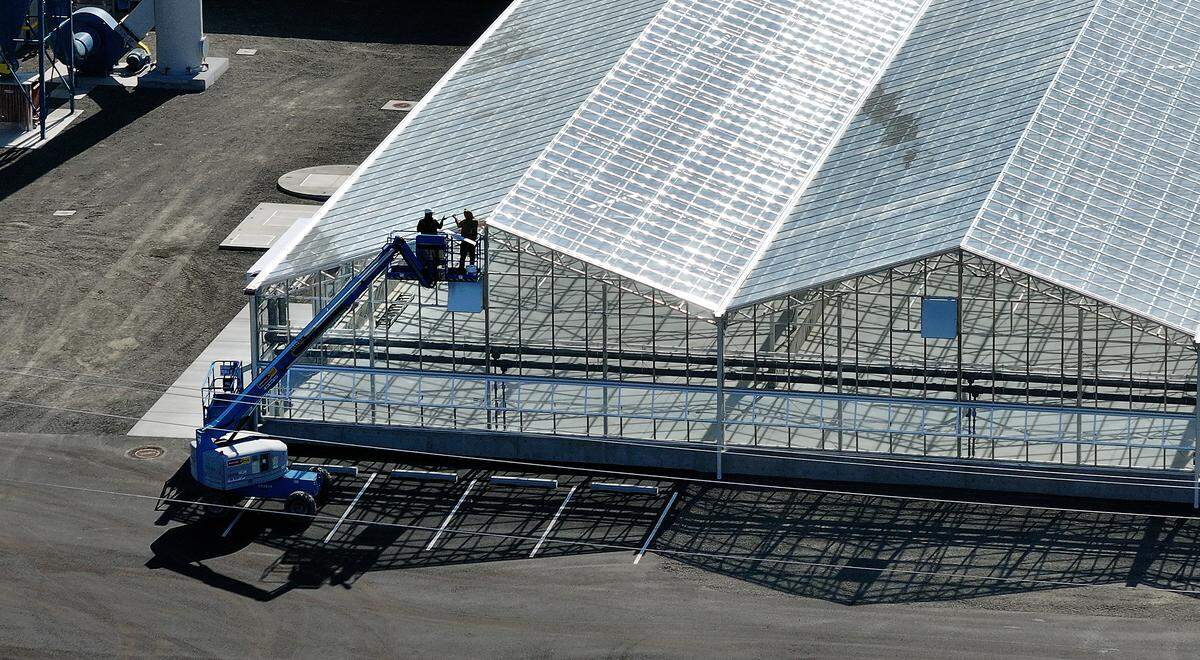
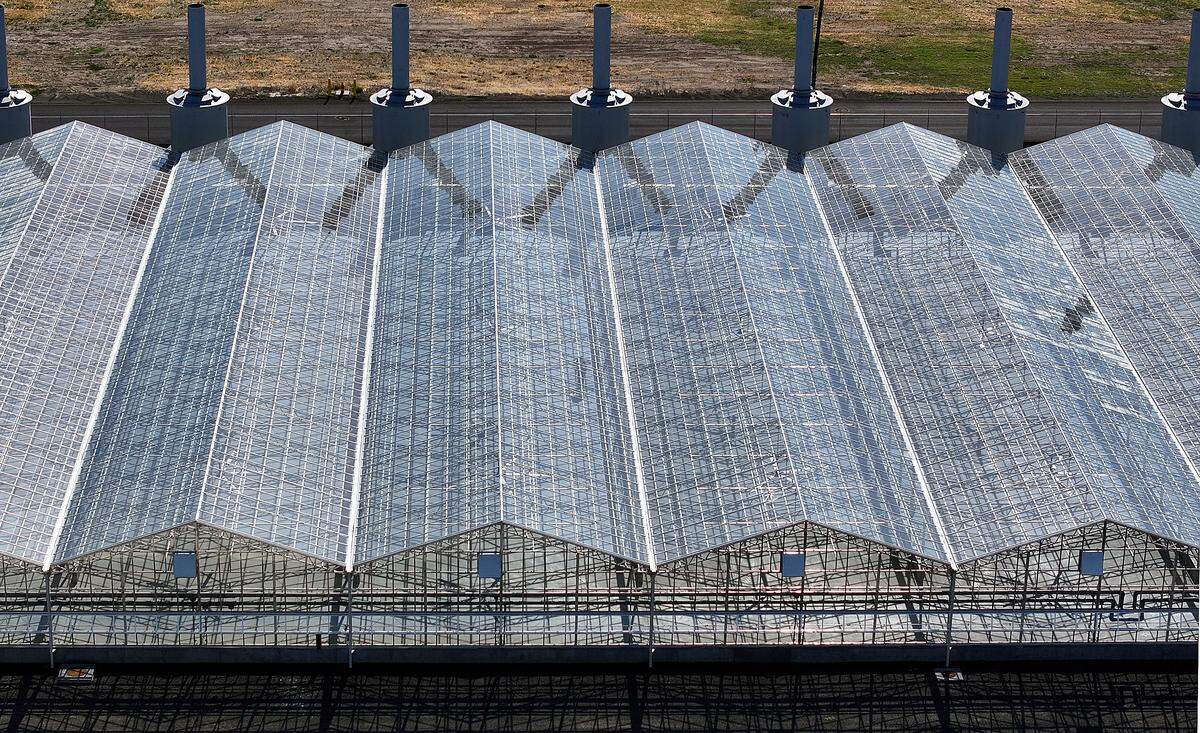
Kennewick’s facility includes 150,000 square feet of enclosed greenhouse space that will sun dry the product. From there, it will transfer to machines that thermal dry, pelletize and cool the product into a Class A biosolid.
“It’s important because we’re using the energy of the sun to remove a lot of that water,” Merrell said. “Most of your other thermal processes require using fossil fuels to do that, so we’re getting the free benefit of that and creating a finished product at the end.”
The process is also different because it reduces biosolids volume by about 67% and will reduce the city’s transportation and disposal costs.
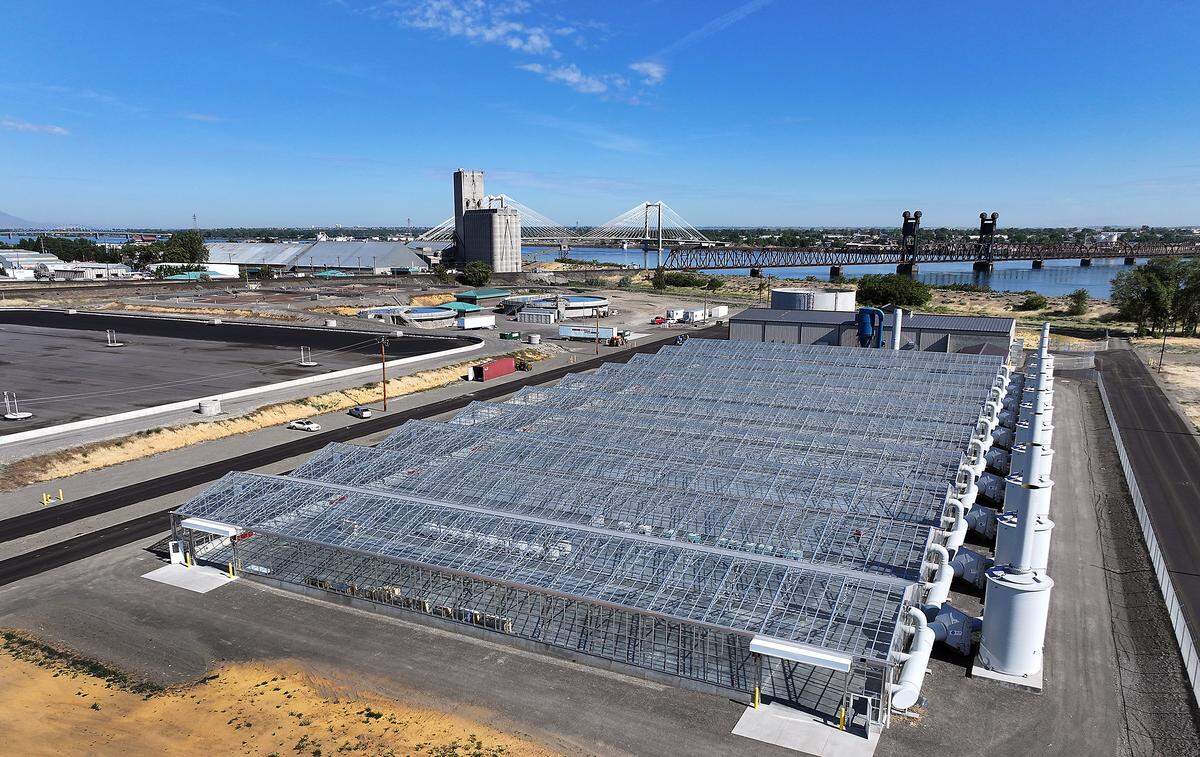
Kennewick already produces a stinky, unpasteurized Class B biosolid that it hauls to agriculture fields, but those costs have gone up nearly 50% in 10 years and requires a strict state permitting process, Roe said. Future regulations and restrictions around Class B use in Washington could increase those costs even more.
Merrell brought with him a pallet of 32-pound bags of FloridaGreen fertilizer for lawn, landscaping and gardening that Kennewick will model its own product after.
He said it “paints a better picture” of what can be produced. The processes of compression, heat and drying creates a stable, marketable fertilizer for anyone to use.
“We’re going to give away these bags later. People are literally going to take a bag of dried biosolids, put it in their car and take it home with them,” he said. “Could you imagine if I had a truck out here and a shovel and a bucket — nobody would take anything.”
‘Forward thinking’
Kennewick’s new biosolids facility is funded by a $32.8 million loan from the state Department of Ecology, with $6.1 million of it forgivable once the plant is complete. Sewer ratepayers will cover $8.2 million, and COVID stimulus ARPA program will cover the remaining $1.8 million.
“Kennewick is positioning itself as a forward-thinking leader in municipal biosolids management, embracing cutting-edge solutions that set a benchmark for other cities,” said Jeremy Lustig, Kennewick’s deputy public works director, in a statement.
Roe said they visited the facility in Florida, and Kennewick even built a small-scale pilot to test the process out and compare it with anaerobic digestive process. It’s a unique, yet simple process, he said.
This story was originally published May 27, 2026 at 7:37 PM.