
Who will pay +$1M to clean up WA’s largest abandoned tire pile in Richland?
AI-generated summary reviewed by our newsroom.
- Richland obtained a 2024 court order to abate the 7,100‑ton Twin Bridges tire pile site.
- Cleanup estimates range $1.1M–$1.6M. Statewide abatement funding is only $600K.
- Ecology offers technical help, but funding shortfalls and backlog stall cleanup.
A fort-like maze built of abandoned used tires near Highway 240 is a jarring welcome to north Richland.
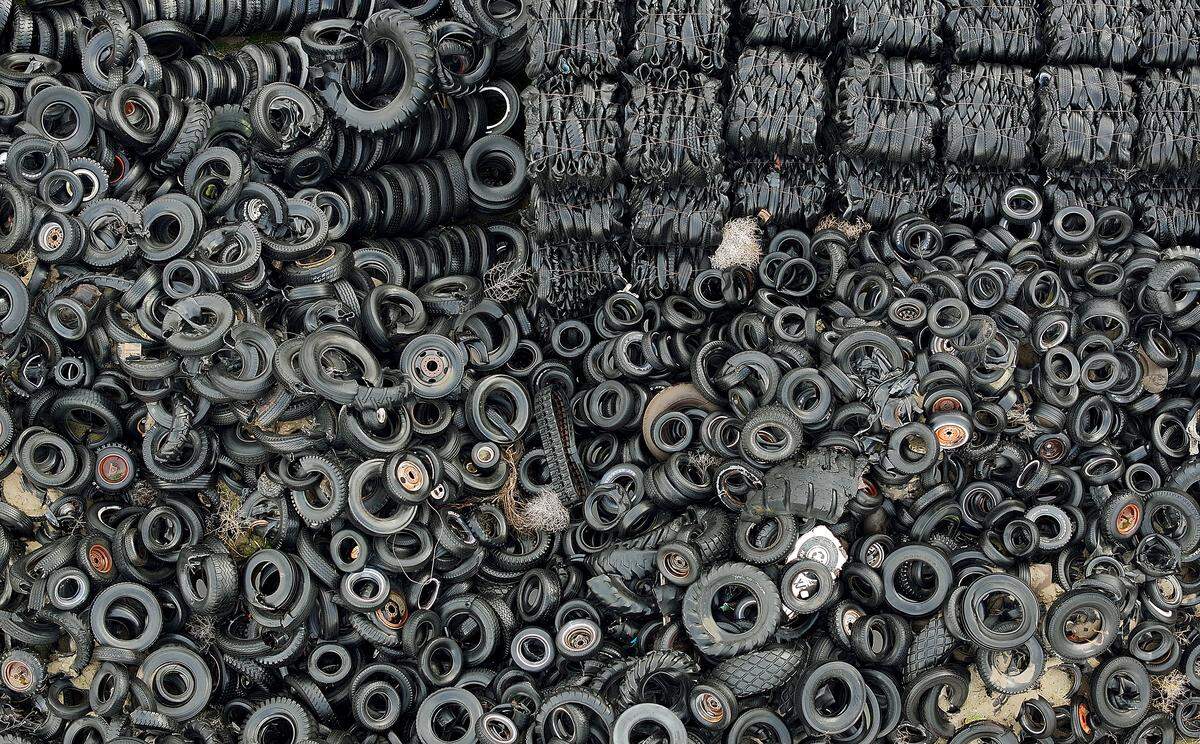
The tire pile on Twin Bridges Road isn’t just jarring. It’s easily the largest stockpile of old tires on an unlicensed site in Washington, according to a 2023 Washington Department of Ecology report.
The Twin Bridges Road tire pile has about 7,100 tons of tires.
Most are baled and piled into wall-like structures around the perimeter. About 100 tons of loose tires are stacked in the interior.
Benton County property records show the five-acre property was purchased in 2008 by Beneficial Reuse Solutions LLC, of Juneau, Alaska. State corporation records to not include a listing for Beneficial.
The city of Richland, which has long considered it in violation of nuisance codes, sued Beneficial in 2023 and received a court order allowing it to abate the problem in 2024.
The city hasn’t followed up because it hasn’t identified a source for the $1.1 million to $1.6 million it’s expected to cost, said Heather Kintzley, city attorney.
“We don’t exactly know where that million dollars will come from,” she told the council during a briefing on various nuisance properties.
$5 tire fees
It won’t come from Ecology, which runs the state’s tire abatement program on a shoestring budget.
The state agency is given only $600,000 to spend statewide. That’s despite the 2025 Legislature’s decision to quintuple the fee tire buyers pay to $5, which was included in a sprawling transportation bill.
The fee is expected to generate $2 million, but the Legislature reserved only the first $600,000 to address discarded tires. The rest is dedicated to general transportation expenditures, including road maintenance.
The bill passed along party lines in both the House and Senate. The all-Republican Tri-Cities delegation voted against it.
Gov. Bob Ferguson signed it in May.
Andrew Wineke, deputy communications director for Ecology, confirmed there is a backlog of requests for tire abatement money and a budget of only $600,000. That’s well short of the bill Richland faces for just one site.
“We will continue to support the city with technical assistance as they pursue cleanup at the site,” Wineke told the Tri-City Herald.
Largest tire pile in WA
There are 47 priority sites named on the Ecology list, but the number is misleading.
The other 46 sites combined have about 400 tons of discarded tires, a tiny fraction of the estimated 1 million tires on the Twin Bridges property.
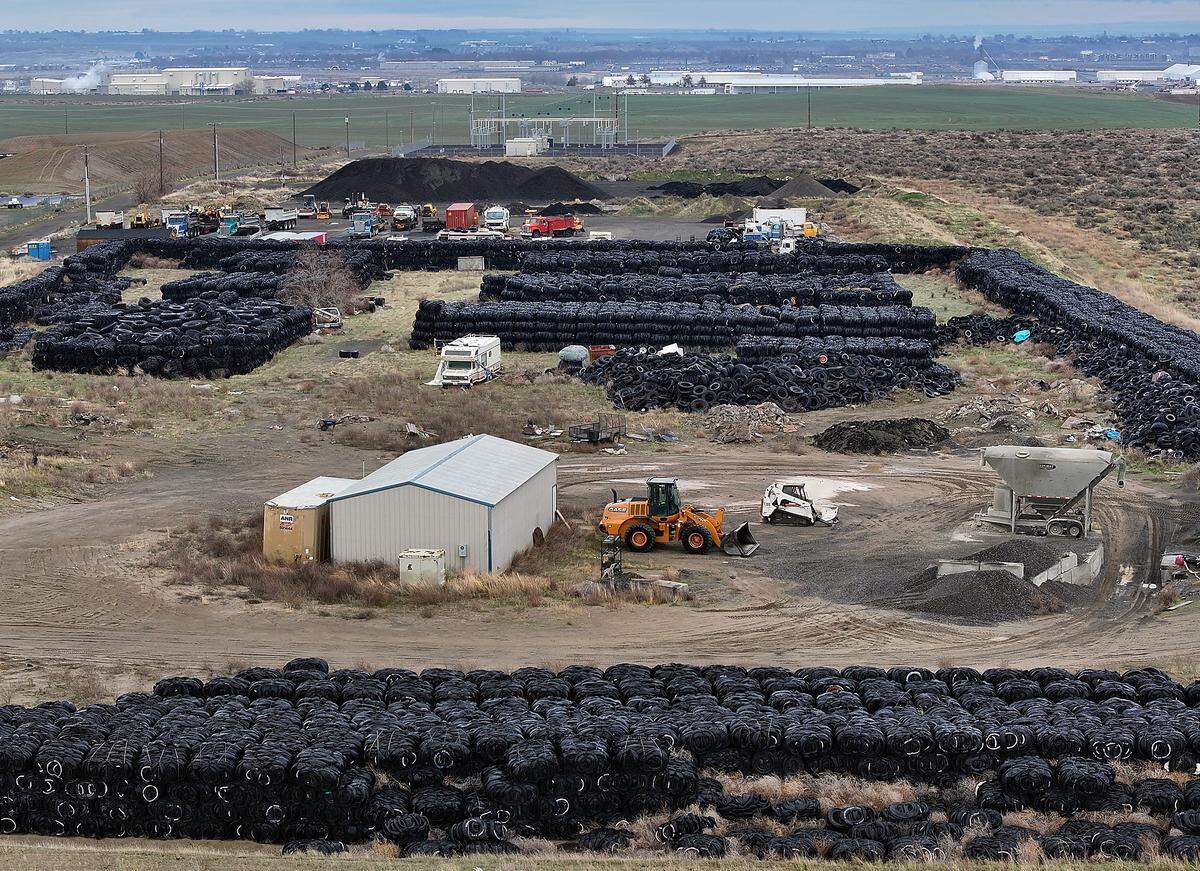
The tire pile near the Horn Rapids housing development and south of the Hanford nuclear reservation is one of four exceptionally difficult properties Richland is working on. Kintzley said the other three are homes.
Each is challenging, but Twin Bridges is particularly thorny.
The city sued the absent owners in Benton County Superior Court in 2023 to have it declared a nuisance and to secure a warrant of abatement needed to legally enter the site and clear it out.
Failed recycling business
The lawsuit indicates the property operated as Beneficial Reuse, a tire recycling center, until it went out of business.
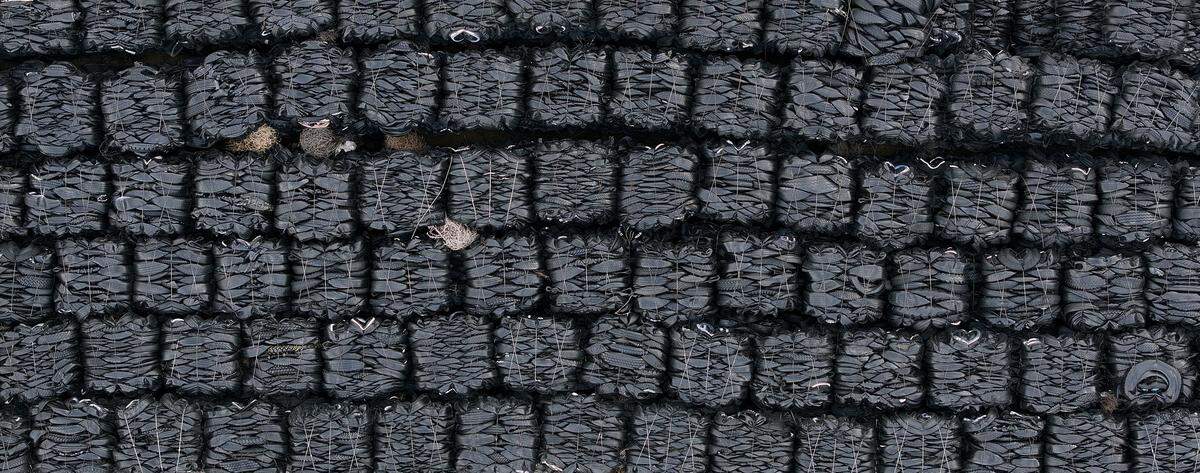
Kintzley said the city is managing the tire pile as best it can. It carved fire breaks among the piles in case the tires catch fire. That’s an ongoing concern of the fire department, she told the city council.
She said the city development services arm is developing a plan for removing the tires, which will be submitted to the court. The property has an assessed value of only $700,000.
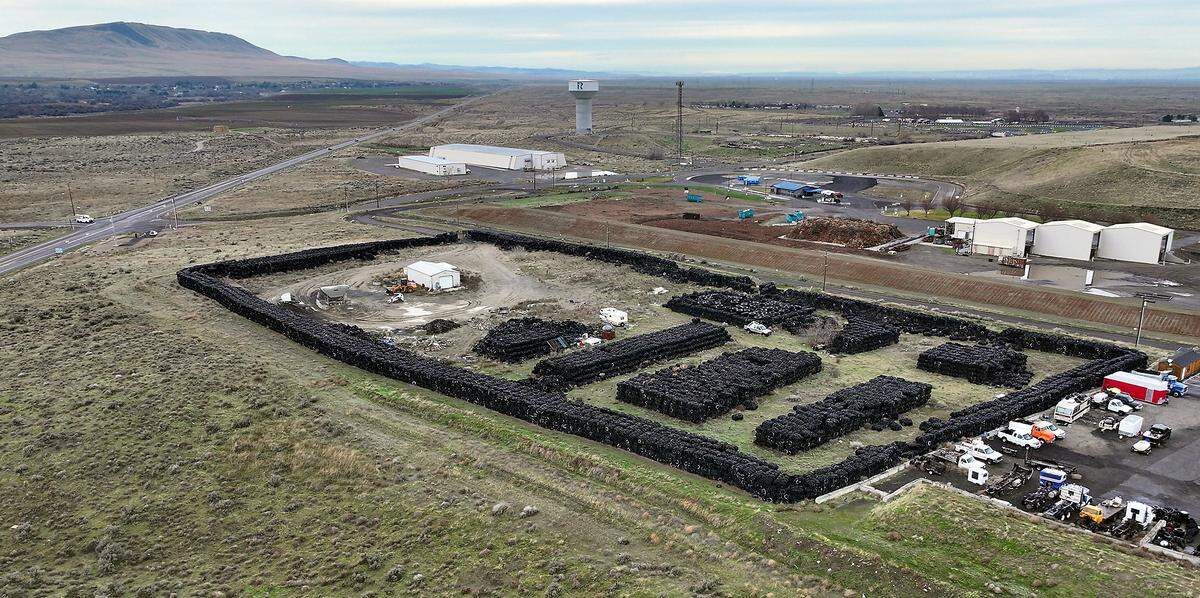
Ecology called Twin Bridges a priority in its 2023 report on discarded tires in Washington.
At the time, the agency contemplated seeking a special appropriation of $1.5 million to support Richland, noting the city has both shredding equipment and a nearby landfill to accept the tires. But there was no appropriation.
This story was originally published January 9, 2026 at 5:00 AM.